Why Are We So Tired?

A Nurse’s Reflection on Exhaustion in Modern Life

The Quiet Epidemic Nobody Seems to Talk About Properly

By Dr Catherine W Dunne MSc.D | M.H.I.T. | Registered Nurse
Abstract

Modern fatigue is increasingly presenting as more than simple tiredness. Across healthcare settings, many individuals describe feeling persistently exhausted despite “normal” investigations, adequate sleep, or attempts at lifestyle change. Terms such as burnout, stress, and fatigue have become commonplace, yet the deeper physiological, emotional, and environmental contributors are often overlooked or fragmented within modern healthcare discussions.

This reflective article explores exhaustion through the lens of contemporary life, nursing experience, and integrative awareness. Factors such as chronic stress activation, nervous system overload, poor restorative sleep, nutritional depletion, emotional burden, overstimulation, social disconnection, and the loss of natural recovery rhythms are considered within the wider context of modern living.

Rather than presenting fatigue as a single diagnosis, this article examines how persistent exhaustion may represent a cumulative response of the body and mind attempting to adapt to prolonged physical, psychological, and environmental strain. It also reflects on the growing number of individuals who report feeling “wired but tired” — functioning outwardly while internally depleted.

Drawing upon observations from clinical nursing practice and holistic care settings, the article encourages a more compassionate, whole-person approach to understanding fatigue. It highlights the importance of listening to patient experiences, recognising the multifactorial nature of exhaustion, and restoring space for recovery, rest, human connection, and nervous system regulation within both healthcare and daily life.

Ultimately, the article asks a question many people are quietly carrying:
Why are we so tired — and what might the body be trying to tell us?

Introduction

People are tired in a way that sleep alone no longer seems to fix.

Not simply “a bit run down,” but deeply depleted — mentally overloaded, emotionally stretched, physically exhausted, yet somehow still expected to continue functioning normally.

As a nurse, I increasingly hear the same quiet phrases repeated in different ways:
“I’m exhausted all the time.”
“My blood tests are normal.”
“I just don’t feel like myself anymore.”
“I’m sleeping, but I still wake up tired.”

Many people describe living in a constant state of being “wired but exhausted” — unable to fully switch off, yet struggling to restore energy no matter how much they rest. Modern life has normalised chronic stress, overstimulation, poor recovery, emotional strain, irregular sleep, constant digital exposure, and the pressure to remain productive even when the body is clearly asking for pause.

Fatigue itself is not a diagnosis. It is often a signal.

Sometimes it reflects physical imbalance. Sometimes emotional overload. Sometimes nutritional depletion, stress physiology, poor sleep quality, burnout, hormonal shifts, chronic inflammation, or the cumulative weight of simply carrying too much for too long.

Perhaps one of the most important questions we should be asking is not simply:
“How do we push through exhaustion?”
…but rather:
“Why are so many people becoming exhausted in the first place?”

This article is not about fear or quick fixes. It is a reflection on modern exhaustion through the lens of nursing, human experience, and integrative awareness — and a reminder that recovery is not weakness, but an essential part of health itself.

The Modern Nervous System: Always “On”

Human beings were not designed to live in a constant state of alertness.

Yet for many people, this has quietly become normal.

The modern nervous system is under relentless pressure. Notifications, noise, financial strain, emotional demands, poor sleep, overstimulation, shift work, caregiving responsibilities, uncertainty, and the expectation to remain constantly available all place the body into a prolonged state of low-grade stress activation. Over time, this continuous “background stress” can begin affecting both physical and emotional wellbeing.

Many individuals describe feeling unable to fully relax, even during rest. They may sit down in the evening physically exhausted, yet mentally unable to switch off. Others wake during the night with racing thoughts, feel tense without obvious reason, or rely heavily on caffeine, sugar, or adrenaline simply to get through the day.

This state is often described as being:
“wired but tired.”

From a physiological perspective, prolonged stress activation affects far more than mood alone. Chronic activation of stress pathways may influence sleep quality, digestion, blood sugar regulation, immune function, inflammation, muscle tension, concentration, hormonal balance, and overall energy production. The body can continue functioning for long periods under stress — but often at the expense of proper restoration and recovery.

Importantly, exhaustion is not always visible.

Many people who are struggling still continue to work, care for families, attend appointments, smile socially, and meet responsibilities. Outward functioning does not always reflect internal wellbeing. Some individuals become so accustomed to operating under stress that exhaustion begins to feel “normal.”

In healthcare settings, this can sometimes create frustration for both patients and practitioners. Investigations may appear broadly reassuring, yet the individual sitting in front of the clinician still feels profoundly unwell, depleted, or disconnected from their usual self. This does not mean symptoms are imaginary. It may instead reflect the complex and multifactorial nature of fatigue itself.

The body has remarkable ways of adapting and compensating. However, adaptation is not the same as restoration.

At some point, the nervous system eventually asks to be listened to.

Rest Is No Longer Truly Rest

One of the quieter changes in modern life is that many people rarely experience genuine rest anymore.

Even during moments that appear restful externally, the mind often remains continuously engaged. Phones, television, social media, news cycles, emails, background noise, and constant streams of information keep the brain stimulated long after the body has physically stopped moving. Silence has become unfamiliar for many people.

There was once greater recognition of recovery as a necessary part of health. Rest was not always viewed as laziness or lack of productivity. Time outdoors, slower evenings, conversation, community, shared meals, and periods of stillness were naturally woven into daily life. Today, many people move from one demand directly into another without any meaningful pause between them.

The body, however, still requires recovery rhythms.

Sleep quantity alone does not necessarily equal restoration. A person may spend eight hours in bed and still wake feeling exhausted if the nervous system has remained in a heightened stress state throughout the night. Emotional strain, unresolved stress, poor sleep quality, hormonal changes, overstimulation, chronic worry, alcohol, excessive screen exposure, irregular schedules, and metabolic imbalance may all affect the body’s ability to properly restore itself during sleep.

Many individuals now describe feeling tired from the moment they wake. Others experience a temporary surge of energy late in the evening, only to struggle sleeping when finally given the opportunity to rest. This pattern of exhaustion combined with internal overstimulation has become increasingly common.

Modern culture often rewards endurance rather than recovery. People are praised for pushing through fatigue, multitasking constantly, remaining available at all hours, and continuing despite obvious exhaustion. Yet the body does not function indefinitely without consequence.

There is also an emotional dimension to exhaustion that is frequently overlooked. Many people are carrying invisible burdens — grief, caregiving responsibilities, financial strain, loneliness, uncertainty, emotional stress, or the simple weight of prolonged overwhelm. Emotional fatigue can manifest physically in profound ways, affecting sleep, appetite, immunity, energy levels, pain perception, and concentration.

Sometimes the body is not failing.

Sometimes it is responding exactly as a chronically overwhelmed human body would be expected to respond.

Rest, therefore, should not be viewed as a luxury. It is a biological requirement. Recovery is not weakness, but part of how the human system repairs, regulates, and continues functioning over time.

When “Normal” Does Not Feel Normal

One of the most difficult experiences for many individuals is being told that everything appears “normal” while continuing to feel profoundly unwell.

In clinical practice, this situation is increasingly common. Blood tests may fall within laboratory reference ranges, scans may show no major abnormality, and outwardly the individual may appear to be coping reasonably well. Yet underneath this, the person may still be experiencing persistent fatigue, brain fog, poor concentration, low motivation, disrupted sleep, muscle tension, emotional exhaustion, or a general sense that “something is not right.”

This can become deeply frustrating and isolating.

It is important to recognise that laboratory investigations are valuable tools, but they do not always fully capture the lived human experience of stress, depletion, overload, or early physiological imbalance. Health exists on a spectrum, and people do not suddenly move from “well” to “unwell” overnight. Often there is a long period in between where the body is compensating, adapting, and quietly struggling before more obvious dysfunction develops.

Fatigue itself is also rarely caused by one single factor alone.

Poor sleep quality, chronic stress activation, nutritional deficiencies, emotional strain, low sunlight exposure, irregular eating patterns, blood sugar instability, hormonal fluctuations, sedentary lifestyles, inflammatory processes, social isolation, and persistent overstimulation may all interact together over time. Modern exhaustion is often cumulative.

In some cases, people become so accustomed to functioning in survival mode that they no longer recognise what genuine wellbeing feels like. Constant tension, mental busyness, shallow breathing, poor concentration, and low-level exhaustion become accepted as “normal adult life.”

But functioning is not necessarily the same as thriving.

There is also growing recognition within healthcare that stress physiology itself has significant effects throughout the body. Prolonged nervous system activation may influence digestion, immune responses, cardiovascular health, sleep regulation, hormonal balance, pain sensitivity, and energy production. The mind and body are not separate systems operating independently of one another; they are deeply interconnected.

This does not mean every symptom has a simple explanation, nor should persistent fatigue ever be dismissed without appropriate medical assessment. Ongoing exhaustion deserves proper evaluation, particularly when accompanied by symptoms such as weight loss, pain, breathlessness, persistent low mood, fever, neurological symptoms, or significant functional decline.

However, alongside appropriate investigation, there may also be value in asking broader questions:
How is this person sleeping?
How stressed are they?
What are they carrying emotionally?
Are they resting properly?
How nourished is the nervous system itself?

Sometimes healing begins not with finding a dramatic diagnosis, but with recognising that the human body has been attempting to cope with prolonged overload for far too long.

The Loss of Natural Recovery Rhythms

Human beings once lived far more closely alongside the rhythms of nature, light, movement, community, and rest. While modern life has brought extraordinary advances in medicine, technology, and communication, it has also quietly altered many of the basic patterns that once supported physical and emotional wellbeing.

Today, many people spend the majority of their time indoors, under artificial lighting, sitting for prolonged periods, disconnected from natural daylight, fresh air, and restorative environments. Meals are often rushed, sleep schedules irregular, and silence increasingly rare. Even moments of pause are frequently filled with screens, scrolling, or mental stimulation.

The body, however, still responds to ancient biological rhythms.

Natural light exposure influences circadian regulation, sleep quality, hormonal balance, and mood. Gentle movement supports circulation, lymphatic flow, joint health, and nervous system regulation. Time spent outdoors has repeatedly been associated with reduced stress levels, improved mental wellbeing, and improved recovery from cognitive fatigue. Human connection, meaningful conversation, and social belonging also play important roles in emotional resilience and overall health.

Many older traditions understood this instinctively.

  • Rest after illness was expected.
  • Recovery periods were respected.
  • People sat together more.
  • Meals were slower.
  • Children played outdoors.
  • Communities gathered.
  • Silence existed naturally within daily life.

Modern society often moves at a pace that leaves little room for these restorative experiences. Productivity has become heavily prioritised, while recovery is frequently postponed until the body forces it through exhaustion, illness, burnout, anxiety, or emotional collapse.

There is also increasing recognition that constant stimulation itself may contribute to fatigue. The human brain is continually processing information — notifications, advertising, headlines, noise, social comparison, emotional content, and endless digital input. Even during periods that appear physically inactive, the nervous system may remain highly engaged.

This continuous demand for attention can gradually erode the body’s capacity for restoration.

For some individuals, healing may not begin with doing more, but with reducing overload. Creating space for recovery does not necessarily require dramatic lifestyle changes. Sometimes the most meaningful interventions are also the simplest:

  • better sleep habits,
  • regular meals,
  • time outdoors,
  • gentle movement,
  • quiet moments,
  • human connection,
  • laughter,
  • breathing space,
  • and permission to rest without guilt.

These are not insignificant things.

They are part of how the human system regulates, repairs, and remembers balance.

Listening to What Exhaustion May Be Saying

Fatigue is often treated as something to fight against, suppress, or simply “push through.” Modern culture frequently encourages people to override the body’s signals in order to remain productive, available, and functioning at all costs. Yet exhaustion itself may sometimes be one of the body’s clearest forms of communication.

The body has remarkable resilience and can compensate for long periods of strain. People often continue caring for others, attending work, meeting responsibilities, and maintaining daily routines long after their internal reserves have become depleted. Eventually, however, the body begins asking for attention in quieter ways:

  • persistent tiredness
  • poor concentration
  • irritability
  • sleep disturbance
  • muscle tension
  • frequent illness
  • low motivation
  • emotional overwhelm
  • or a sense of feeling disconnected from oneself.

These experiences should not automatically be dismissed as weakness, laziness, or personal failure.

In many cases, exhaustion represents the cumulative effect of prolonged stress, insufficient recovery, emotional burden, nutritional imbalance, disrupted sleep, chronic overstimulation, or simply living too long in a constant state of survival mode. The body is not separate from life experience. What a person carries mentally and emotionally often manifests physically over time.

Healthcare itself is increasingly recognising the importance of whole-person approaches to wellbeing. While medical investigation remains essential when symptoms persist, there is also growing awareness that health cannot always be reduced solely to laboratory values or isolated symptoms. Human beings are complex, adaptive systems influenced by physiology, environment, emotion, lifestyle, relationships, and stress.

Sometimes what people need most initially is not another demand placed upon them, but permission to pause long enough to recognise how exhausted they have actually become.

This does not mean abandoning responsibility or avoiding appropriate medical care. Rather, it means acknowledging that restoration is a legitimate and necessary part of health. Rest, nutrition, movement, sleep, emotional support, boundaries, meaningful connection, and nervous system regulation are not luxuries; they are foundational aspects of human wellbeing.

Perhaps one of the most important shifts we can make is moving away from asking:
“How much more can I force myself to endure?”
…and beginning instead to ask:
“What is my body trying to tell me?”

Exhaustion may not always be the enemy.

Sometimes it is the body asking, as gently as it can, to finally be heard.

Conclusion

Perhaps one of the defining characteristics of modern life is that exhaustion has become so common that many people now consider it normal.

People continue functioning while depleted.
They work while exhausted.
Care for others while emotionally overwhelmed.
Push through stress while disconnected from recovery, rest, and restoration.

Yet the human body was never designed to exist in a constant state of pressure without consequence.

Fatigue is rarely caused by one single issue alone. More often, it reflects the combined effects of prolonged stress, poor recovery, emotional burden, nutritional imbalance, disrupted sleep, overstimulation, environmental pressures, and the gradual loss of the natural rhythms that once supported human wellbeing.

Importantly, exhaustion should not simply be ignored, normalised, or dismissed. Persistent fatigue deserves appropriate medical assessment and careful clinical evaluation, particularly where symptoms are ongoing, worsening, or accompanied by other physical or psychological concerns. At the same time, there is also value in recognising that many individuals today are living under levels of sustained stress and overload that the body is quietly struggling to adapt to.

Modern healthcare faces an important challenge: not only treating disease, but understanding the growing gap between outward functioning and genuine wellbeing.

  • Listening matters
  • Rest matters.
  • Recovery matters.
  • Human connection matters

Sometimes the most important step is not pushing harder, but creating enough stillness to recognise that the body has been asking for help for quite some time.

As both healthcare professionals and individuals, perhaps we need to begin viewing exhaustion not simply as an inconvenience to overcome, but as a signal worthy of attention, compassion, and deeper understanding.

Because perhaps the real question is not only:
“Why are we so tired?”
…but also:
“What kind of life have we created that so many people no longer remember what true rest feels like?”

I hope you feel inspired. Look after your body, and it will keep you healthy.

Catherine

CWD | 22.May. 2026 | Ireland

Holistic Healthcare Wexford
Integrative · Mindful · Patient-Centred

About the Author

Dr Catherine W. Dunne MSc.D. is a Registered General Nurse with over 37 years of clinical experience in primary care in Ireland. Alongside her work in General Practice Nursing, she is the founder of Holistic Healthcare Wexford and co-founder of Aumvedas Academy.

With a background that bridges conventional medicine and holistic practice, Catherine has a particular interest in the area where patients are often told “everything is normal,” yet still feel unwell. Her work focuses on helping people understand what their body is communicating, especially in relation to energy, stress, metabolic function, and recovery.

Through a combination of clinical knowledge and holistic support, she works with individuals to restore balance, improve resilience, and support long-term wellbeing.

Based in Wexford, Ireland.

Disclaimer

This article is for informational and educational purposes only and is not intended as medical advice. It does not replace consultation with a qualified healthcare professional. Patients should always seek appropriate medical guidance regarding their individual health needs and before making changes to treatment or care.
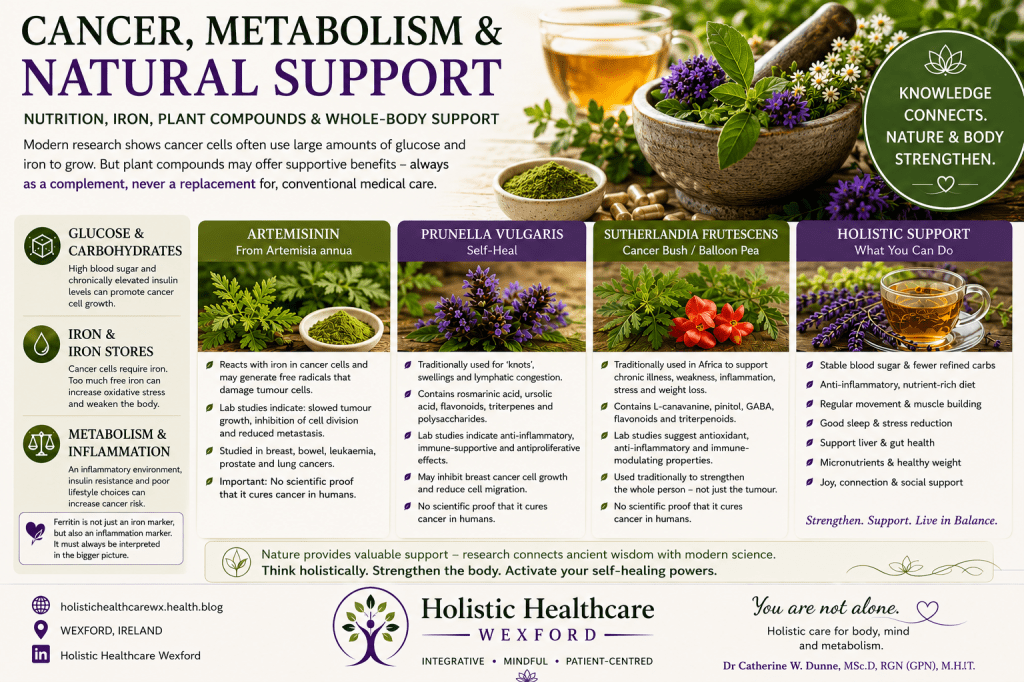
Cancer, Sugar, Carbohydrates and Iron – Why Metabolism is Receiving Greater Attention Today

Many people today are asking whether nutrition, metabolism, chronic inflammation and certain plant compounds may play a role in the development or growth of cancer. Topics such as high sugar intake, heavily processed carbohydrates, iron metabolism and medicinal plants are increasingly being discussed, both within modern research and integrative health approaches.

Science is showing more and more clearly that cancer is not solely a genetic disease, but may also be closely connected to metabolic processes, inflammation, hormonal changes and the overall health of the body.

At the same time, interest is growing in traditional medicinal plants such as Artemisinin (Artemisia annua), Prunella vulgaris and Sutherlandia frutescens, whose compounds have shown possible supportive properties in laboratory studies.

However, one important point remains:

This article is not intended as a cure claim or a replacement for medical treatment. Rather, it aims to bring together current scientific understanding, traditional plant knowledge and holistic health perspectives in a clear and understandable way.

Because sometimes health begins not only with the question:

“How do we fight disease?”

but also with:

“How do we strengthen the person?”

By Dr Catherine W. Dunne, MSc.D., RGN (GPN)
Holistic Healthcare Wexford | Co-founder, Aumvedas Academy

In recent years, researchers have become increasingly interested in why certain metabolic states may influence the growth of cancer cells.

Particular attention has been given to:

  • elevated blood glucose levels
  • diets high in processed carbohydrates
  • chronically raised insulin levels
  • changes in iron metabolism

It is important to understand that the human body requires both glucose and iron for survival. The brain, muscles, immune system and virtually every cell in the body depend upon them. Nevertheless, many studies suggest that cancer cells often “exploit” these systems more aggressively in order to grow rapidly.

The Relationship Between Cancer and Sugar

Many cancer cells consume significantly more glucose than normal cells. This phenomenon has been recognised in oncology for many years and is even the basis of modern PET scans, where radioactive glucose is used to identify metabolically active tumours.

One well-known concept related to this is the so-called Warburg effect, in which cancer cells often favour rapid sugar metabolism (glycolysis) even when oxygen is available.

This does not mean:

“Sugar automatically causes cancer”
or
“Cancer can simply be starved.”

Human metabolism is far more complex than that.

Even during very low-carbohydrate diets, the body continues to produce glucose because it is essential for vital functions.

What may matter more is the overall metabolic environment:

  • chronically elevated insulin levels
  • insulin resistance
  • obesity
  • visceral abdominal fat
  • inflammatory processes
  • lack of movement
  • chronic stress
  • highly processed foods

Particularly problematic are often:

  • refined sugars
  • heavily processed carbohydrates
  • constant snacking
  • sugary drinks
  • ultra-processed foods

Over time, these factors may contribute to chronic inflammation and hormonal imbalance.

Interestingly, chronic stress itself can raise blood glucose levels because cortisol stimulates glucose release from the liver. In other words, the body may remain in a prolonged “high-glucose state” even without excessive sugar intake.

Cancer and Iron – An Often Overlooked Connection

Iron also plays an important role in relation to cancer.

Iron is essential for:

  • cell division
  • oxygen transport
  • energy production
  • DNA synthesis
  • mitochondrial function

Because cancer cells divide rapidly, they often require large amounts of it.

Some tumour types even increase iron uptake into their cells. Researchers have therefore observed altered iron metabolism in several cancers, including breast, bowel and liver cancers.

However, too much free iron may also become problematic.

It can promote oxidative stress and generate free radicals capable of damaging cellular structures and DNA.

Particularly interesting is the fact that after menopause, iron levels naturally rise in many women because monthly blood loss stops. At the same time, inflammation, metabolic dysfunction and hormonal changes often increase.

This does not automatically indicate danger.

However, it helps explain why researchers are paying closer attention to:

  • ferritin levels
  • chronic inflammation
  • metabolic health
  • liver health
  • insulin resistance

Ferritin Is Not Just “Iron”

An important point:

Ferritin is often viewed simply as an iron marker. In reality, ferritin is also an inflammatory marker.

Elevated ferritin levels may occur in:

  • chronic inflammation
  • fatty liver disease
  • infections
  • alcohol burden
  • metabolic syndrome
  • autoimmune disease
  • cancer processes

This is why ferritin should always be interpreted within the wider clinical picture.

The Modern Perspective

Modern research increasingly views cancer as a metabolic disease as well as a genetic one.

This does not mean that sugar or iron alone “cause” cancer.

Rather, a chronically inflamed and metabolically stressed environment may support the growth of already-damaged cells.

For this reason, many integrative approaches today focus on:

  • stable blood sugar regulation
  • reducing heavily processed foods
  • regular movement
  • maintaining healthy muscle mass
  • good sleep
  • stress reduction
  • anti-inflammatory nutrition
  • supporting mitochondrial health

The goal is not fear —
but a better understanding of how deeply nutrition, metabolism, hormones and long-term health are interconnected.

Or more simply:

The body needs sugar and iron to survive.

But when metabolic systems become dysregulated, those same systems may also be exploited by cancer cells.

Possible Supportive Plant Compounds: Artemisinin and Prunella vulgaris

Alongside nutrition, metabolism and inflammation, researchers are increasingly interested in certain plant compounds that may potentially influence the growth or spread of cancer cells.

However, it is important to state clearly:

Many of these approaches remain within the realm of laboratory research, animal models or early experimental studies. They are not currently scientifically confirmed cancer cures.

Nevertheless, there are some interesting observations.

Artemisinin – Originally Known from Malaria Treatment

Artemisinin is derived from the plant Artemisia annua and first became known through malaria treatment.

What made Artemisinin particularly interesting in cancer research was its relationship with iron.

Cancer cells often contain elevated iron levels and increased iron metabolism. Artemisinin reacts with iron and may generate free radicals capable of damaging cancer cells more strongly than healthy cells.

This mechanism attracted significant scientific attention.

Laboratory studies have shown indications of:

  • slowed tumour growth
  • inhibition of cell division
  • promotion of apoptosis (programmed cell death)
  • possible reduction of metastatic activity

Research has included:

  • breast cancer
  • bowel cancer
  • leukaemias
  • prostate cancer
  • lung cancer

Artemisinin is particularly discussed today in relation to:

  • oxidative stress within cancer cells
  • mitochondrial changes
  • iron-dependent metabolic processes

Nevertheless:

Large-scale human clinical trials confirming Artemisinin as a cancer treatment are still lacking.

Therefore, it should never be viewed as a replacement for oncology care, but rather as a possible supportive research avenue within integrative approaches.

Prunella vulgaris – Self-Heal

Prunella vulgaris, also known as Self-Heal, has been traditionally used for centuries for inflammatory swellings, lymphatic congestion and “lumps.”

Modern studies suggest that certain plant compounds may possess possible anti-cancer properties.

These include:

  • rosmarinic acid
  • ursolic acid
  • flavonoids
  • triterpenes
  • polysaccharides

Laboratory findings have suggested:

  • inhibition of breast cancer cell growth
  • possible reduction in cell migration and metastasis
  • anti-inflammatory effects
  • immune-supportive actions
  • promotion of programmed tumour cell death

Interestingly, Prunella vulgaris was historically used long before modern medicine for “breast lumps” and glandular swellings.

Again, however, the evidence currently comes mainly from:

  • cell culture studies
  • animal models
  • early experimental research

There is currently no scientifically confirmed evidence that it cures cancer in humans.

Integrative Support Rather Than False Cure Claims

Modern integrative research is increasingly exploring how:

  • metabolism
  • inflammation
  • immune function
  • mitochondrial health
  • iron metabolism
  • nutrition
    and plant compounds

may interact together.

The focus is less on “miracle cures” and more on the question:

How can the body be supported in a way that is less inflammatory and less metabolically burdensome?

For this reason, many people now also seek support through:

  • anti-inflammatory nutrition
  • stable blood sugar balance
  • stress reduction
  • sleep optimisation
  • movement
  • holistic support
  • plant-based compounds

while conventional medical treatment continues to play a central role.

Because modern research continues to show one thing above all:

The human body is far more complex than simple headlines suggest.

Sutherlandia frutescens – The South African “Cancer Bush”

Another plant attracting increasing interest in integrative research is Sutherlandia frutescens.

Native to South Africa, it is traditionally known as:

  • Cancer Bush
  • Balloon Pea
  • Kankerbos

For centuries it has been used within traditional African herbal medicine to support:

  • chronic illness
  • exhaustion and weakness
  • inflammation
  • stress burden
  • weight loss and wasting
  • weakened immunity

Researchers became interested after laboratory studies suggested possible:

  • antiproliferative effects
  • antioxidant properties
  • immune-modulating actions
  • anti-inflammatory mechanisms

Investigated compounds include:

  • L-canavanine
  • pinitol
  • GABA
  • flavonoids
  • triterpenoids

Some experimental studies suggest that Sutherlandia frutescens may potentially influence the growth of certain cancer cells.

At the same time, the plant was traditionally viewed less as a “tumour destroyer” and more as a strengthening support herb during severe illness.

Many traditional healing systems followed this same philosophy:

Not only treating disease itself —
but supporting the whole person:

  • strength
  • appetite
  • sleep
  • stress regulation
  • immune function
  • overall resilience

Again, it is important to state clearly:

There is currently no scientifically confirmed evidence that Sutherlandia frutescens cures cancer in humans.

It should therefore never replace medical diagnosis or oncology treatment.

Nevertheless, modern research continues exploring how traditional medicinal plants may potentially:

  • modulate inflammation
  • influence oxidative stress
  • support immune function
  • alter metabolic processes within cancer cells

This connection between traditional plant wisdom and modern metabolic research is opening increasingly interesting questions within integrative medicine.

I hope you feel inspired. Look after your body, and it will keep you healthy.

Catherine

CWD | 08.May. 2026 | Ireland

Holistic Healthcare Wexford
Integrative · Mindful · Patient-Centred

About the Author

Dr Catherine W. Dunne MSc.D. is a Registered General Nurse with over 37 years of clinical experience in primary care in Ireland. Alongside her work in General Practice Nursing, she is the founder of Holistic Healthcare Wexford and co-founder of Aumvedas Academy.

With a background that bridges conventional medicine and holistic practice, Catherine has a particular interest in the area where patients are often told “everything is normal,” yet still feel unwell. Her work focuses on helping people understand what their body is communicating, especially in relation to energy, stress, metabolic function, and recovery.

Through a combination of clinical knowledge and holistic support, she works with individuals to restore balance, improve resilience, and support long-term wellbeing.

Based in Wexford, Ireland.

Disclaimer

This article is for informational and educational purposes only and is not intended as medical advice. It does not replace consultation with a qualified healthcare professional. Patients should always seek appropriate medical guidance regarding their individual health needs and before making changes to treatment or care.

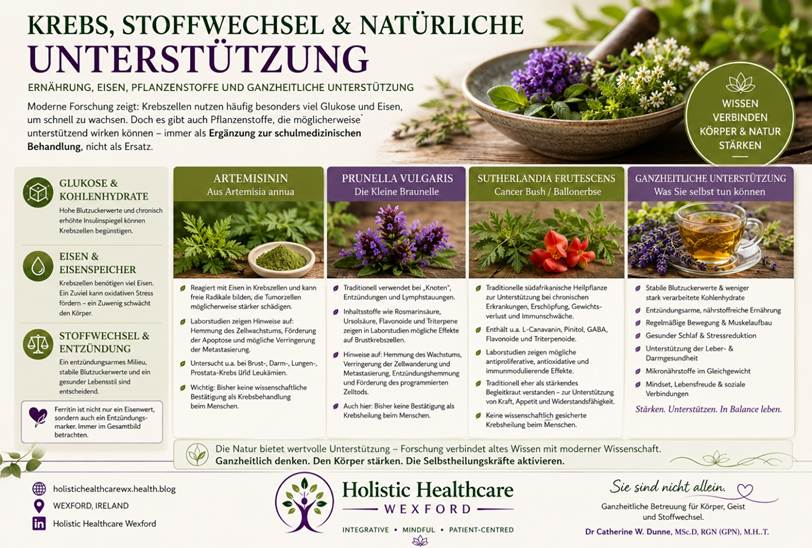
Krebs, Zucker, Kohlenhydrate und Eisen – warum der Stoffwechsel heute stärker beachtet wird

Viele Menschen stellen sich heute die Frage, ob Ernährung, Stoffwechsel, chronische Entzündungen und bestimmte Pflanzenstoffe eine Rolle bei der Entstehung oder dem Wachstum von Krebs spielen könnten. Besonders Themen wie hoher Zuckerkonsum, stark verarbeitete Kohlenhydrate, Eisenstoffwechsel und natürliche Heilpflanzen werden zunehmend diskutiert — sowohl in der modernen Forschung als auch innerhalb integrativer Gesundheitsansätze.

Tatsächlich zeigt die Wissenschaft immer deutlicher, dass Krebs nicht nur eine genetische Erkrankung ist, sondern auch eng mit Stoffwechselprozessen, Entzündungen, hormonellen Veränderungen und der allgemeinen Gesundheit des Körpers verbunden sein kann.

Gleichzeitig wächst das Interesse an traditionellen Heilpflanzen wie Artemisinin (Artemisia annua), Prunella vulgaris und Sutherlandia frutescens, deren Inhaltsstoffe in Laborstudien mögliche unterstützende Eigenschaften gezeigt haben.

Wichtig bleibt jedoch:
Dieser Artikel versteht sich nicht als Heilversprechen oder Ersatz für medizinische Behandlung. Vielmehr geht es darum, aktuelle wissenschaftliche Erkenntnisse, traditionelles Pflanzenwissen und ganzheitliche Gesundheitsansätze verständlich zusammenzuführen.

Denn manchmal beginnt Gesundheit nicht nur mit der Frage:
„Wie bekämpfen wir Krankheit?“
sondern auch mit:
„Wie stärken wir den Menschen?“

By Dr Catherine W. Dunne, MSc.D., RGN (GPN)
Holistic Healthcare Wexford | Co-founder, Aumvedas Academy

In den letzten Jahren interessieren sich Forschende zunehmend für die Frage, warum bestimmte Stoffwechselzustände das Wachstum von Krebszellen beeinflussen können. Besonders häufig diskutiert werden dabei hohe Blutzuckerwerte, stark kohlenhydratreiche Ernährung, chronisch erhöhte Insulinspiegel und Veränderungen im Eisenstoffwechsel.

Dabei ist wichtig zu verstehen:
Der menschliche Körper benötigt sowohl Glukose als auch Eisen zum Überleben. Gehirn, Muskeln, Immunsystem und nahezu jede Körperzelle sind darauf angewiesen. Dennoch zeigen viele Studien, dass Krebszellen diese Systeme oft besonders stark „ausnutzen“, um schneller zu wachsen.

Die Beziehung zwischen Krebs und Zucker

Viele Krebszellen verbrauchen deutlich mehr Glukose als normale Körperzellen. Dieses Phänomen wird in der Onkologie seit Langem beobachtet und ist sogar die Grundlage moderner PET-Scans, bei denen radioaktiv markierte Glukose verwendet wird, um stoffwechselaktive Tumore sichtbar zu machen.

Ein bekanntes Konzept hierzu ist der sogenannte „Warburg-Effekt“. Dabei bevorzugen Krebszellen häufig eine schnelle Zuckerverbrennung (Glykolyse), selbst wenn ausreichend Sauerstoff vorhanden wäre.

Das bedeutet jedoch nicht:
„Zucker verursacht automatisch Krebs“ oder „man kann Krebs einfach aushungern“.

So einfach ist der menschliche Stoffwechsel nicht.

Selbst bei sehr kohlenhydratarmer Ernährung produziert der Körper weiterhin Glukose, da sie für lebenswichtige Funktionen benötigt wird.

Wichtiger scheint vielmehr das gesamte Stoffwechselmilieu zu sein:

  • chronisch erhöhte Insulinwerte
  • Insulinresistenz
  • Übergewicht
  • viszerales Bauchfett
  • Entzündungsprozesse
  • Bewegungsmangel
  • dauerhafter Stress
  • hochverarbeitete Lebensmittel

Besonders problematisch sind häufig:

  • raffinierter Zucker
  • stark verarbeitete Kohlenhydrate
  • ständiges Snacking
  • zuckerreiche Getränke
  • ultra-verarbeitete Nahrung

Diese Faktoren können über Jahre hinweg Entzündungen und hormonelle Dysbalancen fördern.

Interessanterweise kann sogar chronischer Stress den Blutzucker erhöhen, da Cortisol die Glukosefreisetzung aus der Leber steigert. Der Körper kann also auch ohne großen Zuckerkonsum dauerhaft in einem „hohen Glukosezustand“ bleiben.

Krebs und Eisen – ein oft übersehener Zusammenhang

Auch Eisen spielt eine wichtige Rolle im Zusammenhang mit Krebs.

Eisen wird benötigt für:

  • Zellteilung
  • Sauerstofftransport
  • Energiegewinnung
  • DNA-Synthese
  • mitochondriale Funktionen

Da Krebszellen sich schnell teilen, benötigen sie oft große Mengen davon.

Einige Tumorarten erhöhen sogar gezielt die Aufnahme von Eisen in die Zellen. Forschende beobachten daher seit Jahren Veränderungen des Eisenstoffwechsels bei verschiedenen Krebsarten, darunter Brustkrebs, Darmkrebs und Leberkrebs.

Zu viel freies Eisen kann allerdings problematisch sein.
Es kann oxidativen Stress fördern und sogenannte freie Radikale bilden, welche Zellstrukturen und DNA schädigen können.

Besonders interessant ist:
Nach den Wechseljahren steigt der Eisenspiegel bei vielen Frauen natürlicherweise an, da die monatliche Blutung wegfällt. Gleichzeitig nehmen Entzündungen, Stoffwechselprobleme und hormonelle Veränderungen häufig zu.

Das bedeutet nicht automatisch Gefahr.
Es zeigt jedoch, warum Forschende heute genauer auf:

  • Ferritinwerte
  • chronische Entzündungen
  • Stoffwechselgesundheit
  • Lebergesundheit
  • Insulinresistenz

achten.

Ferritin ist nicht nur „Eisen“

Ein wichtiger Punkt:
Ferritin wird oft als reiner Eisenwert angesehen. Tatsächlich ist Ferritin aber auch ein Entzündungsmarker.

Erhöhte Ferritinwerte können unter anderem auftreten bei:

  • chronischen Entzündungen
  • Fettleber
  • Infektionen
  • Alkoholbelastung
  • Stoffwechselsyndrom
  • Autoimmunerkrankungen
  • Krebsprozessen

Deshalb muss Ferritin immer im Gesamtzusammenhang betrachtet werden.

Die moderne Sichtweise

Die heutige Forschung betrachtet Krebs zunehmend auch als Stoffwechselerkrankung — nicht nur als rein genetisches Problem.

Das bedeutet nicht, dass Zucker oder Eisen allein Krebs „verursachen“.
Vielmehr scheint ein chronisch entzündliches, stoffwechselbelastetes Umfeld das Wachstum bereits geschädigter Zellen begünstigen zu können.

Daher konzentrieren sich viele integrative Ansätze heute auf:

  • stabile Blutzuckerwerte
  • weniger stark verarbeitete Nahrung
  • ausreichend Bewegung
  • gesunde Muskelmasse
  • guten Schlaf
  • Stressreduktion
  • entzündungsarme Ernährung
  • Unterstützung der mitochondrialen Gesundheit

Nicht Angst ist das Ziel —
sondern ein besseres Verständnis dafür, wie eng Ernährung, Stoffwechsel, Hormone und langfristige Gesundheit miteinander verbunden sind.

Oder einfacher gesagt:

Der Körper braucht Zucker und Eisen zum Leben.
Doch wenn Stoffwechselprozesse aus dem Gleichgewicht geraten, können genau dieselben Systeme auch von Krebszellen genutzt werden.

Mögliche unterstützende Pflanzenstoffe: Artemisinin und Prunella vulgaris

Neben Ernährung, Stoffwechsel und Entzündungsprozessen interessieren sich Forschende zunehmend auch für bestimmte Pflanzenstoffe, die möglicherweise das Wachstum oder die Ausbreitung von Krebszellen beeinflussen könnten.

Wichtig ist hierbei jedoch:
Viele dieser Ansätze befinden sich noch im Bereich der Laborforschung, Tiermodelle oder frühen experimentellen Untersuchungen. Sie gelten derzeit nicht als wissenschaftlich bestätigte Heilmittel gegen Krebs.

Dennoch gibt es einige interessante Beobachtungen.

Artemisinin – ursprünglich aus der Malariamedizin bekannt

Artemisinin stammt aus der Pflanze Artemisia annua und wurde ursprünglich für die Behandlung von Malaria bekannt.

Besonders interessant für die Krebsforschung wurde Artemisinin durch seine Beziehung zu Eisen.

Krebszellen enthalten oft erhöhte Eisenmengen und besitzen einen gesteigerten Eisenstoffwechsel. Artemisinin reagiert auf Eisen und kann dabei sogenannte freie Radikale erzeugen, welche Krebszellen möglicherweise stärker schädigen als gesunde Zellen.

Genau dieser Mechanismus weckte das Interesse der Forschung.

Laborstudien zeigten bei verschiedenen Krebszelllinien Hinweise auf:

  • verlangsamtes Tumorwachstum
  • Hemmung der Zellteilung
  • Förderung der Apoptose (programmierter Zelltod)
  • mögliche Verringerung von Metastasierungsprozessen

Untersucht wurden unter anderem:

  • Brustkrebs
  • Darmkrebs
  • Leukämien
  • Prostatakrebs
  • Lungenkrebs

Besonders diskutiert wird Artemisinin heute im Zusammenhang mit:

  • oxidativem Stress in Krebszellen
  • mitochondrialen Veränderungen
  • eisenabhängigen Stoffwechselprozessen

Dennoch gilt:
Bis heute fehlen große klinische Humanstudien, welche Artemisinin eindeutig als Krebsbehandlung bestätigen würden.

Daher sollte es niemals als Ersatz für eine onkologische Therapie betrachtet werden, sondern höchstens als möglicher unterstützender Forschungsansatz innerhalb integrativer Konzepte.

Prunella vulgaris – die Kleine Braunelle

Auch Prunella vulgaris, im Deutschen als Kleine Braunelle oder Selbstheilungskraut bekannt, wird seit Jahrhunderten traditionell bei entzündlichen Schwellungen, Lymphstauungen und „Knoten“ verwendet.

Moderne Untersuchungen zeigen inzwischen, dass bestimmte Inhaltsstoffe der Pflanze möglicherweise krebshemmende Eigenschaften besitzen könnten.

Dazu gehören:

  • Rosmarinsäure
  • Ursolsäure
  • Flavonoide
  • Triterpene
  • Polysaccharide

In Laboruntersuchungen wurden unter anderem Hinweise gefunden auf:

  • Hemmung des Wachstums von Brustkrebszellen
  • mögliche Verringerung der Zellwanderung und Metastasierung
  • entzündungshemmende Wirkungen
  • Unterstützung immunologischer Prozesse
  • Förderung des programmierten Zelltods von Tumorzellen

Besonders interessant ist, dass Prunella vulgaris historisch bereits lange vor der modernen Medizin bei „Brustknoten“ und Drüsenschwellungen eingesetzt wurde.

Auch hier gilt jedoch klar:
Die bisherigen Erkenntnisse stammen überwiegend aus:

  • Zellkulturstudien
  • Tiermodellen
  • frühen experimentellen Untersuchungen

Eine wissenschaftlich gesicherte Krebsheilung beim Menschen ist daraus bisher nicht ableitbar.

Integrative Unterstützung statt falscher Heilversprechen

Die moderne integrative Forschung versucht zunehmend zu verstehen, wie:

  • Stoffwechsel,
  • Entzündungen,
  • Immunfunktion,
  • mitochondriale Gesundheit,
  • Eisenstoffwechsel,
  • Ernährung
    und pflanzliche Wirkstoffe

zusammenwirken könnten.

Dabei geht es weniger um „Wunderheilungen“, sondern vielmehr um die Frage:
Wie kann man den Körper möglichst wenig entzündungsfördernd und stoffwechselbelastend unterstützen?

Viele Menschen suchen heute deshalb ergänzend nach:

  • entzündungsarmer Ernährung
  • stabilen Blutzuckerwerten
  • Stressreduktion
  • Schlafoptimierung
  • Bewegung
  • naturheilkundlicher Unterstützung
  • pflanzlichen Begleitstoffen

während die schulmedizinische Behandlung weiterhin eine zentrale Rolle behält.

Denn selbst die modernste Forschung zeigt bisher vor allem eines:
Der menschliche Körper ist weit komplexer, als einfache Schlagzeilen vermuten lassen.

Sutherlandia frutescens – die südafrikanische „Cancer Bush“

Eine weitere Pflanze, die zunehmend Aufmerksamkeit in der integrativen Forschung erhält, ist Sutherlandia frutescens.

Sie stammt aus Südafrika und ist dort traditionell bekannt unter Namen wie:

  • Cancer Bush
  • Ballonerbse
  • Kankerbos

Seit Jahrhunderten wird sie in der traditionellen afrikanischen Pflanzenheilkunde verwendet zur Unterstützung bei:

  • chronischen Erkrankungen
  • Erschöpfung und Schwäche
  • Entzündungen
  • Stressbelastung
  • Gewichtsverlust und Auszehrung
  • geschwächtem Immunsystem

Besonders im Zusammenhang mit Krebs interessierte sich die Forschung für die Pflanze, nachdem Laboruntersuchungen Hinweise auf mögliche:

  • antiproliferative Wirkungen
  • antioxidative Eigenschaften
  • immunmodulierende Effekte
  • entzündungshemmende Mechanismen

zeigten.

Zu den untersuchten Inhaltsstoffen gehören:

  • L-Canavanin
  • Pinitol
  • GABA
  • Flavonoide
  • Triterpenoide

Einige experimentelle Studien deuten darauf hin, dass Sutherlandia frutescens möglicherweise das Wachstum bestimmter Krebszellen beeinflussen könnte. Gleichzeitig scheint die Pflanze traditionell weniger als „Tumorzerstörer“ verstanden worden zu sein, sondern vielmehr als stärkendes Begleitkraut während schwerer Erkrankungen.

Viele traditionelle Heilsysteme verfolgten genau diesen Ansatz:
Nicht nur die Krankheit selbst zu betrachten, sondern den gesamten Menschen zu unterstützen;
Kraft, Appetit, Schlaf, Stressregulation, Immunsystem und allgemeine Widerstandsfähigkeit.

Wichtig bleibt jedoch:
Bis heute existiert keine wissenschaftlich gesicherte Bestätigung, dass Sutherlandia frutescens Krebs beim Menschen heilen kann.

Deshalb sollte die Pflanze niemals als Ersatz für medizinische Diagnostik oder onkologische Behandlung angesehen werden.

Dennoch zeigt die moderne Forschung zunehmend Interesse daran, wie bestimmte traditionelle Heilpflanzen möglicherweise:

  • Entzündungsprozesse modulieren,
  • oxidativen Stress beeinflussen,
  • Immunfunktionen unterstützen
    und
  • Stoffwechselprozesse in Krebszellen verändern könnten.

Gerade diese Verbindung zwischen traditionellem Heilwissen und moderner Stoffwechselforschung eröffnet heute neue interessante Fragestellungen innerhalb der integrativen Medizin.

Ich hoffe, Sie fühlen sich inspiriert. Achten Sie auf Ihren Körper, und er wird sich um Ihre Gesundheit kümmern.
Catherine

CWD | 08. Mai. 2026 | Irland
Holistic Healthcare Wexford
Integrativ · Achtsam · Patientenzentriert

Über die Autorin

Dr. Catherine W. Dunne MSc.D. ist examinierte Krankenschwester (Registered General Nurse) mit über 37 Jahren klinischer Erfahrung in der primären Gesundheitsversorgung in Irland. Neben ihrer Tätigkeit in der Allgemeinmedizin ist sie Gründerin von Holistic Healthcare Wexford sowie Mitbegründerin der Aumvedas Academy.

Durch ihren Hintergrund, der konventionelle Medizin mit ganzheitlicher Praxis verbindet, interessiert sich Catherine besonders für jene Bereiche, in denen Patientinnen und Patienten oft hören:
„Alles ist normal“ … sich jedoch trotzdem nicht gesund fühlen.

Ihre Arbeit konzentriert sich darauf, Menschen dabei zu helfen zu verstehen, was ihr Körper mitteilen möchte; insbesondere im Zusammenhang mit Energie, Stress, Stoffwechsel, hormonellem Gleichgewicht und Regeneration.

Durch die Verbindung von klinischem Wissen und ganzheitlicher Unterstützung begleitet sie Menschen dabei, Balance wiederzufinden, ihre Widerstandskraft zu stärken und langfristiges Wohlbefinden zu fördern.

Ansässig in Wexford, Irland.

Haftungsausschluss

Dieser Artikel dient ausschließlich Informations- und Bildungszwecken und stellt keine medizinische Beratung dar. Er ersetzt nicht die Konsultation eines qualifizierten medizinischen Fachpersonals. Patientinnen und Patienten sollten stets angemessenen medizinischen Rat hinsichtlich ihrer individuellen gesundheitlichen Bedürfnisse einholen, bevor Änderungen an Behandlung oder Therapie vorgenommen werden.

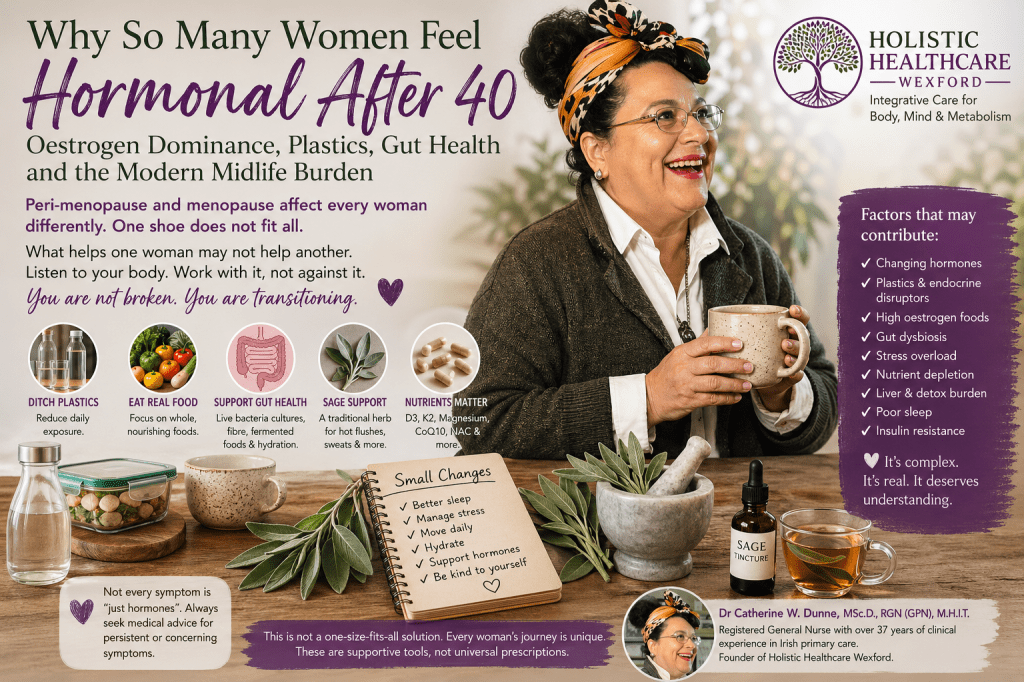
Why Women Feel Hormonal After 40 | Perimenopause, Oestrogen Dominance & Gut Health

You are tired, irritable, bloated, anxious, forgetful, not sleeping properly, gaining weight around the middle, and feeling unlike yourself.

Yet blood tests may come back “normal”.

For many women over 35, especially through peri-menopause, this is where frustration begins. They know something has changed, but often feel unheard or dismissed.

One common pattern behind these symptoms is what is often called Oestrogen Dominance.

This does not always mean high oestrogen on a blood test. More often, it means oestrogen is relatively stronger than progesterone, or the body is struggling to process and clear hormones efficiently.

By Dr Catherine W. Dunne, MSc.D., RGN (GPN)
Holistic Healthcare Wexford | Co-founder, Aumvedas Academy

What Does Oestrogen Dominance Mean?

Hormones work in balance, not isolation.

Oestrogen has many important roles. It supports bones, skin, mood, brain function, the cardiovascular system and reproductive health. But when it outweighs progesterone, symptoms can begin to appear.

This often happens during peri-menopause, when progesterone may fall sooner and faster than oestrogen.

The result can be a body that feels hormonally unsettled.

Common Signs Women Notice

  • heavier or irregular periods
  • breast tenderness
  • bloating and fluid retention
  • mood swings or irritability
  • anxiety or inner tension
  • poor sleep
  • headaches
  • brain fog
  • reduced stress tolerance
  • stubborn weight gain, especially midsection
  • feeling unlike yourself

And yes, many women simply know something is changing long before any test confirms it.

Walking into doorframes may also feature. We shall call that advanced hormonal navigation.

Many women enter their forties expecting a few hot flushes, some skipped periods, and perhaps the occasional mood swing. What they often get instead is a confusing collection of symptoms that seem to arrive all at once: bloating, weight gain around the middle, poor sleep, anxiety, breast tenderness, headaches, heavy or erratic periods, low mood, brain fog, irritability, and the unsettling feeling that they are somehow no longer themselves.

They go for blood tests. They are told everything is normal. They are advised to “manage stress” or accept that it is simply age.

Yet many women know in their bones that something has shifted.

One of the most common phrases used online to describe this experience is oestrogen dominance. It is not a formal medical diagnosis in the same way diabetes or hypothyroidism is, but it is often used to describe a very real pattern: when oestrogenic influence outweighs the balancing effects of progesterone, or when the body is carrying a broader hormonal burden that affects how a woman feels.

This does not always mean oestrogen is high on a blood test. More often, it means oestrogen is relatively stronger than progesterone, or the body is struggling to process, clear and regulate hormones efficiently. In other words, the issue may not be one hormone acting alone. It may be the whole terrain.

The Midlife Hormone Shift Begins Before Menopause

Many women assume menopause begins when periods stop. In reality, the turbulence often starts years earlier.

During perimenopause, ovulation becomes less predictable. Progesterone often declines first, while oestrogen may surge, dip or fluctuate wildly. This can create the classic picture associated with relative oestrogen excess: heavier periods, PMS-like symptoms, fluid retention, mood swings, poor sleep, breast tenderness, migraines and irritability.

When menopause arrives, periods cease, but symptoms do not necessarily vanish. Many women then face a new landscape of sleep disturbance, hot flushes, weight redistribution, vaginal dryness, anxiety, lowered resilience and fatigue.

Even post-menopause, hormones still matter. Fat tissue can continue to produce oestrogen through aromatase activity, lifestyle factors influence hormone metabolism, and environmental chemicals may continue to affect signalling pathways.

So no, the hormone story does not end at menopause. It simply changes chapter.

We Are the Plastic Container Generation

One part of the modern story that deserves far more attention is environmental exposure.

We became the convenience generation. We store food in plastic tubs, heat leftovers in plastic containers, drink water from bottles left in warm cars, wrap food in cling film, and begin our mornings with scalding tea or coffee in takeaway cups lined with plastic polymers and topped with plastic lids.

Many plastics contain compounds such as bisphenols, including BPA, BPS and BPF, as well as phthalates. These chemicals have been studied for their endocrine-disrupting potential, meaning they may interfere with natural hormone signalling.

The issue is not one takeaway coffee, one plastic lunchbox or one bottle of water. It is the small, repeated exposure over years.

Heat increases concern. Microwaving food in plastic, dishwashing worn containers repeatedly, pouring hot liquids into plastic-lined cups, or leaving bottles in sunlight may increase chemical migration. Even thermal till receipts have historically used bisphenol compounds, which can be absorbed through the skin.

This does not mean panic or perfectionism. It means awareness. Simple changes can reduce unnecessary load: use glass containers where possible, choose ceramic mugs, use stainless steel bottles, avoid heating food in plastic, and take a reusable cup for takeaway drinks.

Sometimes the body is not failing women. Sometimes the environment is working against them.

Food Quality Still Matters

Another overlooked area is the quality of the modern food supply.

One of the most significant concerns in discussions around oestrogen dominance is high-oestrogenic or hormonally disruptive food exposure. Commercially raised animals may be exposed to growth-promoting systems designed to increase size, speed of growth or milk production, depending on the country and farming system. Consumers are increasingly aware that what happens in the food chain does not magically stop at the plate.

Conventional produce may also carry residues from pesticides, herbicides and fungicides. Some of these compounds have been studied for endocrine-disrupting effects and may interfere with natural hormone activity, blood sugar regulation and metabolism. While residues may be present only in small amounts on individual fruits or vegetables, the concern is cumulative exposure over time.

This is why many people choose organic, local, pasture-raised or lower-intervention foods where feasible. Not out of fear, but because reducing the overall body burden makes sense.

Processed foods create a separate problem. Ultra-processed diets are often low in fibre, magnesium and protective plant compounds, while being high in refined sugars, additives, poor-quality fats and calorie density. This combination can worsen insulin resistance, inflammation and weight gain, all of which can influence hormone balance.

The real issue is rarely one “bad food”. It is the sum total of modern eating patterns.

Your Gut Helps Regulate Oestrogen

One of the most fascinating and under-discussed areas of women’s health is the gut-hormone connection.

The gut microbiome helps regulate circulating oestrogen through a group of bacterial genes often referred to as the estrobolome. These gut bacteria influence enzymes such as beta-glucuronidase, which are involved in whether oestrogens are eliminated from the body or reactivated and recirculated.

When gut flora is diverse and healthy, hormones are more likely to be processed and cleared efficiently. When gut balance is disturbed through repeated antibiotics, poor diet, chronic stress, constipation, alcohol excess, IBS-type patterns, dysbiosis or conditions such as SIBO, oestrogen recirculation may increase.

Many women with hormonal symptoms also report bloating, sluggish bowels, food sensitivities, recurrent thrush, IBS-type symptoms, and worsening PMS or peri-menopausal symptoms.

That is not coincidence.

Supporting gut health may include increasing fibre, vegetables, resistant starches, fermented foods where tolerated, adequate hydration and regular movement. In some cases, live bacteria cultures, often called probiotics, may help support gut flora and restore microbial balance, especially after antibiotics or periods of digestive disruption.

A healthy bowel habit is one of the least glamorous but most practical hormone tools available. Not glamorous, no. Useful? Absolutely.

Liver, Elimination and the Hormone Clearance Pathway

The liver plays a major role in processing hormones, including oestrogen. Once hormones have been metabolised by the liver, they still need to leave the body through bile and bowel elimination.

If a woman is constipated, inflamed, sleep deprived, nutrient depleted, drinking too much alcohol, under chronic stress or living on processed foods, the system can become less efficient. This does not mean the liver is “broken”. It means the workload is too high and the support is too low.

Good hormone clearance depends on the basics: enough protein, fibre, minerals, hydration, bowel regularity, sleep and reduced toxic load.

Simple, yes. Easy in modern life? Not always.

Where Sage Fits In

Sage is one of the old traditional women’s herbs that deserves renewed respect.

It has long been used for hot flushes, night sweats, excessive perspiration, digestive sluggishness, brain fog, and that overheated, unsettled feeling many women recognise during perimenopause and menopause.

Sage is not a magic hormone cure, and it should not be presented as something that “fixes” oestrogen dominance. Its value is more practical than that. It may support women through the symptoms of hormonal transition, especially where sweating, flushes and digestive heaviness are part of the picture.

The simplest form is sage tea. Use one teaspoon of dried sage leaf, or three to five fresh leaves, in a cup of hot water. Cover and steep for around ten minutes. One cup daily may offer gentle support, while up to two cups daily may be used during hot flush phases.

Sage tincture is another option, commonly taken as twenty to thirty drops in water once or twice daily, depending on product strength.

Regular culinary use also has value. Sage works beautifully in soups, roasted vegetables, stuffing, poultry dishes and savoury cooking. Small regular use often beats heroic one-off efforts.

Sage should be used cautiously in pregnancy, breastfeeding, seizure disorders, or where medications and health conditions require professional advice.

The Wild Yam Myth

For years, wild yam supplements were marketed as natural progesterone support.

Wild yam contains diosgenin, a plant compound used in laboratories as a starting material to manufacture steroid hormones. However, the human body does not naturally convert wild yam into progesterone. That conversion requires industrial processing.

So while some women may feel better using wild yam products, it should not be presented as equivalent to progesterone replacement.

Meanwhile, many women do not realise that in Ireland and Europe, regulated body-identical hormone therapies such as oestradiol and micronised progesterone are already available through licensed medical care and are generally preferred by professional menopause bodies over unregulated compounded alternatives.

That does not mean every woman needs HRT. It means women deserve accurate information rather than marketing fog.

Nutrients That Matter More Than Many Realise

Hormones do not work in isolation. They depend on healthy cells, nervous system balance, mineral sufficiency, mitochondrial energy and sleep.

This is why some women feel dramatically better when foundations are corrected.

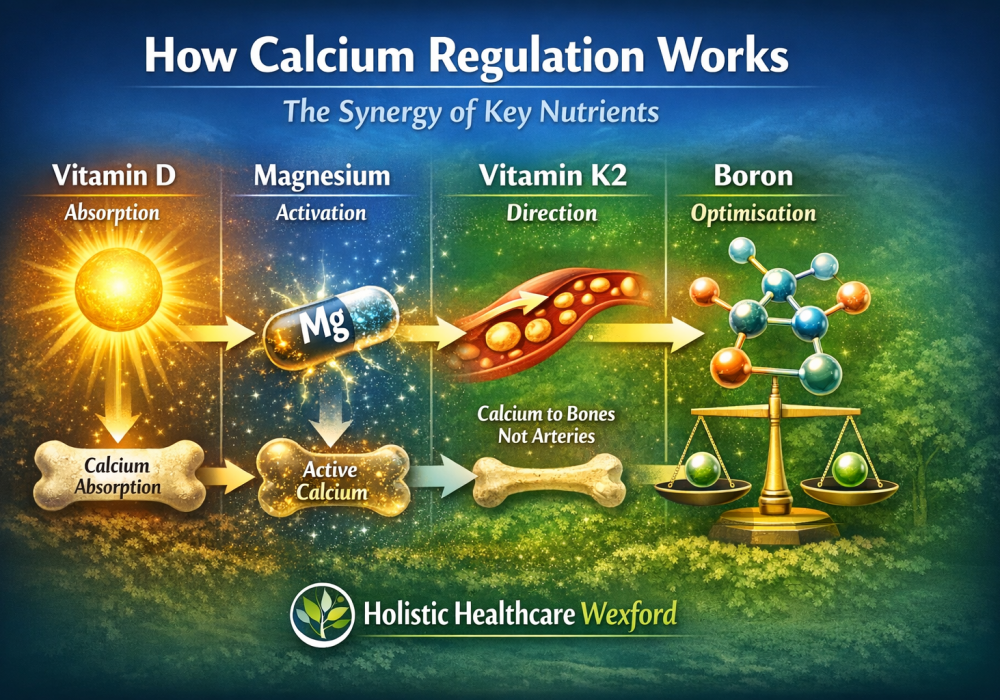
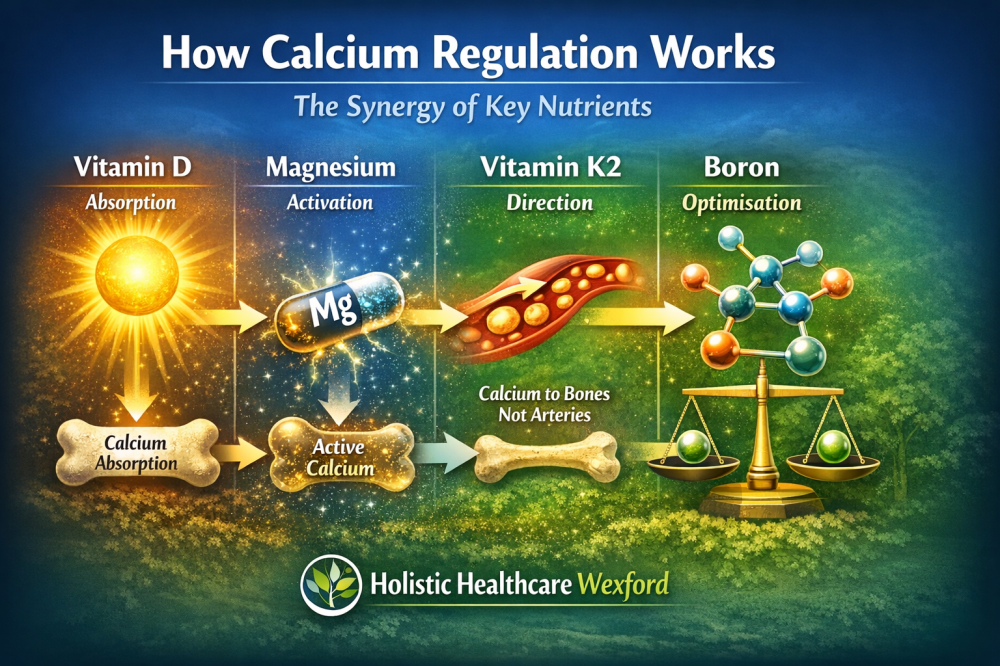
Vitamin D3 is particularly relevant in Ireland, where low sunlight exposure is common. It functions more like a hormone messenger than a simple vitamin and influences mood, immunity and bone health.

Vitamin K2 is often paired with D3 to support healthy calcium handling.

Magnesium is one of the most important minerals for midlife women. It supports sleep, nervous system calm, muscle relaxation, blood sugar balance, vitamin D metabolism and stress resilience.

CoQ10 supports mitochondrial energy production and may be especially relevant in fatigue states, ageing and for women using statins.

NAC, or N-acetyl cysteine, supports glutathione pathways and antioxidant defence and is often discussed in relation to inflammation, metabolic health and resilience.

These are not magic pills. They are part of restoring the terrain in which hormones must function.

What Women Need Most

Many women do not need another lecture telling them to “just relax”.

They need a proper conversation that recognises the complexity of modern midlife health.

They may be dealing with changing hormones, sleep debt, stress overload, mineral depletion, low vitamin D, insulin resistance, environmental chemical burden, gut imbalance, caring responsibilities and years of putting everyone else first.

That is not a minor issue. That is a full-body systems load.

And yes, walking into doorframes, forgetting why you entered a room and losing your words mid-sentence may also feature. We shall call that advanced hormonal navigation.

What Can Help Practically?

The answer is rarely one tablet, one test or one buzzword. It is usually a return to fundamentals.

Eat enough protein. Build meals around real food. Increase fibre gradually. Support bowel regularity. Reduce plastic exposure where possible. Stop heating food in plastic. Choose better-quality food where feasible. Move daily. Strength train if able. Prioritise sleep. Correct nutrient deficiencies. Support gut flora. Reduce alcohol. Use herbs wisely. Seek medical support when symptoms are significant.

And most importantly, listen to the body before it has to shout.

One Size Does Not Fit All

It is also important to say this clearly: no two women experience perimenopause, menopause or post-menopause in exactly the same way.

One woman may struggle mainly with sleep and anxiety. Another may have heavy bleeding and migraines. Another may have hot flushes, joint aches, weight gain, vaginal dryness, low mood, or no major symptoms at all.

This is why the suggestions in this article should not be treated as a “one-for-all” prescription. They are general educational supports, not a personalised treatment plan. What helps one woman may not suit another, especially where medications, medical history, hormone-sensitive conditions, thyroid issues, diabetes, mental health concerns or other factors are involved.

Women deserve individualised care, not a conveyor-belt approach. Midlife health is not a template. It is a conversation.

Important Reality Check

Not every symptom in midlife is “just hormones”.

Persistent heavy bleeding, severe pain, sudden changes, unexplained weight loss, profound fatigue, depression, palpitations, post-menopausal bleeding or concerning symptoms deserve proper medical review.

Women should not be dismissed, but neither should everything be blamed on hormones without careful assessment.

Final Thought

Perimenopause and menopause do not create weakness. They reveal where the body has been carrying strain for years.

When women understand that, everything changes.

The body is not being dramatic. It is communicating.

Sometimes healing begins not with being told that everything is normal, but with finally being understood.

I hope you feel inspired. Look after your body, and it will keep you healthy.

Catherine

CWD | 25 April 2026 | Ireland

Holistic Healthcare Wexford
Integrative · Mindful · Patient-Centred

About the Author

Dr Catherine W. Dunne MSc.D. is a Registered General Nurse with over 37 years of clinical experience in primary care in Ireland. Alongside her work in General Practice Nursing, she is the founder of Holistic Healthcare Wexford and co-founder of Aumvedas Academy.

With a background that bridges conventional medicine and holistic practice, Catherine has a particular interest in the area where patients are often told “everything is normal,” yet still feel unwell. Her work focuses on helping people understand what their body is communicating, especially in relation to energy, stress, metabolic function, and recovery.

Through a combination of clinical knowledge and holistic support, she works with individuals to restore balance, improve resilience, and support long-term wellbeing.

Based in Wexford, Ireland.

Disclaimer

This article is for informational and educational purposes only and is not intended as medical advice. It does not replace consultation with a qualified healthcare professional. Patients should always seek appropriate medical guidance regarding their individual health needs and before making changes to treatment or care.

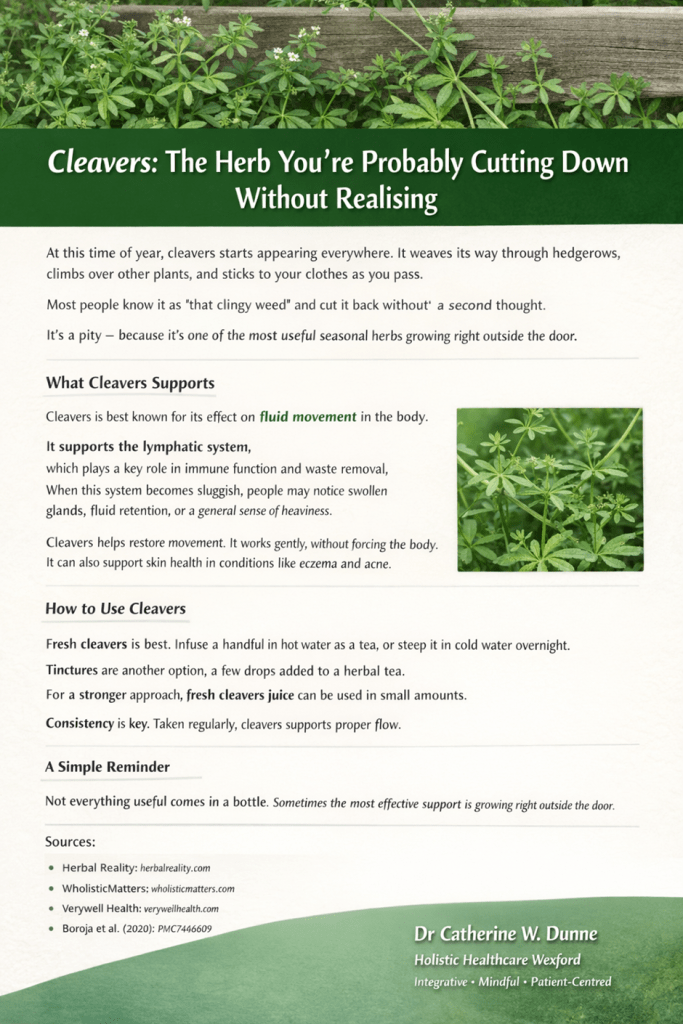
Cleavers: The Herb You’re Probably Cutting Down Without Realising

By Dr Catherine W. Dunne, MSc.D., RGN (GPN)
Holistic Healthcare Wexford | Co-founder, Aumvedas Academy

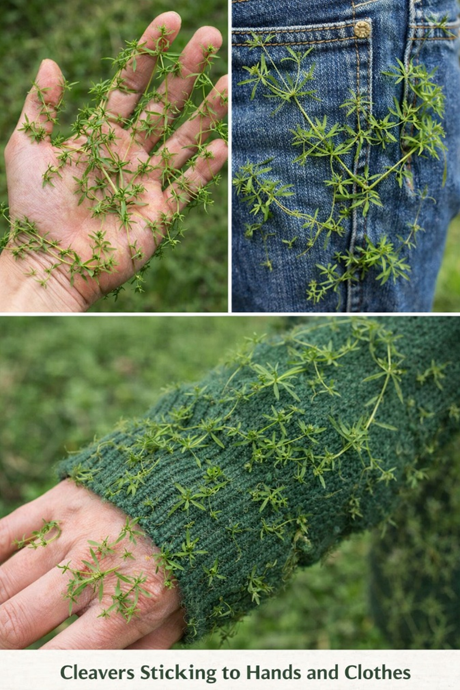
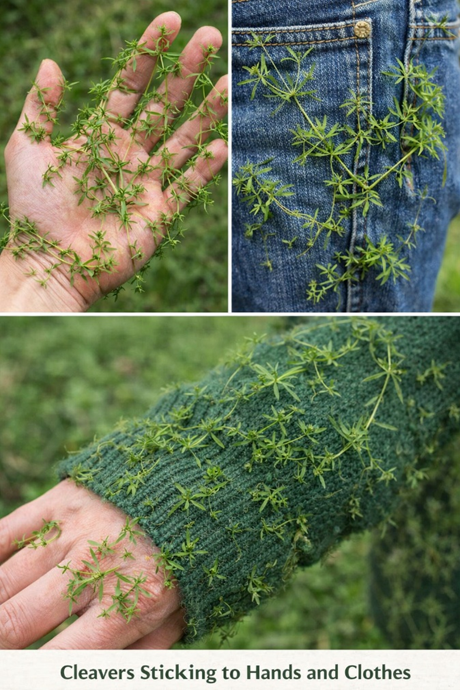
At this time of year, cleavers starts appearing everywhere. It weaves its way through hedgerows, climbs over other plants, and sticks to your clothes as you pass.

Most people know it as “that clingy weed” and cut it back without a second thought.

It’s a pity – because it’s one of the most useful seasonal herbs growing right outside the door.

Cleavers (Galium aparine) has a long history of traditional use, particularly in supporting the lymphatic and urinary systems. While modern research is still developing, there is enough evidence, combined with long-standing herbal practice, to show it has a valuable role when used correctly.

What Cleavers Supports

Cleavers is best known for its effect on fluid movement in the body.

It supports the lymphatic system, which plays a key role in immune function and waste removal. When this system becomes sluggish, people may notice swollen glands, fluid retention, or a general sense of heaviness.

Cleavers helps restore movement. It works gently, without forcing the body, making it suitable for ongoing use over a period of time.

There is also a clear link between lymphatic congestion and skin health. Conditions such as eczema, acne, and psoriasis can sometimes reflect what is happening internally. Supporting lymphatic flow may help improve these from the inside out.

In addition, cleavers has mild diuretic properties, helping the kidneys process and eliminate excess fluid. It is also recognised for its anti-inflammatory and antioxidant compounds, which contribute to its overall supportive role.

How to Use Cleavers

Fresh cleavers is always the best option when available.

A simple way to use it is as a tea. A handful of fresh herb can be infused in hot water and taken once or twice daily. It can also be prepared as a cold infusion, which preserves some of its more delicate constituents and is particularly suitable in warmer or more inflammatory conditions.

Cleavers can also be taken as a tincture. A few drops added to a warm herbal tea such as nettle or red clover is an easy and practical way to take it.

For those who prefer a stronger approach, fresh cleavers juice has traditionally been used in small amounts.

As with any herb, consistency matters more than intensity. Taken regularly over time, cleavers supports the body in restoring proper flow.

Cleavers Benefits:

Strong, consistent evidence:

  • Lymphatic support
  • Diuretic action
  • Skin link
  • Anti-inflammatory properties

Emerging / suggestive:

  • Immune modulation

A Simple Reminder:

Not everything useful comes in a bottle.

Sometimes the most effective support is already growing nearby – unnoticed and often removed before it’s ever given a chance.

Cleavers is one of those plants.

Sources:

Herbal Reality. Cleavers (Galium aparine) Monograph
https://www.herbalreality.com/herb/cleavers/

WholisticMatters. Cleavers Herbal Monograph
https://wholisticmatters.com/herb-detail/cleavers/

Verywell Health. Cleavers: Benefits and Uses
https://www.verywellhealth.com/cleavers-health-benefits-5084341

Boroja et al. (2020). Evaluation of antioxidant and immunomodulatory activity of Galium aparine
https://pmc.ncbi.nlm.nih.gov/articles/PMC7464609/

I hope you feel inspired. Look after your body, and it will keep you healthy.

Catherine

CWD 11 April 2026/Ireland

Holistic Healthcare Wexford
Integrative · Mindful · Patient-Centred

About the Author

Dr Catherine W. Dunne is a Registered General Nurse with over 37 years of clinical experience in primary care in Ireland. Alongside her work in General Practice Nursing, she is the founder of Holistic Healthcare Wexford and co-founder of Aumvedas Academy.

With a background that bridges conventional medicine and holistic practice, Catherine has a particular interest in the area where patients are often told “everything is normal,” yet still feel unwell. Her work focuses on helping people understand what their body is communicating, especially in relation to energy, stress, metabolic function, and recovery.

Through a combination of clinical knowledge and holistic support, she works with individuals to restore balance, improve resilience, and support long-term wellbeing.

Based in Wexford, Ireland.

Disclaimer

This article is for informational and educational purposes only and is not intended as medical advice. It does not replace consultation with a qualified healthcare professional. Patients should always seek appropriate medical guidance regarding their individual health needs and before making changes to treatment or care.
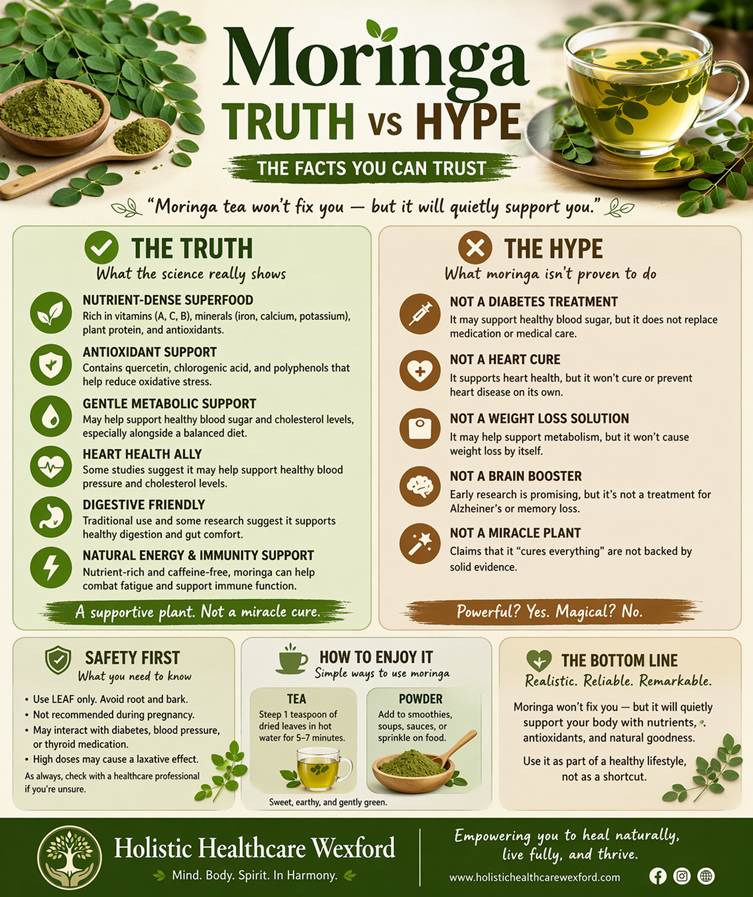
Moringa: Truth vs Hype

“Moringa tea won’t fix you – but it will quietly support you.”

Moringa has been called everything from a “miracle tree” to a “superfood powerhouse.”
And like most things that get that level of attention, the truth sits somewhere in the middle.

So let’s strip it back – no hype, no dismissal – just what actually matters.

By Dr Catherine W. Dunne, MSc.D., RGN (GPN)
Holistic Healthcare Wexford | Co-founder, Aumvedas Academy

Let us look at what generalised information is given to us, when we see their ads flashing past us on Social Media Posts:

Moringa oleifera is a plant with numerous health benefits that have withstood the test of time. The leaves have been utilized as food medicine for thousands of years. (There are, however, side-effects with the root and the bark (listed below), so avoid them.)

Moringa leaves and flowers were first discovered around 2,000 BC in northern India where traditional physicians quickly became aware of the therapeutic value. As a result of the leave’s high levels of valuable nutrients, moringa was diligently used by members of royal families and other aristocrats.

Moringa, the “Miracle Tree” contains over 92 Nutritional Values – all in perfect balance!
Vitamins:
A (Alpha and Beta-Carotene), A B-Complex, C, D, E, K, Folate, Biotin, and many more.

Minerals:
Calcium, Chloride, Chromium, Copper, Fluorine, Iron, Manganese, Magnesium, Molybdenum, Phosphorus, Potassium, Sodium, Selenium, Sulphur, Zinc.

All 18 Amino Acids and many other beneficial nutrients, like Chlorophyll, Carotenoids, Flavonoids, Omega (3,6,9) Oils, Plant Sterols, Polyphenols, and still more.

While this sounds impressive, the presence of nutrients does not automatically translate into a therapeutic effect in the body.

Multiple studies show consuming moringa can improve blood sugar response. This is likely, at least in part, due to its fibre and protein content. This nutritional profile helps lower and level out blood sugar spikes. And balanced blood sugar is crucial for hormonal health, a healthy weight, and energy levels.

Antibacterial properties:
This plant produces substances to protect itself from bacteria in its environment. We receive these same antibacterial properties when we eat or apply it topically. In fact, in a 2011 study, researchers discovered that moringa extract inhibits the growth of S. aureus, V. parahaemolyticus, E. faecalis, and A. caviae.

Speeds healing:
Traditionally, many use moringa as a poultice to speed wound healing. We now have research to support that: Applying moringa to wounds can enhance wound healing. Moringa encourages blood clotting at the site of a wound. This shortens the time it takes to repair damage and speeds wound healing time.

Facilitates sleep:
As a protein-rich food, moringa packs an assortment of amino acids, some of which (most notably tryptophan) are the backbone of sleep-inducing hormones, like melatonin, priming the body for improved and more restful sleep.

Lowers cholesterol:
Moringa may also lower cholesterol, thanks to high levels of fibre and plant sterols. In a rabbit study, it lowered cholesterol and reduced plaque in the arteries as effectively as medication, without the side-effects.

Reduces severity of asthma:
In one of the few human clinical trials on the plant, adults with asthma took 3 grams of moringa twice daily (added to food) for three weeks. Moringa not only reduced asthma symptoms, but also reduced the severity of asthma attacks.

Reduces inflammation:
As with all plant-based foods, a number of studies show moringa contains phytochemicals that act as anti-inflammatories. Because inflammation is at the root of many diseases, the plant may help protect the body from long-term issues like arthritis, Crohn’s disease, and even chronic pain. (https://pmc.ncbi.nlm.nih.gov/articles/PMC9916933/)

This PubMed study states: “While the entire tree has antitumor activity, the sex hormone-related property is attributable to its ROOT, folk medicine use has also proven.” (I hear the root has been used as an abortifacent in India).
“This plant has been studied in relation to diabetes and thyroid function.” (https://pmc.ncbi.nlm.nih.gov/articles/PMC12003216/)

Moringa: Truth vs Hype

What Moringa Actually Is

Moringa (Moringa oleifera) is a leafy plant traditionally used as both food and medicine, particularly in parts of India and Africa.

The leaves are the part most commonly used and importantly, the safest.

They contain:

  • Plant protein
  • Minerals like calcium, iron, and magnesium
  • Vitamins (especially beta-carotene and vitamin C)
  • Antioxidants such as quercetin and chlorogenic acid

👉 In simple terms:
It’s a very nutrient-dense green.

Where the Hype Comes From

You’ll often see claims like:

  • lowers blood sugar
  • reduces cholesterol
  • boosts immunity
  • aids weight loss
  • supports brain health

Now, here’s the important part:

👉 Most of these claims come from:

  • small studies
  • animal research
  • or early-stage trials

That doesn’t make them false, but it does mean they are not strong enough to stand as treatments.

What Moringa Can Genuinely Do

When you remove the exaggeration, moringa sits in a very useful place:

1. Nutritional Support

It can help in:

  • fatigue
  • recovery
  • low nutrient intake

Think of it as:
👉 “filling in the gaps” rather than correcting disease

2. Antioxidant Support

Its plant compounds help:

  • reduce oxidative stress
  • support the body’s natural repair processes

Not dramatic — but quietly helpful over time.

3. Gentle Metabolic Support

There is some evidence it may:

  • support blood sugar balance
  • assist lipid (cholesterol) profiles

But:
👉 this is supportive, not therapeutic

What It Does NOT Do

Let’s be clear — because this is where people get misled.

Moringa does not:

  • treat diabetes
  • replace cholesterol medication
  • cause weight loss
  • “boost” immunity in any direct way

If something claims to do all of the above…

👉 it’s being oversold.

Who It May Suit

Moringa tea or powder can be useful for:

  • people feeling run down or depleted
  • those recovering from illness
  • general nutritional support
  • mild inflammatory states

It fits best as part of:
👉 a wider approach — not a standalone solution

Safety – What You Need to Know

  • Use leaf only (avoid root and bark)
  • Avoid in pregnancy as a precaution
  • Be mindful if taking:
    • diabetes medication
    • blood pressure medication
    • thyroid medication

As always:
👉 more is not better

How to Use It

Simple and effective:

  • Tea:
    1 teaspoon dried leaf
    Steep 5–7 minutes
  • Powder:
    Add to smoothies, soups, or food

👉 Consistency matters more than dose.

Final Thought

Moringa doesn’t need exaggeration.

It’s not a miracle.
It’s not a cure.

But it is:

👉 a steady, supportive plant that earns its place quietly

And in a world full of noise…

that’s often exactly what the body needs.

I hope you feel inspired. Look after your body, and it will keep you healthy.

Catherine

CWD 11 April 2026/Ireland

Holistic Healthcare Wexford
Integrative · Mindful · Patient-Centred

About the Author

Dr Catherine W. Dunne is a Registered General Nurse with over 37 years of clinical experience in primary care in Ireland. Alongside her work in General Practice Nursing, she is the founder of Holistic Healthcare Wexford and co-founder of Aumvedas Academy.

With a background that bridges conventional medicine and holistic practice, Catherine has a particular interest in the area where patients are often told “everything is normal,” yet still feel unwell. Her work focuses on helping people understand what their body is communicating, especially in relation to energy, stress, metabolic function, and recovery.

Through a combination of clinical knowledge and holistic support, she works with individuals to restore balance, improve resilience, and support long-term wellbeing.

Based in Wexford, Ireland.

Disclaimer

This article is for informational and educational purposes only and is not intended as medical advice. It does not replace consultation with a qualified healthcare professional. Patients should always seek appropriate medical guidance regarding their individual health needs and before making changes to treatment or care.

Stinging Nettle in Spring

Simple. Powerful. Right on your doorstep.

By Dr Catherine W. Dunne, MSc.D., RGN (GPN), M.H.I.T.
Holistic Healthcare Wexford

There’s a short window in spring when stinging nettle is at its best.

The young shoots are tender, vibrant, and full of life.
They haven’t toughened yet, and interestingly, they’re far less “stingy” to handle when picked correctly.

This is when nettle shifts from being a nuisance in the garden…
to one of the most useful plants you can bring into your daily routine.

Why Spring Nettles Are Different

Young nettle leaves are rich in:

  • Natural enzymes
  • Vitamin C
  • Iron
  • Magnesium
  • Calcium
  • Chlorophyll
  • Plant compounds that help reduce oxidative stress

At this stage, the plant is in active growth.
Everything is moving, building, and regenerating.

And that’s exactly what it offers the body.

WHAT NETTLE TEA SUPPORTS

A simple cup of nettle tea, taken regularly, can do far more than most people expect.
It works quietly in the background, supporting the body where it needs it most.

Antioxidant support

Nettle helps reduce free radical activity in the body.

This matters more than people realise. Oxidative stress is linked to fatigue, inflammation, skin issues, and slower recovery.

A daily nettle tea is a quiet way of supporting the body at that level.

Support for heavy periods (young girls & women)

This is one of the old uses and still one of the most relevant.

Nettle:

  • Supports iron levels
  • Helps maintain energy
  • Provides minerals needed during blood loss

Nettle provides natural support for iron levels, helping maintain energy during heavier menstrual cycles.
It also supplies key minerals the body draws on during blood loss.

Taken as a tea, it offers gentle support without complication.

Skin support – especially teenagers

When skin is flaring, spots, congestion, breakouts, the body is often:

  • Under pressure
  • Slightly inflamed
  • Not clearing waste efficiently

The body often reflects internal imbalance rather than just surface issues.

Nettle supports the body by helping reduce inflammatory load, improving nutrient availability, and encouraging natural internal “clearing.”

It’s not a quick fix, but taken daily and over time, it brings a steadiness the skin responds well in a noticeable way, too.

Bladder and urinary support

Even as a simple tea, nettle supports normal kidney and urinary function.

It gently encourages fluid movement through the body without being harsh or depleting.
This makes it particularly useful when the system feels sluggish or under strain.

It’s not harsh.
It doesn’t deplete.

It supports the body in doing what it’s meant to do anyway.

How to Use It

Nettle doesn’t need complicated preparation.
In fact, its strength lies in its simplicity.

A teaspoon or two of dried nettle steeped in hot water for 10–15 minutes is enough to create a mineral-rich infusion.

Taken once or twice daily, it becomes a steady support rather than a quick intervention.

Fresh young nettle in spring can also be used in soups or lightly steamed, offering the same benefits in a more food-based form.

With nettle, consistency matters far more than quantity.

RECAP:

✔️ Fresh nettle (spring)

  • Pick young tops (gloves recommended)
  • Use in soups, broths, or lightly steamed
  • Can also be used fresh for tea

✔️ Tea

  • 1–2 teaspoons dried nettle per cup
  • Steep 10–15 minutes
  • Drink 1–3 cups daily

Consistency matters more than quantity.

A few practical notes

  • Avoid picking near roadsides or sprayed areas
  • If on diuretics or blood pressure medication, just be mindful
  • Pick young leaves in spring, when the plant is at its most vibrant
  • Avoid roadside or sprayed areas
  • Use gloves when harvesting fresh nettle
  • In most cases, nettle as a tea is safe and well tolerated

Final Thought

Nettle isn’t exotic.
It’s not expensive.
It doesn’t come in a glossy package.

And yet, every spring, it shows up offering exactly what the body often needs:

👉 nourishment
👉 support
👉 balance

Sometimes the simplest plants are the ones worth paying attention to.

I hope you feel inspired. Look after your body, and it will keep you healthy.

Catherine

CWD 03 April 2026/Ireland

Holistic Healthcare Wexford
Integrative · Mindful · Patient-Centred

About the Author

Dr Catherine W. Dunne is a Registered General Nurse with over 37 years of clinical experience in primary care in Ireland. Alongside her work in General Practice Nursing, she is the founder of Holistic Healthcare Wexford and co-founder of Aumvedas Academy.

With a background that bridges conventional medicine and holistic practice, Catherine has a particular interest in the area where patients are often told “everything is normal,” yet still feel unwell. Her work focuses on helping people understand what their body is communicating, especially in relation to energy, stress, metabolic function, and recovery.

Through a combination of clinical knowledge and holistic support, she works with individuals to restore balance, improve resilience, and support long-term wellbeing.

Based in Wexford, Ireland.

Disclaimer
The information provided in this article is for general educational purposes only and is not intended as medical advice, diagnosis, or treatment. While every effort is made to ensure accuracy, individual health needs can vary. Always consult your GP or a qualified healthcare professional before making changes to your health routine, especially if you have an existing condition, are taking medication, or are pregnant.

The Gap in Care – How Mindfulness, Ayurveda, and patient behaviour are reshaping healthcare without permission

By Dr Catherine W. Dunne, MSc.D., RGN (GPN), M.H.I.T.
Holistic Healthcare Wexford | Co-founder, Aumvedas Academy

In everyday clinical practice, there is a quiet shift happening.

Patients are no longer relying solely on conventional medical care. Alongside prescribed treatments, many are turning to mindfulness, herbal medicine, traditional systems such as Ayurveda, and other complementary approaches to support their health.

What is striking is not that this is happening but that it is often happening without discussion.

Patients frequently do not disclose these choices. Not because they are careless, but because they anticipate dismissal. Over time, this has created a subtle but important gap in care, one where clinical oversight is absent, not by design, but by disconnect.

Patients Are Already There

This shift is not theoretical.

It is visible in daily practice:

  • Patients using breathing techniques to manage anxiety
  • Individuals exploring herbal supports alongside prescribed medications
  • People adopting dietary patterns based on traditional systems
  • A growing reliance on self-guided health approaches

Whether acknowledged or not, this is now part of modern healthcare behaviour.

The question is no longer if patients are engaging with these approaches, but whether healthcare is willing to recognise it.

Mindfulness: A Practical Clinical Tool

Mindfulness has moved beyond the realm of “wellness” and into something far more practical.

At its core, it supports regulation of the nervous system.

In clinical terms, this translates to:

  • Reduced sympathetic overdrive
  • Improved vagal tone
  • Better emotional regulation
  • Support in chronic stress, pain, and fatigue

For many patients, it is not an abstract concept. It is a tool that helps them cope, function, and stabilise.

And as one colleague recently put it: ‘sometimes it is the very thing that keeps a person steady in the middle of overwhelming pressure.’

Ayurveda and Observational Medicine

Long before laboratory diagnostics, systems such as Ayurveda developed structured ways of understanding human health.

These systems observed:

  • Individual constitution and variability
  • Digestive strength and metabolic patterns
  • The impact of routine, environment, and rhythm

While the language differs from modern medicine, the underlying principle is familiar:

People respond differently.

In clinical practice, we see this every day; variability in response to medication, recovery time, tolerance, and resilience.

Ancient systems simply approached this from a different starting point.

Where Metaphysics Meets Physiology

There is also a layer of health that is harder to measure, but impossible to ignore.

Thought patterns influence stress responses.
Beliefs shape behaviours.
Emotional states affect physiology.

We see this reflected in:

  • Chronic stress conditions
  • Sleep disturbance
  • Immune function
  • Recovery outcomes

We may not yet quantify every aspect of this, but its impact is visible in patient presentation and progression.

Ignoring it does not make it irrelevant.

The Irish Context: A Growing Divide

In Ireland, there remains a cautious, at times resistant, stance toward complementary approaches within formal healthcare structures.

Meanwhile, patients are moving in a different direction.

Patients are seeking:

  • Holistic support
  • Preventative approaches
  • Greater involvement in their own care

In contrast, other healthcare systems, such as in parts of Europe, have begun integrating complementary medicine into training and practice.

This creates an uncomfortable reality:

Patients are moving forward.
Healthcare policy, in many cases, is standing still.

The Role of the Practitioner

This is not about replacing conventional medicine.

It is about acknowledging what is already happening and responding responsibly.

The role of the practitioner is to:

  • Create a space where patients feel safe to disclose
  • Understand potential interactions and risks
  • Offer grounded, evidence-informed guidance
  • Support without dismissing

Because when communication is absent, risk increases.

And when patients feel heard, care improves.

Closing Reflection

Patients are not waiting for permission to explore these approaches, they are already doing so.

The real question is whether healthcare chooses to ignore this shift, or to engage with it in a way that is safe, informed, and grounded in practice.

I hope you feel inspired. Look after your body, and it will keep you healthy.

Catherine

CWD 03 April 2026/Ireland

About the Author

Dr Catherine W. Dunne, MSc.D., RGN (GPN), M.H.I.T., is a Registered General Nurse with over 37 years of clinical experience in primary care in Ireland. Alongside her work in General Practice Nursing, she is the founder of Holistic Healthcare Wexford and co-founder of Aumvedas Academy.

With a background that bridges conventional medicine and holistic practice, Catherine has a particular interest in the area where patients are often told “everything is normal,” yet still feel unwell. Her work focuses on chronic disease management, metabolic health, and integrative approaches to patient care, combining clinical knowledge with evidence-informed complementary therapies.

She works with individuals to better understand what their body is communicating, particularly in relation to stress, energy, recovery, and overall resilience, supporting long-term wellbeing through a grounded, patient-centred approach.

Based in Wexford, Ireland.

Disclaimer

This article is for informational and educational purposes only and is not intended as medical advice. It does not replace consultation with a qualified healthcare professional. Patients should always seek appropriate medical guidance regarding their individual health needs and before making changes to treatment or care.
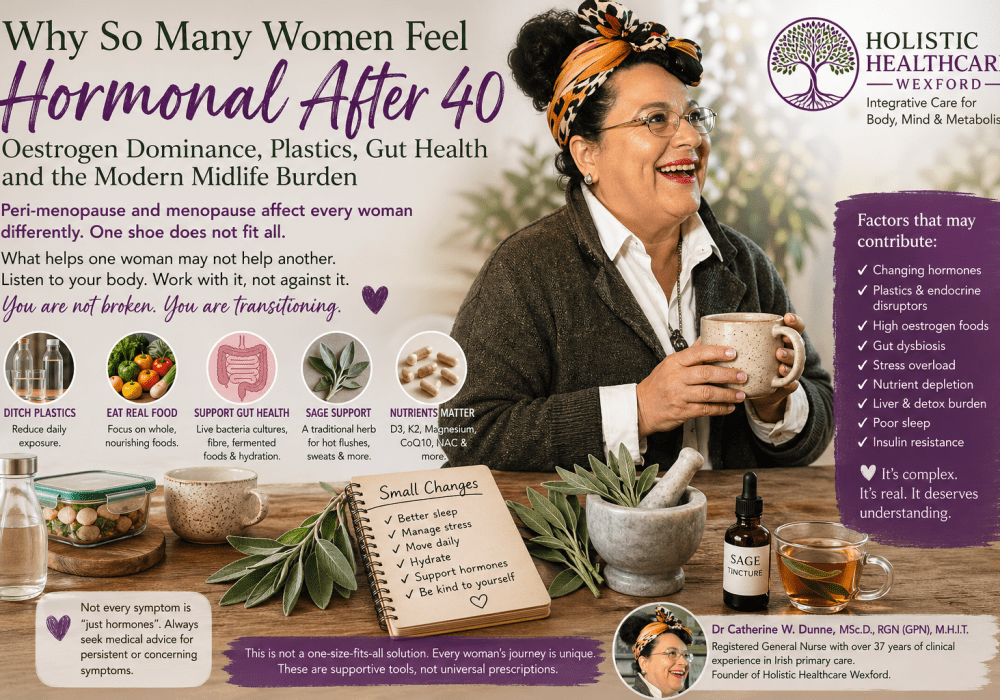
Why You Feel “Off” Even When Your Blood Tests Are Normal

By Dr Catherine W. Dunne, MSc.D., RGN (GPN), M.H.I.T.
Holistic Healthcare Wexford

YOU ARE NOT IMAGINING IT

Many people are told the same thing:
“Your blood tests are normal.”  And yet… you don’t feel normal.

Your energy is low.
Your sleep isn’t refreshing.
Your mood feels flat, anxious, or unpredictable.
Your body just doesn’t feel right.

This is more common than you might think.
And importantly:
It does not mean nothing is wrong.

NORMAL” DOES NOT MEAN OPTIMAL

Standard blood tests are designed to detect disease.
They are not designed to assess how well your body is functioning day to day.

A result can sit comfortably within range, yet still be:

  • low for your individual needs
  • poorly utilised by the body
  • insufficient during times of stress or recovery

This is where many people fall through the gap.

IT’S NOT JUST WHAT YOU TAKE, IT’S WHAT YOUR BODY CAN USE

You might be:

  • eating well
  • taking supplements
  • doing all the right things

And still feel depleted.

Why?

Because the body relies on multiple steps:

  • digestion
  • absorption
  • transport
  • cellular uptake

If any part of that chain is under strain, you can feel the effects long before anything shows up on a lab report.

THE MISSING PIECE IS OFTERN THE NERVOUS SYSTEM

One of the most overlooked factors is nervous system load.
Modern life keeps the body in a constant state of low-grade stress, ongoing alertness, and overstimulation.
Over time, this begins to affect energy production, sleep quality, digestion, and hormone balance.

Many people describe it simply as:
“I can’t switch off.”
That alone can keep the body from restoring properly.

THIS IS WHERE WHOLISTIC CARE COMES IN.

In practice at Holistic Healthcare Wexford, this pattern shows up more and more frequently.
People often arrive feeling dismissed, frustrated, and unsure where to turn next.
This work is not about replacing medical care.
It is about supporting the body’s function, identifying where things are under strain, and helping the system return to balance.

This may include nervous system support, targeted nutritional guidance, and gentle, body-led therapies.

YOU ARE NOT “FINE”. YOU ARE EARLY.

Feeling “off” is often an early signal, not a dead end.

Your body is communicating.
It just hasn’t reached the point of disease.
And that is exactly where the greatest opportunity for change exists.

WHAT YOU CAN DO NEXT

If this resonates with you, start simple:

  • Pause and acknowledge how you actually feel
  • Look at your sleep, stress, and daily load
  • Do not dismiss your symptoms just because tests are “normal”

If you feel you need support:

A holistic consultation can help you make sense of what your body is showing you and what to do next.

FINAL THOUGHT

You know your body.
If something feels off, it is worth listening.
Not everything shows up on paper.
But that does not make it any less real.

I hope you feel inspired. Look after your body, and it will keep you healthy.

Catherine

CWD 01 April 2026/Ireland

About the Author

Dr Catherine W. Dunne is a Registered General Nurse with over 37 years of clinical experience in primary care in Ireland. Alongside her work in General Practice Nursing, she is the founder of Holistic Healthcare Wexford and co-founder of Aumvedas Academy.

With a background that bridges conventional medicine and holistic practice, Catherine has a particular interest in the area where patients are often told “everything is normal,” yet still feel unwell. Her work focuses on helping people understand what their body is communicating, especially in relation to energy, stress, metabolic function, and recovery.

Through a combination of clinical knowledge and holistic support, she works with individuals to restore balance, improve resilience, and support long-term wellbeing.

Based in Wexford, Ireland.

Disclaimer

The information provided in this article is for educational purposes only and is not intended as medical advice. Always consult a qualified healthcare professional before starting any new supplement or health intervention.

Boron: The Missing Link in Vitamin D, Calcium & Hormone Balance

You can take Vitamin D, Magnesium, and Calcium—and still not get the results you expect.
Sometimes, the missing piece is not what you take, but what helps your body use it.

By Dr Catherine W. Dunne, MSc.D., RGN (GPN)
Holistic Healthcare Wexford

Boron is one of those nutrients.

It may only be required in trace amounts, but its impact on bone health, hormones, inflammation, and Vitamin D function makes it a valuable addition to a well-structured health plan.

Bone Health: More Than Just Calcium

When it comes to bones, most people think of Calcium. But Calcium alone is only part of the picture.

Boron helps the body to improve Calcium retention, enhance Magnesium utilisation, and support Vitamin D activation. This creates a more efficient system for maintaining bone density and strength.

Emerging research also suggests Boron may help reduce joint discomfort and stiffness, particularly in osteoarthritis, by supporting a balanced inflammatory response.

In clinical practice, this is often seen in patients whose bone markers or symptoms do not improve despite adequate Calcium and Vitamin D intake.

A Natural Anti-Inflammatory Support

Chronic, low-grade inflammation is at the root of many modern health concerns.

Boron has been shown to reduce inflammatory markers such as CRP, modulate immune responses, and support tissue recovery.

This makes it a useful addition in cases of joint pain, post-viral fatigue, and general inflammatory states.

In clinical settings, this may be relevant in patients presenting with persistent low-grade inflammatory symptoms.

Hormonal Balance: A Quiet Regulator

One of Boron’s most interesting roles is its influence on hormones.

It has been shown to influence free testosterone levels, support healthy oestrogen metabolism, and reduce sex hormone binding globulin (SHBG).

This means more hormones are available in their active form, which may benefit perimenopause, menopause, and low energy states.

Boron and Vitamin D: A Powerful Partnership

Boron plays a supportive role in how the body uses Vitamin D.

It helps extend the half-life of Vitamin D, improve Magnesium efficiency, and support proper Calcium direction alongside Vitamin K2.

Together, Vitamin D, Magnesium, Vitamin K2, and Boron create a more balanced and effective system.

Boron may also play a supportive role in thyroid function through its interaction with mineral balance and hormone regulation.

This is how these nutrients work together in the body:

Cognitive and Nervous System Support

Low Boron intake has been associated with reduced concentration, slower cognitive processing, and brain fog.

Adequate levels may support mental clarity and neurological function.

Dietary Sources of Boron

Boron is found naturally in avocados, raisins, prunes, nuts (especially almonds), and leafy green vegetables.

However, modern diets often provide lower than optimal intake.

Supplementation

Typical intake ranges from 3 mg daily for general support, with 6 mg often used in short-term therapeutic protocols.

There is rarely a need to exceed this range.

Safety Considerations

Avoid high doses in pregnancy and use caution in kidney disease. As with all nutrients, balance is key.

Clinical Perspective

Boron is often the missing link in protocols where bone support, Vitamin D response, hormonal balance, or inflammation management are not progressing as expected.

Final Thoughts

Boron helps the body use what is already there more efficiently. In many cases, health does not improve because something is missing but because what is already there is not being used properly.


Boron does not replace your core nutrients, it helps them work properly.

If you would like to understand how vitamin D, magnesium, and vitamin K2 work together to regulate calcium in the body, you can read more here:
Vitamin D3, Magnesium and Vitamin K2: The Team That Helps Calcium Work in the Body

I hope you feel inspired. Look after your body, and it will keep you healthy.

Catherine

CWD 27 March 2026/Ireland

About the Author

Dr Catherine W. Dunne MSc.D., RGN, M.H.I.T. is a nurse, holistic practitioner, and educator based in Wexford, Ireland. With over 35 years of experience in healthcare and energy-based healing modalities, she integrates conventional medical knowledge with holistic approaches to support whole-person well-being.

Catherine is the founder of Holistic HealthCare Wexford and co-founder of Aumvedas Academy, where she teaches courses in holistic health, energy medicine, and integrative healing practices.

Her work focuses on empowering people to understand the body as an intelligent system capable of healing when supported with the right knowledge, nutrition, and energetic balance.

Learn more:
Holistic HealthCare Wexford
Aumvedas Academy 

Disclaimer

The information provided in this article is for educational purposes only and is not intended as medical advice. Always consult a qualified healthcare professional before starting any new supplement or health intervention.