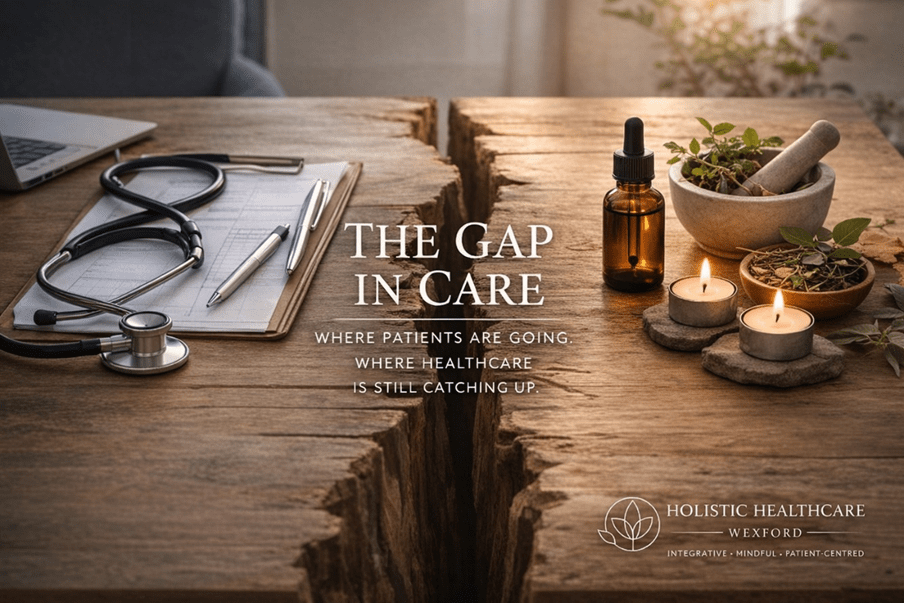
The Gap in Care – How Mindfulness, Ayurveda, and patient behaviour are reshaping healthcare without permission
By Dr Catherine W. Dunne, MSc.D., RGN (GPN), M.H.I.T.
Holistic Healthcare Wexford | Co-founder, Aumvedas Academy
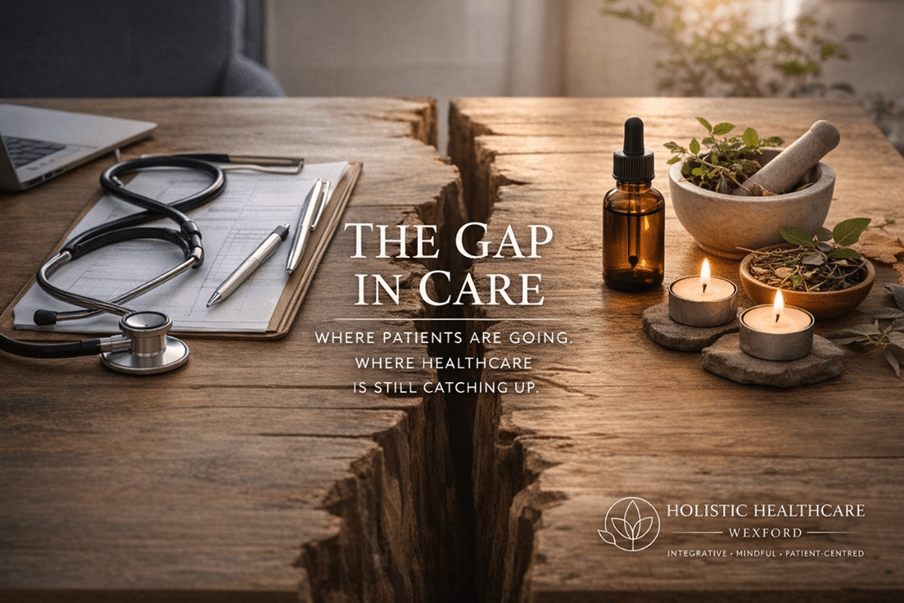
In everyday clinical practice, there is a quiet shift happening.
Patients are no longer relying solely on conventional medical care. Alongside prescribed treatments, many are turning to mindfulness, herbal medicine, traditional systems such as Ayurveda, and other complementary approaches to support their health.
What is striking is not that this is happening but that it is often happening without discussion.
Patients frequently do not disclose these choices. Not because they are careless, but because they anticipate dismissal. Over time, this has created a subtle but important gap in care, one where clinical oversight is absent, not by design, but by disconnect.
Patients Are Already There
This shift is not theoretical.
It is visible in daily practice:
- Patients using breathing techniques to manage anxiety
- Individuals exploring herbal supports alongside prescribed medications
- People adopting dietary patterns based on traditional systems
- A growing reliance on self-guided health approaches
Whether acknowledged or not, this is now part of modern healthcare behaviour.
The question is no longer if patients are engaging with these approaches, but whether healthcare is willing to recognise it.
Mindfulness: A Practical Clinical Tool
Mindfulness has moved beyond the realm of “wellness” and into something far more practical.
At its core, it supports regulation of the nervous system.
In clinical terms, this translates to:
- Reduced sympathetic overdrive
- Improved vagal tone
- Better emotional regulation
- Support in chronic stress, pain, and fatigue
For many patients, it is not an abstract concept. It is a tool that helps them cope, function, and stabilise.
And as one colleague recently put it: ‘sometimes it is the very thing that keeps a person steady in the middle of overwhelming pressure.’
Ayurveda and Observational Medicine
Long before laboratory diagnostics, systems such as Ayurveda developed structured ways of understanding human health.
These systems observed:
- Individual constitution and variability
- Digestive strength and metabolic patterns
- The impact of routine, environment, and rhythm
While the language differs from modern medicine, the underlying principle is familiar:
People respond differently.
In clinical practice, we see this every day; variability in response to medication, recovery time, tolerance, and resilience.
Ancient systems simply approached this from a different starting point.
Where Metaphysics Meets Physiology
There is also a layer of health that is harder to measure, but impossible to ignore.
Thought patterns influence stress responses.
Beliefs shape behaviours.
Emotional states affect physiology.
We see this reflected in:
- Chronic stress conditions
- Sleep disturbance
- Immune function
- Recovery outcomes
We may not yet quantify every aspect of this, but its impact is visible in patient presentation and progression.
Ignoring it does not make it irrelevant.
The Irish Context: A Growing Divide
In Ireland, there remains a cautious, at times resistant, stance toward complementary approaches within formal healthcare structures.
Meanwhile, patients are moving in a different direction.
Patients are seeking:
- Holistic support
- Preventative approaches
- Greater involvement in their own care
In contrast, other healthcare systems, such as in parts of Europe, have begun integrating complementary medicine into training and practice.
This creates an uncomfortable reality:
Patients are moving forward.
Healthcare policy, in many cases, is standing still.
The Role of the Practitioner
This is not about replacing conventional medicine.
It is about acknowledging what is already happening and responding responsibly.
The role of the practitioner is to:
- Create a space where patients feel safe to disclose
- Understand potential interactions and risks
- Offer grounded, evidence-informed guidance
- Support without dismissing
Because when communication is absent, risk increases.
And when patients feel heard, care improves.
Closing Reflection
Patients are not waiting for permission to explore these approaches, they are already doing so.
The real question is whether healthcare chooses to ignore this shift, or to engage with it in a way that is safe, informed, and grounded in practice.
I hope you feel inspired. Look after your body, and it will keep you healthy.
Catherine

CWD 03 April 2026/Ireland
About the Author
Dr Catherine W. Dunne, MSc.D., RGN (GPN), M.H.I.T., is a Registered General Nurse with over 37 years of clinical experience in primary care in Ireland. Alongside her work in General Practice Nursing, she is the founder of Holistic Healthcare Wexford and co-founder of Aumvedas Academy.
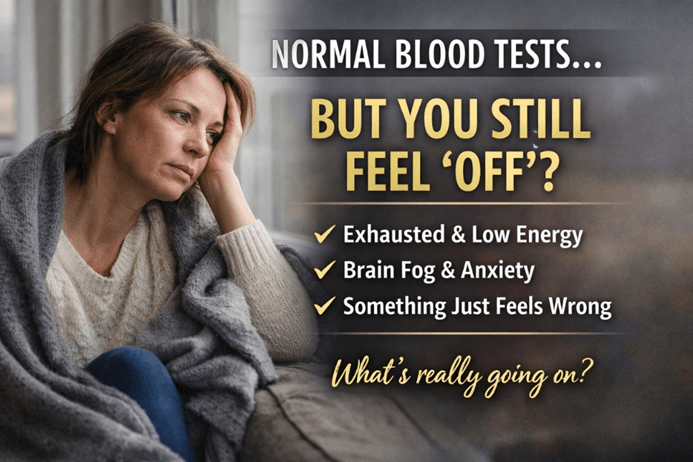
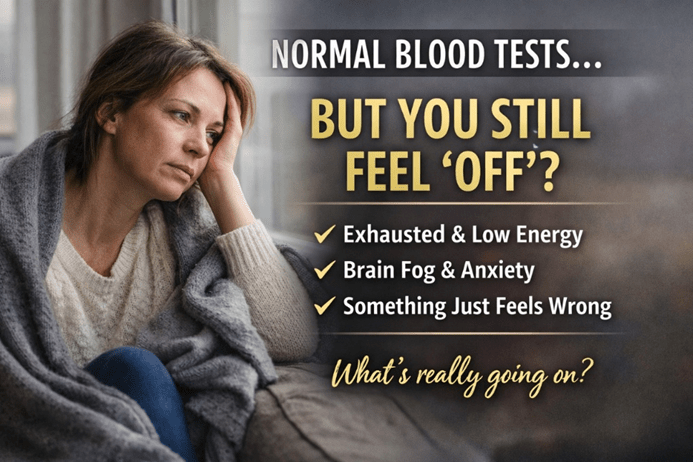
With a background that bridges conventional medicine and holistic practice, Catherine has a particular interest in the area where patients are often told “everything is normal,” yet still feel unwell. Her work focuses on chronic disease management, metabolic health, and integrative approaches to patient care, combining clinical knowledge with evidence-informed complementary therapies.
She works with individuals to better understand what their body is communicating, particularly in relation to stress, energy, recovery, and overall resilience, supporting long-term wellbeing through a grounded, patient-centred approach.
Based in Wexford, Ireland.
Disclaimer
This article is for informational and educational purposes only and is not intended as medical advice. It does not replace consultation with a qualified healthcare professional. Patients should always seek appropriate medical guidance regarding their individual health needs and before making changes to treatment or care.


 Holistic Healthcare Wexford