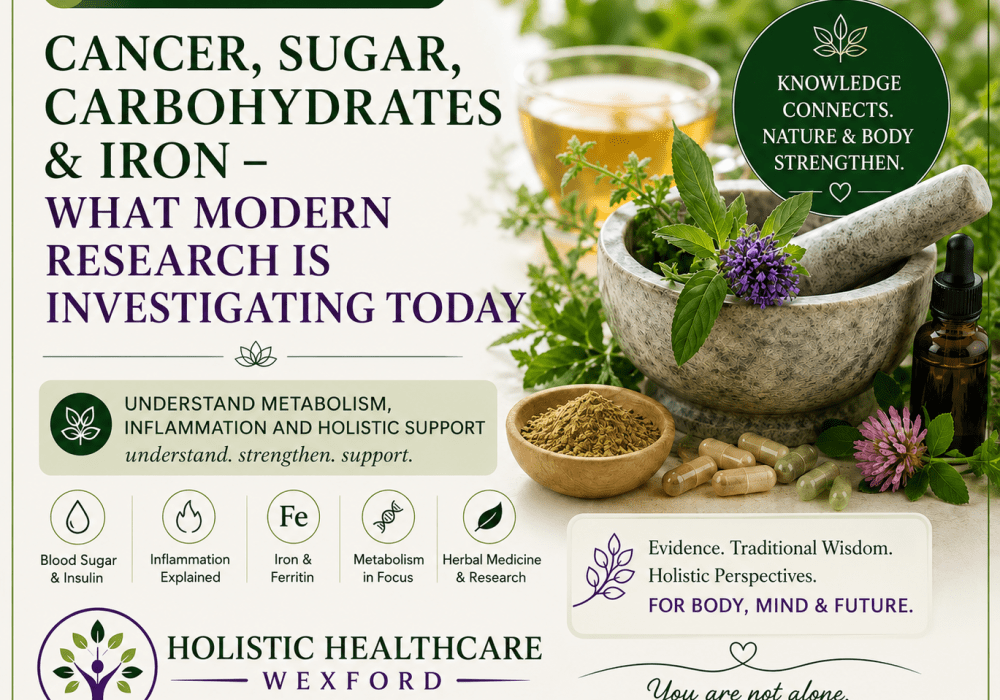
Cancer, Sugar, Carbohydrates and Iron – Why Metabolism is Receiving Greater Attention Today

Many people today are asking whether nutrition, metabolism, chronic inflammation and certain plant compounds may play a role in the development or growth of cancer. Topics such as high sugar intake, heavily processed carbohydrates, iron metabolism and medicinal plants are increasingly being discussed, both within modern research and integrative health approaches.

Science is showing more and more clearly that cancer is not solely a genetic disease, but may also be closely connected to metabolic processes, inflammation, hormonal changes and the overall health of the body.

At the same time, interest is growing in traditional medicinal plants such as Artemisinin (Artemisia annua), Prunella vulgaris and Sutherlandia frutescens, whose compounds have shown possible supportive properties in laboratory studies.

However, one important point remains:

This article is not intended as a cure claim or a replacement for medical treatment. Rather, it aims to bring together current scientific understanding, traditional plant knowledge and holistic health perspectives in a clear and understandable way.

Because sometimes health begins not only with the question:

“How do we fight disease?”

but also with:

“How do we strengthen the person?”

By Dr Catherine W. Dunne, MSc.D., RGN (GPN)
Holistic Healthcare Wexford | Co-founder, Aumvedas Academy
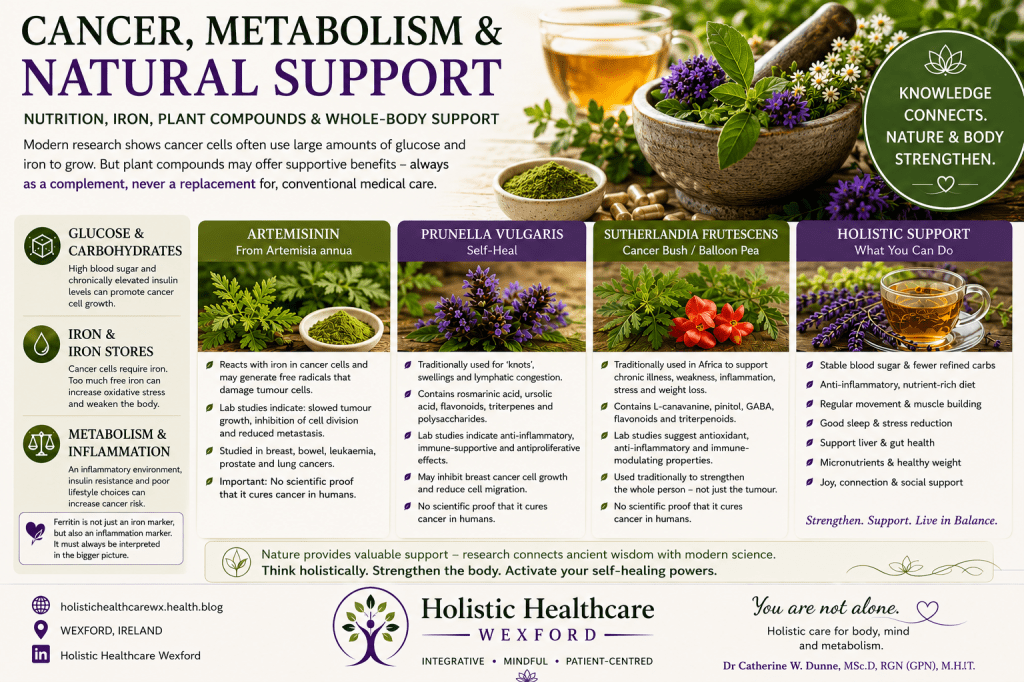
In recent years, researchers have become increasingly interested in why certain metabolic states may influence the growth of cancer cells.

Particular attention has been given to:

  • elevated blood glucose levels
  • diets high in processed carbohydrates
  • chronically raised insulin levels
  • changes in iron metabolism

It is important to understand that the human body requires both glucose and iron for survival. The brain, muscles, immune system and virtually every cell in the body depend upon them. Nevertheless, many studies suggest that cancer cells often “exploit” these systems more aggressively in order to grow rapidly.

The Relationship Between Cancer and Sugar

Many cancer cells consume significantly more glucose than normal cells. This phenomenon has been recognised in oncology for many years and is even the basis of modern PET scans, where radioactive glucose is used to identify metabolically active tumours.

One well-known concept related to this is the so-called Warburg effect, in which cancer cells often favour rapid sugar metabolism (glycolysis) even when oxygen is available.

This does not mean:

“Sugar automatically causes cancer”
or
“Cancer can simply be starved.”

Human metabolism is far more complex than that.

Even during very low-carbohydrate diets, the body continues to produce glucose because it is essential for vital functions.

What may matter more is the overall metabolic environment:

  • chronically elevated insulin levels
  • insulin resistance
  • obesity
  • visceral abdominal fat
  • inflammatory processes
  • lack of movement
  • chronic stress
  • highly processed foods

Particularly problematic are often:

  • refined sugars
  • heavily processed carbohydrates
  • constant snacking
  • sugary drinks
  • ultra-processed foods

Over time, these factors may contribute to chronic inflammation and hormonal imbalance.

Interestingly, chronic stress itself can raise blood glucose levels because cortisol stimulates glucose release from the liver. In other words, the body may remain in a prolonged “high-glucose state” even without excessive sugar intake.

Cancer and Iron – An Often Overlooked Connection

Iron also plays an important role in relation to cancer.

Iron is essential for:

  • cell division
  • oxygen transport
  • energy production
  • DNA synthesis
  • mitochondrial function

Because cancer cells divide rapidly, they often require large amounts of it.

Some tumour types even increase iron uptake into their cells. Researchers have therefore observed altered iron metabolism in several cancers, including breast, bowel and liver cancers.

However, too much free iron may also become problematic.

It can promote oxidative stress and generate free radicals capable of damaging cellular structures and DNA.

Particularly interesting is the fact that after menopause, iron levels naturally rise in many women because monthly blood loss stops. At the same time, inflammation, metabolic dysfunction and hormonal changes often increase.

This does not automatically indicate danger.

However, it helps explain why researchers are paying closer attention to:

  • ferritin levels
  • chronic inflammation
  • metabolic health
  • liver health
  • insulin resistance

Ferritin Is Not Just “Iron”

An important point:

Ferritin is often viewed simply as an iron marker. In reality, ferritin is also an inflammatory marker.

Elevated ferritin levels may occur in:

  • chronic inflammation
  • fatty liver disease
  • infections
  • alcohol burden
  • metabolic syndrome
  • autoimmune disease
  • cancer processes

This is why ferritin should always be interpreted within the wider clinical picture.

The Modern Perspective

Modern research increasingly views cancer as a metabolic disease as well as a genetic one.

This does not mean that sugar or iron alone “cause” cancer.

Rather, a chronically inflamed and metabolically stressed environment may support the growth of already-damaged cells.

For this reason, many integrative approaches today focus on:

  • stable blood sugar regulation
  • reducing heavily processed foods
  • regular movement
  • maintaining healthy muscle mass
  • good sleep
  • stress reduction
  • anti-inflammatory nutrition
  • supporting mitochondrial health

The goal is not fear —
but a better understanding of how deeply nutrition, metabolism, hormones and long-term health are interconnected.

Or more simply:

The body needs sugar and iron to survive.

But when metabolic systems become dysregulated, those same systems may also be exploited by cancer cells.

Possible Supportive Plant Compounds: Artemisinin and Prunella vulgaris

Alongside nutrition, metabolism and inflammation, researchers are increasingly interested in certain plant compounds that may potentially influence the growth or spread of cancer cells.

However, it is important to state clearly:

Many of these approaches remain within the realm of laboratory research, animal models or early experimental studies. They are not currently scientifically confirmed cancer cures.

Nevertheless, there are some interesting observations.

Artemisinin – Originally Known from Malaria Treatment

Artemisinin is derived from the plant Artemisia annua and first became known through malaria treatment.

What made Artemisinin particularly interesting in cancer research was its relationship with iron.

Cancer cells often contain elevated iron levels and increased iron metabolism. Artemisinin reacts with iron and may generate free radicals capable of damaging cancer cells more strongly than healthy cells.

This mechanism attracted significant scientific attention.

Laboratory studies have shown indications of:

  • slowed tumour growth
  • inhibition of cell division
  • promotion of apoptosis (programmed cell death)
  • possible reduction of metastatic activity

Research has included:

  • breast cancer
  • bowel cancer
  • leukaemias
  • prostate cancer
  • lung cancer

Artemisinin is particularly discussed today in relation to:

  • oxidative stress within cancer cells
  • mitochondrial changes
  • iron-dependent metabolic processes

Nevertheless:

Large-scale human clinical trials confirming Artemisinin as a cancer treatment are still lacking.

Therefore, it should never be viewed as a replacement for oncology care, but rather as a possible supportive research avenue within integrative approaches.

Prunella vulgaris – Self-Heal

Prunella vulgaris, also known as Self-Heal, has been traditionally used for centuries for inflammatory swellings, lymphatic congestion and “lumps.”

Modern studies suggest that certain plant compounds may possess possible anti-cancer properties.

These include:

  • rosmarinic acid
  • ursolic acid
  • flavonoids
  • triterpenes
  • polysaccharides

Laboratory findings have suggested:

  • inhibition of breast cancer cell growth
  • possible reduction in cell migration and metastasis
  • anti-inflammatory effects
  • immune-supportive actions
  • promotion of programmed tumour cell death

Interestingly, Prunella vulgaris was historically used long before modern medicine for “breast lumps” and glandular swellings.

Again, however, the evidence currently comes mainly from:

  • cell culture studies
  • animal models
  • early experimental research

There is currently no scientifically confirmed evidence that it cures cancer in humans.

Integrative Support Rather Than False Cure Claims

Modern integrative research is increasingly exploring how:

  • metabolism
  • inflammation
  • immune function
  • mitochondrial health
  • iron metabolism
  • nutrition
    and plant compounds

may interact together.

The focus is less on “miracle cures” and more on the question:

How can the body be supported in a way that is less inflammatory and less metabolically burdensome?

For this reason, many people now also seek support through:

  • anti-inflammatory nutrition
  • stable blood sugar balance
  • stress reduction
  • sleep optimisation
  • movement
  • holistic support
  • plant-based compounds

while conventional medical treatment continues to play a central role.

Because modern research continues to show one thing above all:

The human body is far more complex than simple headlines suggest.

Sutherlandia frutescens – The South African “Cancer Bush”

Another plant attracting increasing interest in integrative research is Sutherlandia frutescens.

Native to South Africa, it is traditionally known as:

  • Cancer Bush
  • Balloon Pea
  • Kankerbos

For centuries it has been used within traditional African herbal medicine to support:

  • chronic illness
  • exhaustion and weakness
  • inflammation
  • stress burden
  • weight loss and wasting
  • weakened immunity

Researchers became interested after laboratory studies suggested possible:

  • antiproliferative effects
  • antioxidant properties
  • immune-modulating actions
  • anti-inflammatory mechanisms

Investigated compounds include:

  • L-canavanine
  • pinitol
  • GABA
  • flavonoids
  • triterpenoids

Some experimental studies suggest that Sutherlandia frutescens may potentially influence the growth of certain cancer cells.

At the same time, the plant was traditionally viewed less as a “tumour destroyer” and more as a strengthening support herb during severe illness.

Many traditional healing systems followed this same philosophy:

Not only treating disease itself —
but supporting the whole person:

  • strength
  • appetite
  • sleep
  • stress regulation
  • immune function
  • overall resilience

Again, it is important to state clearly:

There is currently no scientifically confirmed evidence that Sutherlandia frutescens cures cancer in humans.

It should therefore never replace medical diagnosis or oncology treatment.

Nevertheless, modern research continues exploring how traditional medicinal plants may potentially:

  • modulate inflammation
  • influence oxidative stress
  • support immune function
  • alter metabolic processes within cancer cells

This connection between traditional plant wisdom and modern metabolic research is opening increasingly interesting questions within integrative medicine.

I hope you feel inspired. Look after your body, and it will keep you healthy.

Catherine

CWD | 08.May. 2026 | Ireland

Holistic Healthcare Wexford
Integrative · Mindful · Patient-Centred

About the Author

Dr Catherine W. Dunne MSc.D. is a Registered General Nurse with over 37 years of clinical experience in primary care in Ireland. Alongside her work in General Practice Nursing, she is the founder of Holistic Healthcare Wexford and co-founder of Aumvedas Academy.

With a background that bridges conventional medicine and holistic practice, Catherine has a particular interest in the area where patients are often told “everything is normal,” yet still feel unwell. Her work focuses on helping people understand what their body is communicating, especially in relation to energy, stress, metabolic function, and recovery.

Through a combination of clinical knowledge and holistic support, she works with individuals to restore balance, improve resilience, and support long-term wellbeing.

Based in Wexford, Ireland.

Disclaimer

This article is for informational and educational purposes only and is not intended as medical advice. It does not replace consultation with a qualified healthcare professional. Patients should always seek appropriate medical guidance regarding their individual health needs and before making changes to treatment or care.
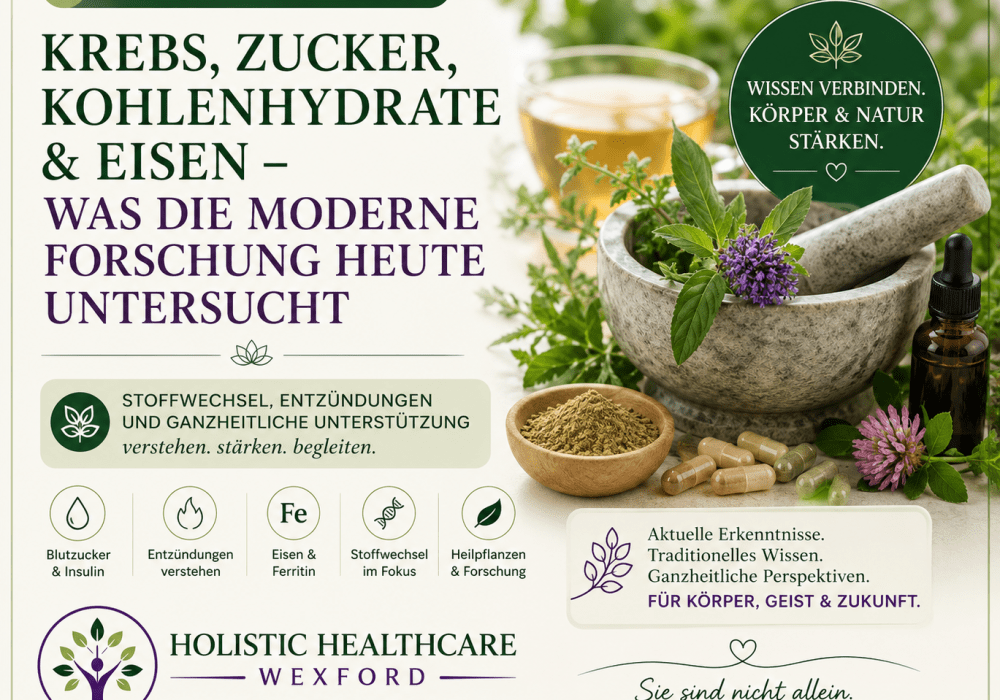
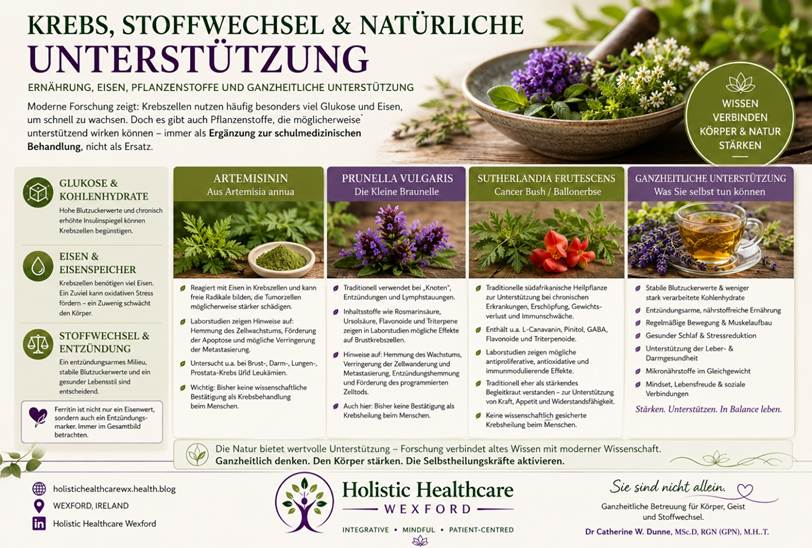
Krebs, Zucker, Kohlenhydrate und Eisen – warum der Stoffwechsel heute stärker beachtet wird

Viele Menschen stellen sich heute die Frage, ob Ernährung, Stoffwechsel, chronische Entzündungen und bestimmte Pflanzenstoffe eine Rolle bei der Entstehung oder dem Wachstum von Krebs spielen könnten. Besonders Themen wie hoher Zuckerkonsum, stark verarbeitete Kohlenhydrate, Eisenstoffwechsel und natürliche Heilpflanzen werden zunehmend diskutiert — sowohl in der modernen Forschung als auch innerhalb integrativer Gesundheitsansätze.

Tatsächlich zeigt die Wissenschaft immer deutlicher, dass Krebs nicht nur eine genetische Erkrankung ist, sondern auch eng mit Stoffwechselprozessen, Entzündungen, hormonellen Veränderungen und der allgemeinen Gesundheit des Körpers verbunden sein kann.

Gleichzeitig wächst das Interesse an traditionellen Heilpflanzen wie Artemisinin (Artemisia annua), Prunella vulgaris und Sutherlandia frutescens, deren Inhaltsstoffe in Laborstudien mögliche unterstützende Eigenschaften gezeigt haben.

Wichtig bleibt jedoch:
Dieser Artikel versteht sich nicht als Heilversprechen oder Ersatz für medizinische Behandlung. Vielmehr geht es darum, aktuelle wissenschaftliche Erkenntnisse, traditionelles Pflanzenwissen und ganzheitliche Gesundheitsansätze verständlich zusammenzuführen.

Denn manchmal beginnt Gesundheit nicht nur mit der Frage:
„Wie bekämpfen wir Krankheit?“
sondern auch mit:
„Wie stärken wir den Menschen?“

By Dr Catherine W. Dunne, MSc.D., RGN (GPN)
Holistic Healthcare Wexford | Co-founder, Aumvedas Academy

In den letzten Jahren interessieren sich Forschende zunehmend für die Frage, warum bestimmte Stoffwechselzustände das Wachstum von Krebszellen beeinflussen können. Besonders häufig diskutiert werden dabei hohe Blutzuckerwerte, stark kohlenhydratreiche Ernährung, chronisch erhöhte Insulinspiegel und Veränderungen im Eisenstoffwechsel.

Dabei ist wichtig zu verstehen:
Der menschliche Körper benötigt sowohl Glukose als auch Eisen zum Überleben. Gehirn, Muskeln, Immunsystem und nahezu jede Körperzelle sind darauf angewiesen. Dennoch zeigen viele Studien, dass Krebszellen diese Systeme oft besonders stark „ausnutzen“, um schneller zu wachsen.

Die Beziehung zwischen Krebs und Zucker

Viele Krebszellen verbrauchen deutlich mehr Glukose als normale Körperzellen. Dieses Phänomen wird in der Onkologie seit Langem beobachtet und ist sogar die Grundlage moderner PET-Scans, bei denen radioaktiv markierte Glukose verwendet wird, um stoffwechselaktive Tumore sichtbar zu machen.

Ein bekanntes Konzept hierzu ist der sogenannte „Warburg-Effekt“. Dabei bevorzugen Krebszellen häufig eine schnelle Zuckerverbrennung (Glykolyse), selbst wenn ausreichend Sauerstoff vorhanden wäre.

Das bedeutet jedoch nicht:
„Zucker verursacht automatisch Krebs“ oder „man kann Krebs einfach aushungern“.

So einfach ist der menschliche Stoffwechsel nicht.

Selbst bei sehr kohlenhydratarmer Ernährung produziert der Körper weiterhin Glukose, da sie für lebenswichtige Funktionen benötigt wird.

Wichtiger scheint vielmehr das gesamte Stoffwechselmilieu zu sein:

  • chronisch erhöhte Insulinwerte
  • Insulinresistenz
  • Übergewicht
  • viszerales Bauchfett
  • Entzündungsprozesse
  • Bewegungsmangel
  • dauerhafter Stress
  • hochverarbeitete Lebensmittel

Besonders problematisch sind häufig:

  • raffinierter Zucker
  • stark verarbeitete Kohlenhydrate
  • ständiges Snacking
  • zuckerreiche Getränke
  • ultra-verarbeitete Nahrung

Diese Faktoren können über Jahre hinweg Entzündungen und hormonelle Dysbalancen fördern.

Interessanterweise kann sogar chronischer Stress den Blutzucker erhöhen, da Cortisol die Glukosefreisetzung aus der Leber steigert. Der Körper kann also auch ohne großen Zuckerkonsum dauerhaft in einem „hohen Glukosezustand“ bleiben.

Krebs und Eisen – ein oft übersehener Zusammenhang

Auch Eisen spielt eine wichtige Rolle im Zusammenhang mit Krebs.

Eisen wird benötigt für:

  • Zellteilung
  • Sauerstofftransport
  • Energiegewinnung
  • DNA-Synthese
  • mitochondriale Funktionen

Da Krebszellen sich schnell teilen, benötigen sie oft große Mengen davon.

Einige Tumorarten erhöhen sogar gezielt die Aufnahme von Eisen in die Zellen. Forschende beobachten daher seit Jahren Veränderungen des Eisenstoffwechsels bei verschiedenen Krebsarten, darunter Brustkrebs, Darmkrebs und Leberkrebs.

Zu viel freies Eisen kann allerdings problematisch sein.
Es kann oxidativen Stress fördern und sogenannte freie Radikale bilden, welche Zellstrukturen und DNA schädigen können.

Besonders interessant ist:
Nach den Wechseljahren steigt der Eisenspiegel bei vielen Frauen natürlicherweise an, da die monatliche Blutung wegfällt. Gleichzeitig nehmen Entzündungen, Stoffwechselprobleme und hormonelle Veränderungen häufig zu.

Das bedeutet nicht automatisch Gefahr.
Es zeigt jedoch, warum Forschende heute genauer auf:

  • Ferritinwerte
  • chronische Entzündungen
  • Stoffwechselgesundheit
  • Lebergesundheit
  • Insulinresistenz

achten.

Ferritin ist nicht nur „Eisen“

Ein wichtiger Punkt:
Ferritin wird oft als reiner Eisenwert angesehen. Tatsächlich ist Ferritin aber auch ein Entzündungsmarker.

Erhöhte Ferritinwerte können unter anderem auftreten bei:

  • chronischen Entzündungen
  • Fettleber
  • Infektionen
  • Alkoholbelastung
  • Stoffwechselsyndrom
  • Autoimmunerkrankungen
  • Krebsprozessen

Deshalb muss Ferritin immer im Gesamtzusammenhang betrachtet werden.

Die moderne Sichtweise

Die heutige Forschung betrachtet Krebs zunehmend auch als Stoffwechselerkrankung — nicht nur als rein genetisches Problem.

Das bedeutet nicht, dass Zucker oder Eisen allein Krebs „verursachen“.
Vielmehr scheint ein chronisch entzündliches, stoffwechselbelastetes Umfeld das Wachstum bereits geschädigter Zellen begünstigen zu können.

Daher konzentrieren sich viele integrative Ansätze heute auf:

  • stabile Blutzuckerwerte
  • weniger stark verarbeitete Nahrung
  • ausreichend Bewegung
  • gesunde Muskelmasse
  • guten Schlaf
  • Stressreduktion
  • entzündungsarme Ernährung
  • Unterstützung der mitochondrialen Gesundheit

Nicht Angst ist das Ziel —
sondern ein besseres Verständnis dafür, wie eng Ernährung, Stoffwechsel, Hormone und langfristige Gesundheit miteinander verbunden sind.

Oder einfacher gesagt:

Der Körper braucht Zucker und Eisen zum Leben.
Doch wenn Stoffwechselprozesse aus dem Gleichgewicht geraten, können genau dieselben Systeme auch von Krebszellen genutzt werden.

Mögliche unterstützende Pflanzenstoffe: Artemisinin und Prunella vulgaris

Neben Ernährung, Stoffwechsel und Entzündungsprozessen interessieren sich Forschende zunehmend auch für bestimmte Pflanzenstoffe, die möglicherweise das Wachstum oder die Ausbreitung von Krebszellen beeinflussen könnten.

Wichtig ist hierbei jedoch:
Viele dieser Ansätze befinden sich noch im Bereich der Laborforschung, Tiermodelle oder frühen experimentellen Untersuchungen. Sie gelten derzeit nicht als wissenschaftlich bestätigte Heilmittel gegen Krebs.

Dennoch gibt es einige interessante Beobachtungen.

Artemisinin – ursprünglich aus der Malariamedizin bekannt

Artemisinin stammt aus der Pflanze Artemisia annua und wurde ursprünglich für die Behandlung von Malaria bekannt.

Besonders interessant für die Krebsforschung wurde Artemisinin durch seine Beziehung zu Eisen.

Krebszellen enthalten oft erhöhte Eisenmengen und besitzen einen gesteigerten Eisenstoffwechsel. Artemisinin reagiert auf Eisen und kann dabei sogenannte freie Radikale erzeugen, welche Krebszellen möglicherweise stärker schädigen als gesunde Zellen.

Genau dieser Mechanismus weckte das Interesse der Forschung.

Laborstudien zeigten bei verschiedenen Krebszelllinien Hinweise auf:

  • verlangsamtes Tumorwachstum
  • Hemmung der Zellteilung
  • Förderung der Apoptose (programmierter Zelltod)
  • mögliche Verringerung von Metastasierungsprozessen

Untersucht wurden unter anderem:

  • Brustkrebs
  • Darmkrebs
  • Leukämien
  • Prostatakrebs
  • Lungenkrebs

Besonders diskutiert wird Artemisinin heute im Zusammenhang mit:

  • oxidativem Stress in Krebszellen
  • mitochondrialen Veränderungen
  • eisenabhängigen Stoffwechselprozessen

Dennoch gilt:
Bis heute fehlen große klinische Humanstudien, welche Artemisinin eindeutig als Krebsbehandlung bestätigen würden.

Daher sollte es niemals als Ersatz für eine onkologische Therapie betrachtet werden, sondern höchstens als möglicher unterstützender Forschungsansatz innerhalb integrativer Konzepte.

Prunella vulgaris – die Kleine Braunelle

Auch Prunella vulgaris, im Deutschen als Kleine Braunelle oder Selbstheilungskraut bekannt, wird seit Jahrhunderten traditionell bei entzündlichen Schwellungen, Lymphstauungen und „Knoten“ verwendet.

Moderne Untersuchungen zeigen inzwischen, dass bestimmte Inhaltsstoffe der Pflanze möglicherweise krebshemmende Eigenschaften besitzen könnten.

Dazu gehören:

  • Rosmarinsäure
  • Ursolsäure
  • Flavonoide
  • Triterpene
  • Polysaccharide

In Laboruntersuchungen wurden unter anderem Hinweise gefunden auf:

  • Hemmung des Wachstums von Brustkrebszellen
  • mögliche Verringerung der Zellwanderung und Metastasierung
  • entzündungshemmende Wirkungen
  • Unterstützung immunologischer Prozesse
  • Förderung des programmierten Zelltods von Tumorzellen

Besonders interessant ist, dass Prunella vulgaris historisch bereits lange vor der modernen Medizin bei „Brustknoten“ und Drüsenschwellungen eingesetzt wurde.

Auch hier gilt jedoch klar:
Die bisherigen Erkenntnisse stammen überwiegend aus:

  • Zellkulturstudien
  • Tiermodellen
  • frühen experimentellen Untersuchungen

Eine wissenschaftlich gesicherte Krebsheilung beim Menschen ist daraus bisher nicht ableitbar.

Integrative Unterstützung statt falscher Heilversprechen

Die moderne integrative Forschung versucht zunehmend zu verstehen, wie:

  • Stoffwechsel,
  • Entzündungen,
  • Immunfunktion,
  • mitochondriale Gesundheit,
  • Eisenstoffwechsel,
  • Ernährung
    und pflanzliche Wirkstoffe

zusammenwirken könnten.

Dabei geht es weniger um „Wunderheilungen“, sondern vielmehr um die Frage:
Wie kann man den Körper möglichst wenig entzündungsfördernd und stoffwechselbelastend unterstützen?

Viele Menschen suchen heute deshalb ergänzend nach:

  • entzündungsarmer Ernährung
  • stabilen Blutzuckerwerten
  • Stressreduktion
  • Schlafoptimierung
  • Bewegung
  • naturheilkundlicher Unterstützung
  • pflanzlichen Begleitstoffen

während die schulmedizinische Behandlung weiterhin eine zentrale Rolle behält.

Denn selbst die modernste Forschung zeigt bisher vor allem eines:
Der menschliche Körper ist weit komplexer, als einfache Schlagzeilen vermuten lassen.

Sutherlandia frutescens – die südafrikanische „Cancer Bush“

Eine weitere Pflanze, die zunehmend Aufmerksamkeit in der integrativen Forschung erhält, ist Sutherlandia frutescens.

Sie stammt aus Südafrika und ist dort traditionell bekannt unter Namen wie:

  • Cancer Bush
  • Ballonerbse
  • Kankerbos

Seit Jahrhunderten wird sie in der traditionellen afrikanischen Pflanzenheilkunde verwendet zur Unterstützung bei:

  • chronischen Erkrankungen
  • Erschöpfung und Schwäche
  • Entzündungen
  • Stressbelastung
  • Gewichtsverlust und Auszehrung
  • geschwächtem Immunsystem

Besonders im Zusammenhang mit Krebs interessierte sich die Forschung für die Pflanze, nachdem Laboruntersuchungen Hinweise auf mögliche:

  • antiproliferative Wirkungen
  • antioxidative Eigenschaften
  • immunmodulierende Effekte
  • entzündungshemmende Mechanismen

zeigten.

Zu den untersuchten Inhaltsstoffen gehören:

  • L-Canavanin
  • Pinitol
  • GABA
  • Flavonoide
  • Triterpenoide

Einige experimentelle Studien deuten darauf hin, dass Sutherlandia frutescens möglicherweise das Wachstum bestimmter Krebszellen beeinflussen könnte. Gleichzeitig scheint die Pflanze traditionell weniger als „Tumorzerstörer“ verstanden worden zu sein, sondern vielmehr als stärkendes Begleitkraut während schwerer Erkrankungen.

Viele traditionelle Heilsysteme verfolgten genau diesen Ansatz:
Nicht nur die Krankheit selbst zu betrachten, sondern den gesamten Menschen zu unterstützen;
Kraft, Appetit, Schlaf, Stressregulation, Immunsystem und allgemeine Widerstandsfähigkeit.

Wichtig bleibt jedoch:
Bis heute existiert keine wissenschaftlich gesicherte Bestätigung, dass Sutherlandia frutescens Krebs beim Menschen heilen kann.

Deshalb sollte die Pflanze niemals als Ersatz für medizinische Diagnostik oder onkologische Behandlung angesehen werden.

Dennoch zeigt die moderne Forschung zunehmend Interesse daran, wie bestimmte traditionelle Heilpflanzen möglicherweise:

  • Entzündungsprozesse modulieren,
  • oxidativen Stress beeinflussen,
  • Immunfunktionen unterstützen
    und
  • Stoffwechselprozesse in Krebszellen verändern könnten.

Gerade diese Verbindung zwischen traditionellem Heilwissen und moderner Stoffwechselforschung eröffnet heute neue interessante Fragestellungen innerhalb der integrativen Medizin.

Ich hoffe, Sie fühlen sich inspiriert. Achten Sie auf Ihren Körper, und er wird sich um Ihre Gesundheit kümmern.
Catherine

CWD | 08. Mai. 2026 | Irland
Holistic Healthcare Wexford
Integrativ · Achtsam · Patientenzentriert

Über die Autorin

Dr. Catherine W. Dunne MSc.D. ist examinierte Krankenschwester (Registered General Nurse) mit über 37 Jahren klinischer Erfahrung in der primären Gesundheitsversorgung in Irland. Neben ihrer Tätigkeit in der Allgemeinmedizin ist sie Gründerin von Holistic Healthcare Wexford sowie Mitbegründerin der Aumvedas Academy.

Durch ihren Hintergrund, der konventionelle Medizin mit ganzheitlicher Praxis verbindet, interessiert sich Catherine besonders für jene Bereiche, in denen Patientinnen und Patienten oft hören:
„Alles ist normal“ … sich jedoch trotzdem nicht gesund fühlen.

Ihre Arbeit konzentriert sich darauf, Menschen dabei zu helfen zu verstehen, was ihr Körper mitteilen möchte; insbesondere im Zusammenhang mit Energie, Stress, Stoffwechsel, hormonellem Gleichgewicht und Regeneration.

Durch die Verbindung von klinischem Wissen und ganzheitlicher Unterstützung begleitet sie Menschen dabei, Balance wiederzufinden, ihre Widerstandskraft zu stärken und langfristiges Wohlbefinden zu fördern.

Ansässig in Wexford, Irland.

Haftungsausschluss

Dieser Artikel dient ausschließlich Informations- und Bildungszwecken und stellt keine medizinische Beratung dar. Er ersetzt nicht die Konsultation eines qualifizierten medizinischen Fachpersonals. Patientinnen und Patienten sollten stets angemessenen medizinischen Rat hinsichtlich ihrer individuellen gesundheitlichen Bedürfnisse einholen, bevor Änderungen an Behandlung oder Therapie vorgenommen werden.

What Your Nervous System Is Trying to Tell You

You can feel it… but you can’t always explain it

Many people describe it in similar ways:

“I’m tired, but I can’t switch off.”
“My mind keeps going.”
“I feel on edge for no real reason.”

You might not call it your nervous system.
But that is often exactly where this begins.

The body is not designed to stay “on” all the time

The nervous system has one very important job: to respond to what is happening around you, and then help the body return to a state of rest once the moment has passed.

In today’s world, that second part is often missing.

Instead, the body remains in a low level of alertness for much of the day. Not dramatic.

Not obvious. Just constant.

That constant background tension can slowly wear people down without them fully realising it.

By Dr Catherine W. Dunne, MSc.D., RGN (GPN), M.H.I.T.
Holistic Healthcare Wexford

What that can feel like

It does not always show up as “stress” in the way people expect. More often, it can feel like:

  • difficulty switching off
  • light or broken sleep
  • waking tired
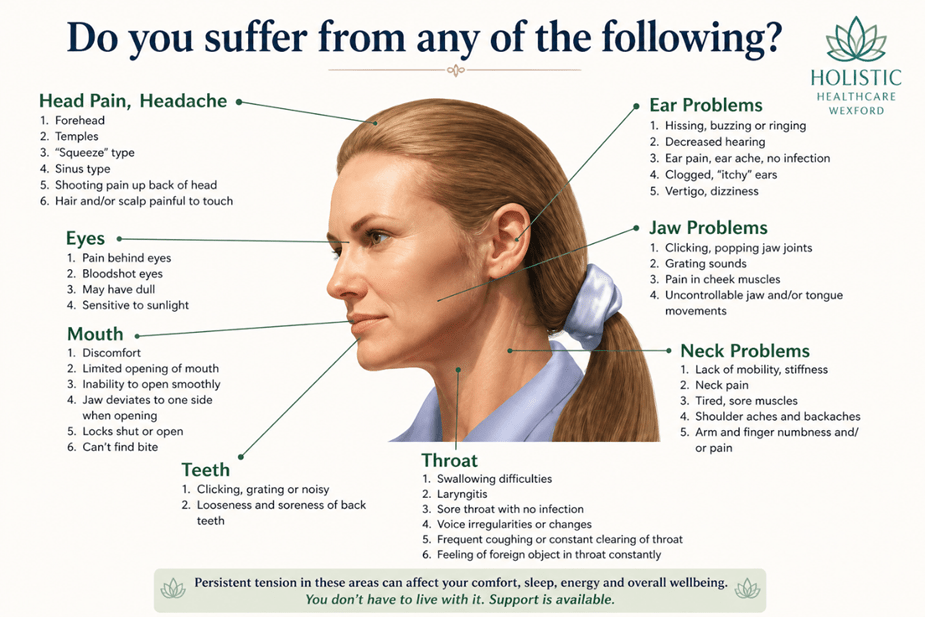
  • tension in the shoulders, jaw, or chest
  • digestive discomfort
  • feeling overwhelmed by small things
  • irritability or low patience
  • feeling unlike yourself

Many people simply say:

“I don’t feel like myself.”

Why this matters more than people realise

When the body stays in this state for too long, it begins to affect how everything else functions.

Energy begins to dip.
Sleep becomes lighter and less restorative.
Digestion may slow or become unsettled.
Hormonal balance can begin to shift.
Focus and resilience may drop.

Over time, the body is no longer recovering properly. That is often when people begin to feel persistently off.

This is where things get missed

Standard tests can still come back as “normal”.

Because this is not always about disease. It is often about how the system is functioning.

The nervous system plays a central role in sleep, digestion, stress tolerance, hormones, mood, and overall resilience. When it is under strain, the whole body can feel the effects.

What the body may be asking for

Often, it is not asking for more pressure, pushing, or stimulation.

It may be asking for:

  • regular quiet moments
  • proper rest without guilt
  • less constant input
  • steadier routines
  • movement that calms rather than exhausts
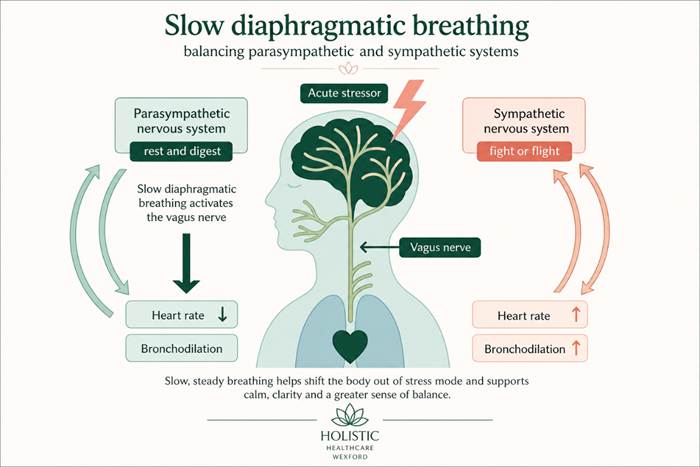
  • deeper breathing
  • support and reassurance
  • time to recover

This is not weakness. It is physiology.

How this is supported in practice

In clinic at Holistic Healthcare Wexford, this is a pattern I see often. People arrive believing they need to “try harder”, when in truth many need the opposite.

The focus is often on helping the body feel safe enough to settle again. When that begins to happen, people commonly notice:

  • deeper sleep
  • clearer thinking
  • improved energy
  • less internal tension
  • better coping capacity
  • a sense of calm returning

Sometimes later life is when we finally notice the patterns that were there all along.

What you can start doing now

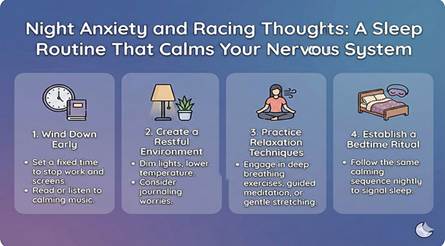
Keep it simple. The nervous system responds well to consistency, not perfection.

  • Step away from stimulation for short periods during the day
  • Get morning daylight where possible
  • Reduce doom-scrolling and late-night screen time
  • Eat regularly and stay hydrated
  • Walk outdoors, especially in nature
  • Notice jaw and shoulder tension and consciously release it
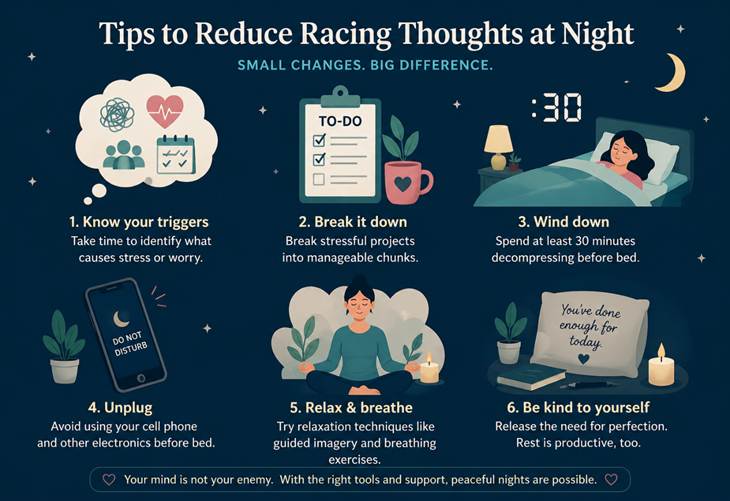
  • Protect sleep as a priority, not a luxury
  • Build small moments of peace into ordinary days

You do not need to overhaul your life overnight. Small steady changes often bring the greatest shift.

Final thought

Your body is not working against you.

It is responding to the load it is under.

When the nervous system is supported, everything else often begins to follow.

I hope you feel inspired. Look after your body, and it will keep you healthy.

Catherine

CWD | 01 May 2026 | Ireland

Holistic Healthcare Wexford
Integrative · Mindful · Patient-Centred

About the Author

Dr Catherine W. Dunne MSc.D. is a Registered General Nurse with over 37 years of clinical experience in primary care in Ireland. Alongside her work in General Practice Nursing, she is the founder of Holistic Healthcare Wexford and co-founder of Aumvedas Academy.

With a background that bridges conventional medicine and holistic practice, Catherine has a particular interest in the area where patients are often told “everything is normal,” yet still feel unwell. Her work focuses on helping people understand what their body is communicating, especially in relation to energy, stress, metabolic function, and recovery.

Through a combination of clinical knowledge and holistic support, she works with individuals to restore balance, improve resilience, and support long-term wellbeing.

Based in Wexford, Ireland.

Disclaimer

This article is for informational and educational purposes only and is not intended as medical advice. It does not replace consultation with a qualified healthcare professional. Patients should always seek appropriate medical guidance regarding their individual health needs and before making changes to treatment or care.

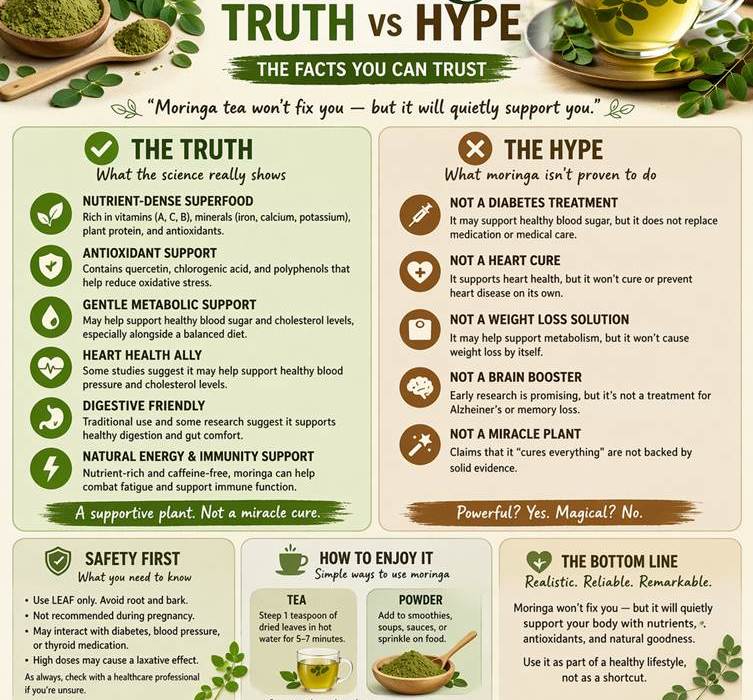
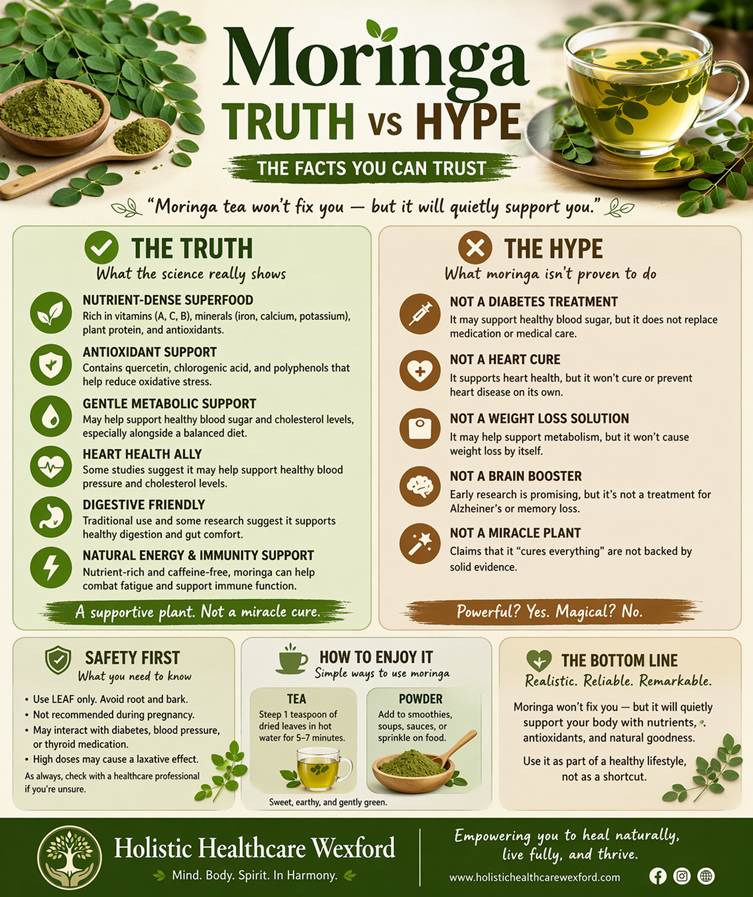
Moringa: Truth vs Hype

“Moringa tea won’t fix you – but it will quietly support you.”

Moringa has been called everything from a “miracle tree” to a “superfood powerhouse.”
And like most things that get that level of attention, the truth sits somewhere in the middle.

So let’s strip it back – no hype, no dismissal – just what actually matters.

By Dr Catherine W. Dunne, MSc.D., RGN (GPN)
Holistic Healthcare Wexford | Co-founder, Aumvedas Academy

Let us look at what generalised information is given to us, when we see their ads flashing past us on Social Media Posts:

Moringa oleifera is a plant with numerous health benefits that have withstood the test of time. The leaves have been utilized as food medicine for thousands of years. (There are, however, side-effects with the root and the bark (listed below), so avoid them.)

Moringa leaves and flowers were first discovered around 2,000 BC in northern India where traditional physicians quickly became aware of the therapeutic value. As a result of the leave’s high levels of valuable nutrients, moringa was diligently used by members of royal families and other aristocrats.

Moringa, the “Miracle Tree” contains over 92 Nutritional Values – all in perfect balance!
Vitamins:
A (Alpha and Beta-Carotene), A B-Complex, C, D, E, K, Folate, Biotin, and many more.

Minerals:
Calcium, Chloride, Chromium, Copper, Fluorine, Iron, Manganese, Magnesium, Molybdenum, Phosphorus, Potassium, Sodium, Selenium, Sulphur, Zinc.

All 18 Amino Acids and many other beneficial nutrients, like Chlorophyll, Carotenoids, Flavonoids, Omega (3,6,9) Oils, Plant Sterols, Polyphenols, and still more.

While this sounds impressive, the presence of nutrients does not automatically translate into a therapeutic effect in the body.

Multiple studies show consuming moringa can improve blood sugar response. This is likely, at least in part, due to its fibre and protein content. This nutritional profile helps lower and level out blood sugar spikes. And balanced blood sugar is crucial for hormonal health, a healthy weight, and energy levels.

Antibacterial properties:
This plant produces substances to protect itself from bacteria in its environment. We receive these same antibacterial properties when we eat or apply it topically. In fact, in a 2011 study, researchers discovered that moringa extract inhibits the growth of S. aureus, V. parahaemolyticus, E. faecalis, and A. caviae.

Speeds healing:
Traditionally, many use moringa as a poultice to speed wound healing. We now have research to support that: Applying moringa to wounds can enhance wound healing. Moringa encourages blood clotting at the site of a wound. This shortens the time it takes to repair damage and speeds wound healing time.

Facilitates sleep:
As a protein-rich food, moringa packs an assortment of amino acids, some of which (most notably tryptophan) are the backbone of sleep-inducing hormones, like melatonin, priming the body for improved and more restful sleep.

Lowers cholesterol:
Moringa may also lower cholesterol, thanks to high levels of fibre and plant sterols. In a rabbit study, it lowered cholesterol and reduced plaque in the arteries as effectively as medication, without the side-effects.

Reduces severity of asthma:
In one of the few human clinical trials on the plant, adults with asthma took 3 grams of moringa twice daily (added to food) for three weeks. Moringa not only reduced asthma symptoms, but also reduced the severity of asthma attacks.

Reduces inflammation:
As with all plant-based foods, a number of studies show moringa contains phytochemicals that act as anti-inflammatories. Because inflammation is at the root of many diseases, the plant may help protect the body from long-term issues like arthritis, Crohn’s disease, and even chronic pain. (https://pmc.ncbi.nlm.nih.gov/articles/PMC9916933/)

This PubMed study states: “While the entire tree has antitumor activity, the sex hormone-related property is attributable to its ROOT, folk medicine use has also proven.” (I hear the root has been used as an abortifacent in India).
“This plant has been studied in relation to diabetes and thyroid function.” (https://pmc.ncbi.nlm.nih.gov/articles/PMC12003216/)

Moringa: Truth vs Hype

What Moringa Actually Is

Moringa (Moringa oleifera) is a leafy plant traditionally used as both food and medicine, particularly in parts of India and Africa.

The leaves are the part most commonly used and importantly, the safest.

They contain:

  • Plant protein
  • Minerals like calcium, iron, and magnesium
  • Vitamins (especially beta-carotene and vitamin C)
  • Antioxidants such as quercetin and chlorogenic acid

👉 In simple terms:
It’s a very nutrient-dense green.

Where the Hype Comes From

You’ll often see claims like:

  • lowers blood sugar
  • reduces cholesterol
  • boosts immunity
  • aids weight loss
  • supports brain health

Now, here’s the important part:

👉 Most of these claims come from:

  • small studies
  • animal research
  • or early-stage trials

That doesn’t make them false, but it does mean they are not strong enough to stand as treatments.

What Moringa Can Genuinely Do

When you remove the exaggeration, moringa sits in a very useful place:

1. Nutritional Support

It can help in:

  • fatigue
  • recovery
  • low nutrient intake

Think of it as:
👉 “filling in the gaps” rather than correcting disease

2. Antioxidant Support

Its plant compounds help:

  • reduce oxidative stress
  • support the body’s natural repair processes

Not dramatic — but quietly helpful over time.

3. Gentle Metabolic Support

There is some evidence it may:

  • support blood sugar balance
  • assist lipid (cholesterol) profiles

But:
👉 this is supportive, not therapeutic

What It Does NOT Do

Let’s be clear — because this is where people get misled.

Moringa does not:

  • treat diabetes
  • replace cholesterol medication
  • cause weight loss
  • “boost” immunity in any direct way

If something claims to do all of the above…

👉 it’s being oversold.

Who It May Suit

Moringa tea or powder can be useful for:

  • people feeling run down or depleted
  • those recovering from illness
  • general nutritional support
  • mild inflammatory states

It fits best as part of:
👉 a wider approach — not a standalone solution

Safety – What You Need to Know

  • Use leaf only (avoid root and bark)
  • Avoid in pregnancy as a precaution
  • Be mindful if taking:
    • diabetes medication
    • blood pressure medication
    • thyroid medication

As always:
👉 more is not better

How to Use It

Simple and effective:

  • Tea:
    1 teaspoon dried leaf
    Steep 5–7 minutes
  • Powder:
    Add to smoothies, soups, or food

👉 Consistency matters more than dose.

Final Thought

Moringa doesn’t need exaggeration.

It’s not a miracle.
It’s not a cure.

But it is:

👉 a steady, supportive plant that earns its place quietly

And in a world full of noise…

that’s often exactly what the body needs.

I hope you feel inspired. Look after your body, and it will keep you healthy.

Catherine

CWD 11 April 2026/Ireland

Holistic Healthcare Wexford
Integrative · Mindful · Patient-Centred

About the Author

Dr Catherine W. Dunne is a Registered General Nurse with over 37 years of clinical experience in primary care in Ireland. Alongside her work in General Practice Nursing, she is the founder of Holistic Healthcare Wexford and co-founder of Aumvedas Academy.

With a background that bridges conventional medicine and holistic practice, Catherine has a particular interest in the area where patients are often told “everything is normal,” yet still feel unwell. Her work focuses on helping people understand what their body is communicating, especially in relation to energy, stress, metabolic function, and recovery.

Through a combination of clinical knowledge and holistic support, she works with individuals to restore balance, improve resilience, and support long-term wellbeing.

Based in Wexford, Ireland.

Disclaimer

This article is for informational and educational purposes only and is not intended as medical advice. It does not replace consultation with a qualified healthcare professional. Patients should always seek appropriate medical guidance regarding their individual health needs and before making changes to treatment or care.

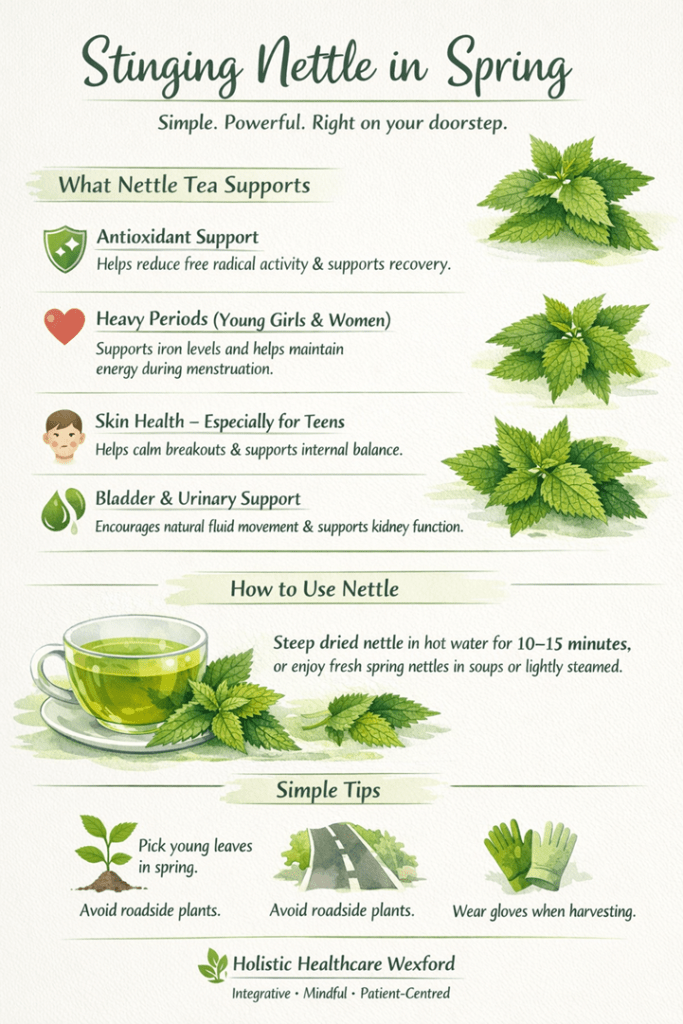
Stinging Nettle in Spring

Simple. Powerful. Right on your doorstep.

By Dr Catherine W. Dunne, MSc.D., RGN (GPN), M.H.I.T.
Holistic Healthcare Wexford

There’s a short window in spring when stinging nettle is at its best.

The young shoots are tender, vibrant, and full of life.
They haven’t toughened yet, and interestingly, they’re far less “stingy” to handle when picked correctly.

This is when nettle shifts from being a nuisance in the garden…
to one of the most useful plants you can bring into your daily routine.

Why Spring Nettles Are Different

Young nettle leaves are rich in:

  • Natural enzymes
  • Vitamin C
  • Iron
  • Magnesium
  • Calcium
  • Chlorophyll
  • Plant compounds that help reduce oxidative stress

At this stage, the plant is in active growth.
Everything is moving, building, and regenerating.

And that’s exactly what it offers the body.

WHAT NETTLE TEA SUPPORTS

A simple cup of nettle tea, taken regularly, can do far more than most people expect.
It works quietly in the background, supporting the body where it needs it most.

Antioxidant support

Nettle helps reduce free radical activity in the body.

This matters more than people realise. Oxidative stress is linked to fatigue, inflammation, skin issues, and slower recovery.

A daily nettle tea is a quiet way of supporting the body at that level.

Support for heavy periods (young girls & women)

This is one of the old uses and still one of the most relevant.

Nettle:

  • Supports iron levels
  • Helps maintain energy
  • Provides minerals needed during blood loss

Nettle provides natural support for iron levels, helping maintain energy during heavier menstrual cycles.
It also supplies key minerals the body draws on during blood loss.

Taken as a tea, it offers gentle support without complication.

Skin support – especially teenagers

When skin is flaring, spots, congestion, breakouts, the body is often:

  • Under pressure
  • Slightly inflamed
  • Not clearing waste efficiently

The body often reflects internal imbalance rather than just surface issues.

Nettle supports the body by helping reduce inflammatory load, improving nutrient availability, and encouraging natural internal “clearing.”

It’s not a quick fix, but taken daily and over time, it brings a steadiness the skin responds well in a noticeable way, too.

Bladder and urinary support

Even as a simple tea, nettle supports normal kidney and urinary function.

It gently encourages fluid movement through the body without being harsh or depleting.
This makes it particularly useful when the system feels sluggish or under strain.

It’s not harsh.
It doesn’t deplete.

It supports the body in doing what it’s meant to do anyway.

How to Use It

Nettle doesn’t need complicated preparation.
In fact, its strength lies in its simplicity.

A teaspoon or two of dried nettle steeped in hot water for 10–15 minutes is enough to create a mineral-rich infusion.

Taken once or twice daily, it becomes a steady support rather than a quick intervention.

Fresh young nettle in spring can also be used in soups or lightly steamed, offering the same benefits in a more food-based form.

With nettle, consistency matters far more than quantity.

RECAP:

✔️ Fresh nettle (spring)

  • Pick young tops (gloves recommended)
  • Use in soups, broths, or lightly steamed
  • Can also be used fresh for tea

✔️ Tea

  • 1–2 teaspoons dried nettle per cup
  • Steep 10–15 minutes
  • Drink 1–3 cups daily

Consistency matters more than quantity.

A few practical notes

  • Avoid picking near roadsides or sprayed areas
  • If on diuretics or blood pressure medication, just be mindful
  • Pick young leaves in spring, when the plant is at its most vibrant
  • Avoid roadside or sprayed areas
  • Use gloves when harvesting fresh nettle
  • In most cases, nettle as a tea is safe and well tolerated

Final Thought

Nettle isn’t exotic.
It’s not expensive.
It doesn’t come in a glossy package.

And yet, every spring, it shows up offering exactly what the body often needs:

👉 nourishment
👉 support
👉 balance

Sometimes the simplest plants are the ones worth paying attention to.

I hope you feel inspired. Look after your body, and it will keep you healthy.

Catherine

CWD 03 April 2026/Ireland

Holistic Healthcare Wexford
Integrative · Mindful · Patient-Centred

About the Author

Dr Catherine W. Dunne is a Registered General Nurse with over 37 years of clinical experience in primary care in Ireland. Alongside her work in General Practice Nursing, she is the founder of Holistic Healthcare Wexford and co-founder of Aumvedas Academy.

With a background that bridges conventional medicine and holistic practice, Catherine has a particular interest in the area where patients are often told “everything is normal,” yet still feel unwell. Her work focuses on helping people understand what their body is communicating, especially in relation to energy, stress, metabolic function, and recovery.

Through a combination of clinical knowledge and holistic support, she works with individuals to restore balance, improve resilience, and support long-term wellbeing.

Based in Wexford, Ireland.

Disclaimer
The information provided in this article is for general educational purposes only and is not intended as medical advice, diagnosis, or treatment. While every effort is made to ensure accuracy, individual health needs can vary. Always consult your GP or a qualified healthcare professional before making changes to your health routine, especially if you have an existing condition, are taking medication, or are pregnant.

Why You Feel “Off” Even When Your Blood Tests Are Normal

By Dr Catherine W. Dunne, MSc.D., RGN (GPN), M.H.I.T.
Holistic Healthcare Wexford

YOU ARE NOT IMAGINING IT

Many people are told the same thing:
“Your blood tests are normal.”  And yet… you don’t feel normal.

Your energy is low.
Your sleep isn’t refreshing.
Your mood feels flat, anxious, or unpredictable.
Your body just doesn’t feel right.

This is more common than you might think.
And importantly:
It does not mean nothing is wrong.

NORMAL” DOES NOT MEAN OPTIMAL

Standard blood tests are designed to detect disease.
They are not designed to assess how well your body is functioning day to day.

A result can sit comfortably within range, yet still be:

  • low for your individual needs
  • poorly utilised by the body
  • insufficient during times of stress or recovery

This is where many people fall through the gap.

IT’S NOT JUST WHAT YOU TAKE, IT’S WHAT YOUR BODY CAN USE

You might be:

  • eating well
  • taking supplements
  • doing all the right things

And still feel depleted.

Why?

Because the body relies on multiple steps:

  • digestion
  • absorption
  • transport
  • cellular uptake

If any part of that chain is under strain, you can feel the effects long before anything shows up on a lab report.

THE MISSING PIECE IS OFTERN THE NERVOUS SYSTEM

One of the most overlooked factors is nervous system load.
Modern life keeps the body in a constant state of low-grade stress, ongoing alertness, and overstimulation.
Over time, this begins to affect energy production, sleep quality, digestion, and hormone balance.

Many people describe it simply as:
“I can’t switch off.”
That alone can keep the body from restoring properly.

THIS IS WHERE WHOLISTIC CARE COMES IN.

In practice at Holistic Healthcare Wexford, this pattern shows up more and more frequently.
People often arrive feeling dismissed, frustrated, and unsure where to turn next.
This work is not about replacing medical care.
It is about supporting the body’s function, identifying where things are under strain, and helping the system return to balance.

This may include nervous system support, targeted nutritional guidance, and gentle, body-led therapies.

YOU ARE NOT “FINE”. YOU ARE EARLY.

Feeling “off” is often an early signal, not a dead end.

Your body is communicating.
It just hasn’t reached the point of disease.
And that is exactly where the greatest opportunity for change exists.

WHAT YOU CAN DO NEXT

If this resonates with you, start simple:

  • Pause and acknowledge how you actually feel
  • Look at your sleep, stress, and daily load
  • Do not dismiss your symptoms just because tests are “normal”

If you feel you need support:

A holistic consultation can help you make sense of what your body is showing you and what to do next.

FINAL THOUGHT

You know your body.
If something feels off, it is worth listening.
Not everything shows up on paper.
But that does not make it any less real.

I hope you feel inspired. Look after your body, and it will keep you healthy.

Catherine

CWD 01 April 2026/Ireland

About the Author

Dr Catherine W. Dunne is a Registered General Nurse with over 37 years of clinical experience in primary care in Ireland. Alongside her work in General Practice Nursing, she is the founder of Holistic Healthcare Wexford and co-founder of Aumvedas Academy.

With a background that bridges conventional medicine and holistic practice, Catherine has a particular interest in the area where patients are often told “everything is normal,” yet still feel unwell. Her work focuses on helping people understand what their body is communicating, especially in relation to energy, stress, metabolic function, and recovery.

Through a combination of clinical knowledge and holistic support, she works with individuals to restore balance, improve resilience, and support long-term wellbeing.

Based in Wexford, Ireland.

Disclaimer

The information provided in this article is for educational purposes only and is not intended as medical advice. Always consult a qualified healthcare professional before starting any new supplement or health intervention.

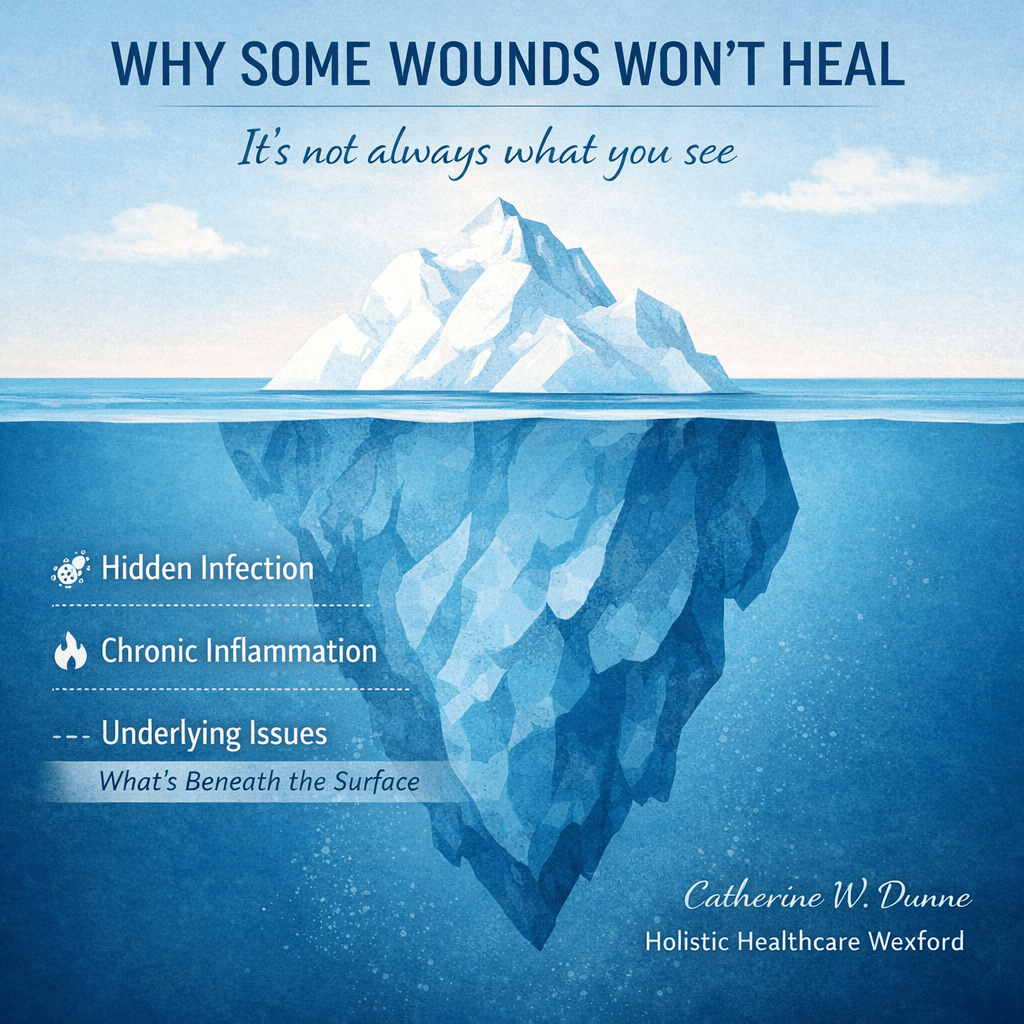
Why Some Wounds Just Won’t Heal: What Most People Are Missing

This article explores why some wounds become slow to heal, looking at common underlying factors such as hidden infection, inflammation, and the body’s internal healing environment, and how a more supportive, integrative approach may help restore the natural healing process.

By Dr Catherine W. Dunne, MSc.D., RGN (GPN)

If you’ve ever had a wound that seemed to linger far longer than it should, you’ll know how frustrating it can be.

It starts small.
A cut. A graze. A surgical site.
Then weeks pass… and it’s still there.

For some people, especially those with diabetes, circulatory issues, or ongoing inflammation, wounds can become slow, stubborn, and difficult to manage.

But here’s the part many people are never told:

👉 Not all wounds fail to heal because of the skin.

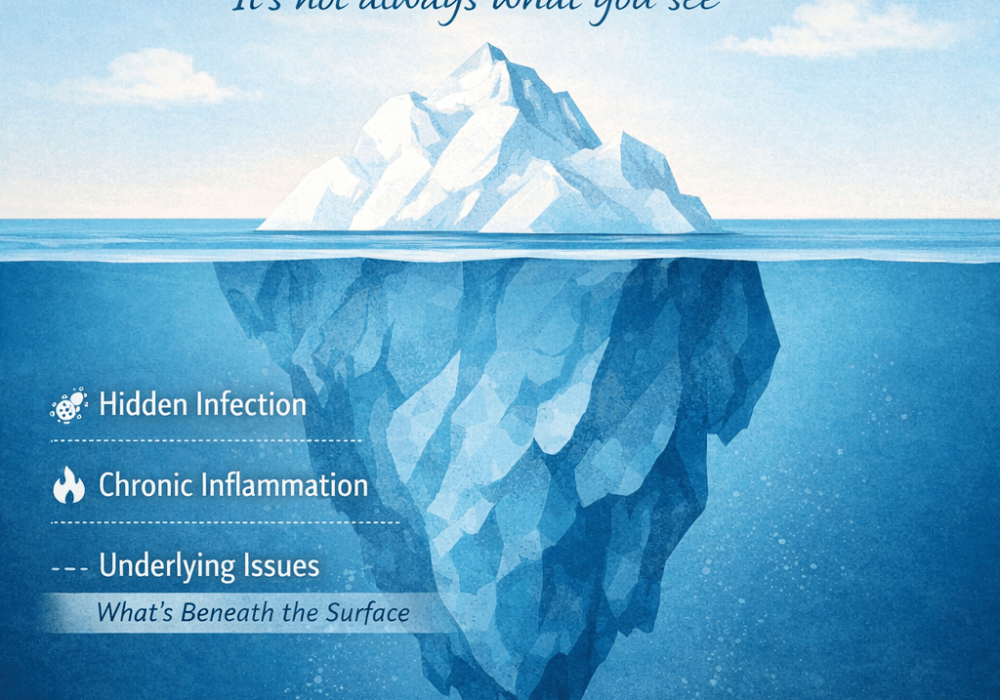
Very often, the issue lies beneath the surface.

The Hidden Problem: Why Healing Gets Stuck

In clinical practice, delayed wound healing is usually linked to three key factors:

1. Persistent Low-Level Infection

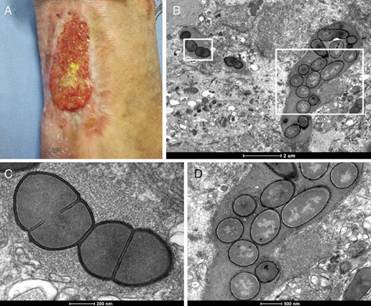
Even when a wound doesn’t look obviously infected, bacteria can still be present.

These microbes don’t always behave in the way we expect.
They don’t just sit on the surface, they organise themselves.

2. Biofilm Formation (The “Invisible Shield”)

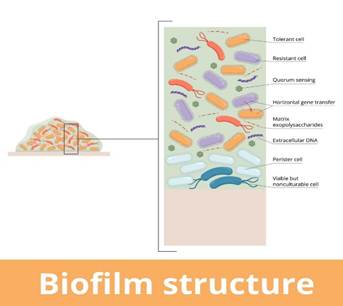
Bacteria can form what’s known as a biofilm, a protective layer that acts like a shield.

Inside this structure:

  • bacteria become harder to kill
  • standard treatments may struggle to reach them
  • the wound remains in a prolonged inflammatory state

This is one of the main reasons wounds become chronic.

3. Ongoing Inflammation

When the body senses something isn’t right, it stays in “repair mode.”

But if that phase never switches off:

  • healing slows
  • tissue regeneration is impaired
  • the wound can stall completely

Why Standard Treatments Don’t Always Work

Modern wound care is excellent in many ways, particularly with:

  • advanced dressings
  • infection control
  • moisture balance

But even with the best care, some wounds:

  • plateau
  • re-open
  • or simply refuse to progress

This is where we begin to look at adjunctive approaches, methods that support the body rather than replace standard care.

A Quietly Powerful Tool: Silver in Wound Care

Silver has been used in wound care for centuries.
In modern practice, it is commonly found in specialised dressings used in hospitals and community settings.

Its value lies in its ability to:

  • reduce harmful bacteria in the wound
  • interfere with how bacteria grow and spread
  • support a cleaner environment for healing

This can be particularly helpful in wounds that appear clean but are not progressing.

More recently, there has been growing interest in colloidal silver, which contains very small (nano-sized) particles suspended in solution.

Research and clinical observation suggest it may:

  • help reduce the number of bacteria present
  • disrupt protective layers that bacteria form to shield themselves (known as biofilms)
  • support a more balanced healing environment

Importantly, when used appropriately, it is considered an adjunct, meaning it works alongside standard wound care rather than replacing it.

A Holistic View of Wound Healing

From a holistic perspective, wound healing is never just about the skin.
It involves:

  • circulation
  • immune function
  • how the body produces and uses energy, regulates blood sugar, and controls inflammation
  • balanced inflammation response

And sometimes, small supportive interventions can help the body return to a natural healing state.

Final Thoughts

If a wound is slow to heal, it does not mean the body has failed.
It usually means something is getting in the way.

Understanding factors such as infection, biofilm, and inflammation can make a significant difference in how we approach care.
When appropriate, integrating supportive therapies alongside standard treatment may help support the healing process.

This article is intended to support understanding and awareness of wound healing and does not replace individual clinical assessment or care.
It usually means something is getting in the way of the natural healing process.

I hope you feel inspired. Look after your body, and it will keep you healthy.

Catherine

CWD 20 March 2026/Ireland

ABOUT THE AUTHOR

Dr Catherine W. Dunne, MSc.D., RGN (GPN), is an experienced General Practice Nurse based in Ireland, with over 37 years of clinical experience, including more than three decades in Irish primary care.

She has a strong clinical background in chronic disease management and wound care, with a particular interest in community-based treatment approaches. Her early nursing training in Germany included exposure to both conventional and complementary wound-care practices, shaping her integrative clinical perspective.

In addition to her nursing work, Dr Dunne is the founder of Holistic Healthcare Wexford and co-founder of Aumvedas Academy, where she provides education in integrative health approaches.

Her work focuses on bridging evidence-based medicine with practical, patient-centred care in modern clinical practice.

Why Calcium Alone Is Not Enough

Vitamin D3, Magnesium and Vitamin K2: The Team That Helps Calcium Work in the Body

For many years we were told something simple about bone health:

By Dr Catherine W. Dunne MSc.D., RGN
Holistic HealthCare Wexford & Aumvedas Academy
Nurse, Medical Intuitive and Holistic Practitioner

Take calcium and a little vitamin D.

But modern research is showing that calcium metabolism is far more sophisticated than that. The body relies on a small team of nutrients working together — most importantly vitamin D3, magnesium and vitamin K2.

When these nutrients are balanced, calcium is more likely to support healthy bones rather than accumulating in places where it should not be.

Understanding how this system works can help us make better choices for long-term health.

What do vitamin D3, magnesium and vitamin K2 do together?

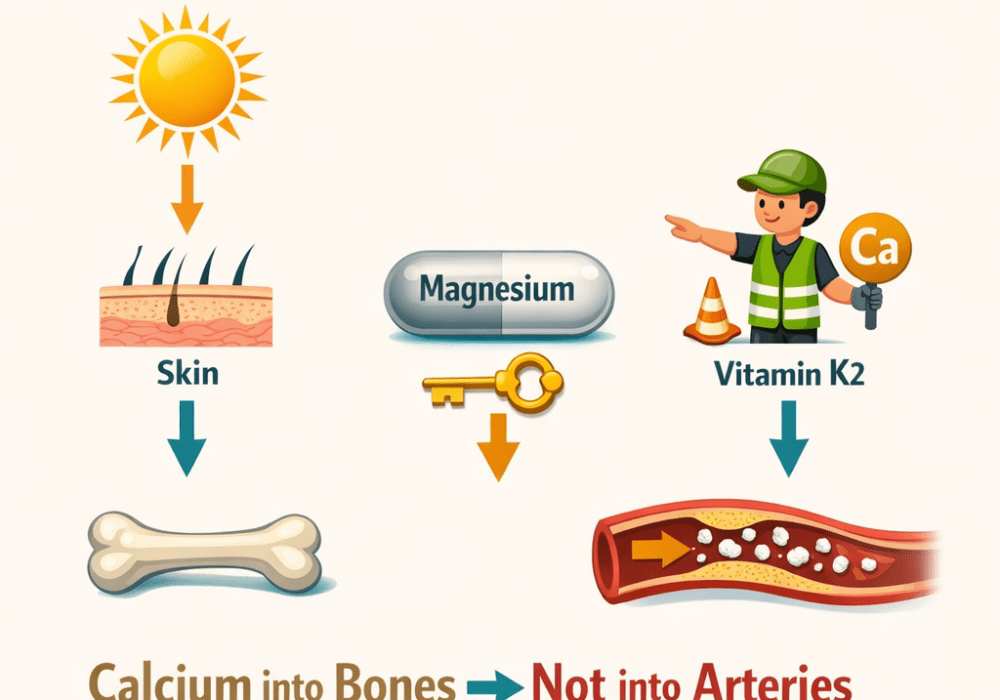
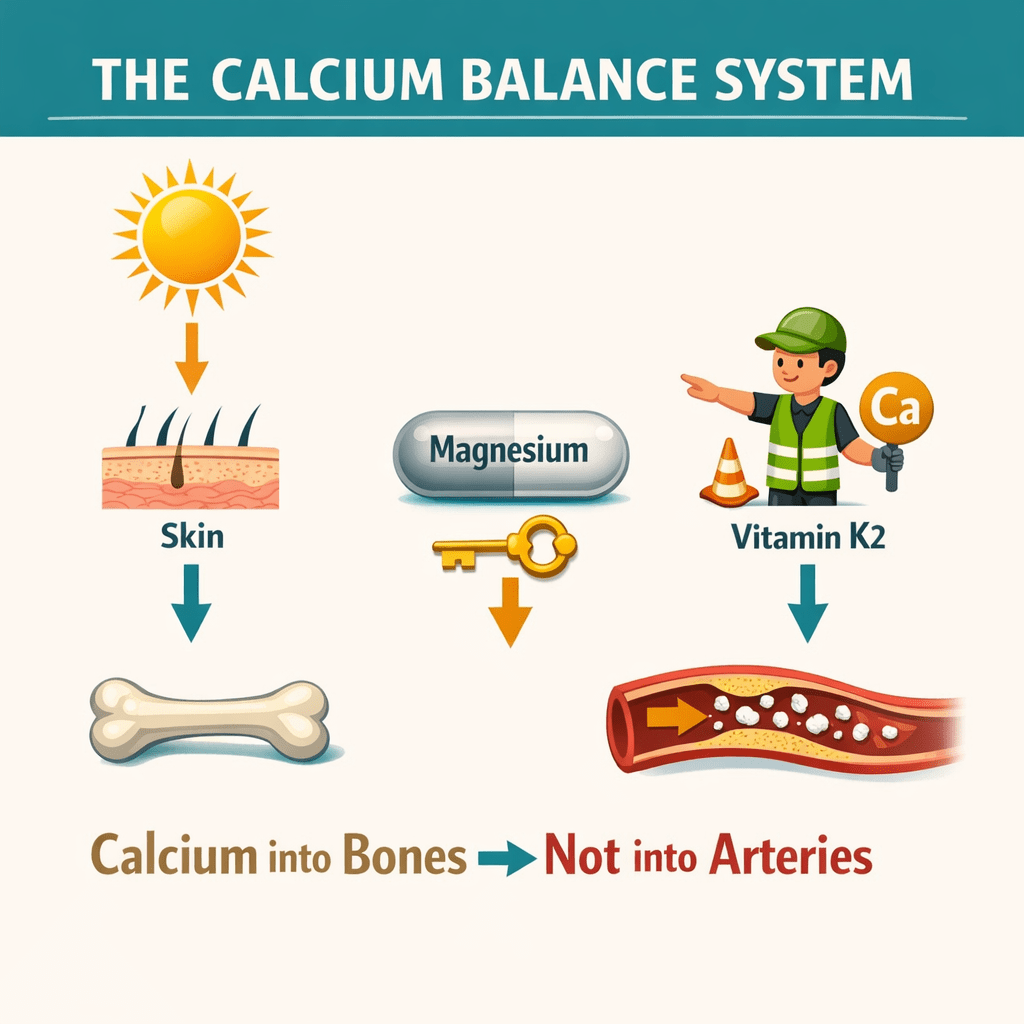
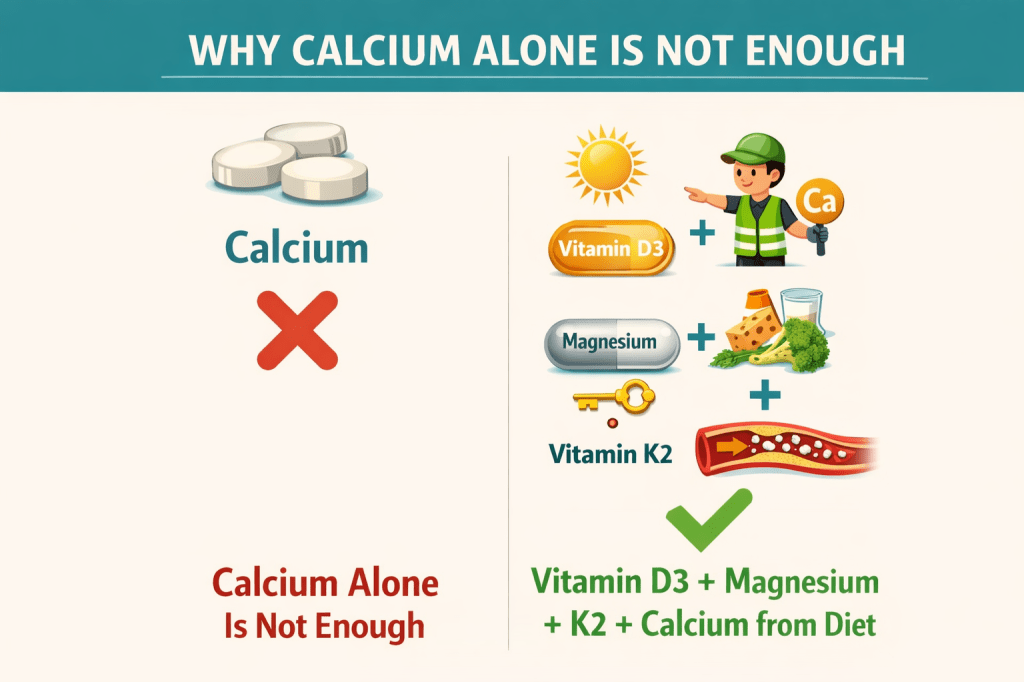
Vitamin D3 helps the body absorb calcium from food, magnesium activates vitamin D so it can function properly, and vitamin K2 directs calcium into bones while helping prevent deposits in arteries and soft tissues. Together, these nutrients support healthy calcium balance, bone strength and overall metabolic health.

Vitamin D3 – The Sunshine Signal

Vitamin D is often called a vitamin, but in reality it behaves more like a hormone.

Production begins in the skin when ultraviolet-B sunlight converts a cholesterol-related molecule called 7-dehydrocholesterol into vitamin D3.

Once activated by the liver and kidneys, vitamin D influences hundreds of genes involved in:

• calcium absorption
• immune regulation
• inflammation control
• muscle strength
• bone metabolism

One of its most important roles is helping the body absorb calcium from food.

Without sufficient vitamin D, the body may absorb only a small fraction of the calcium we eat.

Low vitamin D levels have also been associated in research studies with a range of conditions including:

• osteoporosis
• autoimmune diseases such as multiple sclerosis
• certain cancers including breast and bowel cancer.

This does not mean vitamin D alone prevents these diseases, but it highlights how important it is in maintaining normal physiological balance.

Magnesium – The Quiet Enabler

Here is a fact that many people do not realise.

Vitamin D cannot function properly without magnesium.

Magnesium is required for the enzymes that activate vitamin D in the body. Without adequate magnesium, vitamin D may remain largely inactive.

Magnesium also plays important roles in:

• parathyroid hormone regulation
• nerve and muscle function
• heart rhythm stability
• bone mineralisation.

Unfortunately magnesium deficiency has become common in modern diets due to soil depletion, processed foods and certain medications.

When magnesium levels are low, increasing calcium intake alone often fails to correct imbalances.

Vitamin K2 – The Calcium Guide

If vitamin D increases calcium absorption, another important question arises:

Where does that calcium go?

Vitamin K2 helps answer that question.

This nutrient activates specialised proteins that guide calcium into the bones while helping prevent calcium deposits in arteries and soft tissues.

Two important vitamin K2-dependent proteins include:

Osteocalcin, which binds calcium into the bone matrix
Matrix GLA protein, which helps prevent vascular calcification.

In simple terms, vitamin K2 acts like a traffic controller for calcium, helping ensure it strengthens bones rather than accumulating where it does not belong.

Why Calcium From Food Is Often Preferable

Calcium is clearly important for bone health, but more is not always better.

Many people can obtain adequate calcium through foods such as:

• dairy products
• leafy green vegetables
• almonds and sesame seeds
• small fish eaten with bones.

Supplements may be appropriate in certain situations, but high calcium intake without sufficient vitamin D, magnesium and K2 may not support healthy calcium balance.

For this reason, many clinicians now emphasise dietary calcium alongside nutrient balance rather than relying solely on supplements.

Vitamin D and the Immune System

Beyond bone health, vitamin D plays an important role in immune regulation.

Immune cells contain vitamin D receptors, and adequate levels appear to help maintain balanced immune responses.

Researchers have explored links between vitamin D status and conditions such as:

• multiple sclerosis
• autoimmune diseases
• breast cancer
• colorectal (bowel) cancer.

While vitamin D is not a treatment for these conditions, maintaining healthy levels may support the body’s natural defence systems.

Interestingly, the prevalence of multiple sclerosis increases in populations living further from the equator, where sunlight exposure — and therefore vitamin D production — is lower.

A Simple Way to Think About the System

Instead of focusing on a single nutrient, it helps to think of calcium regulation as a partnership.

Vitamin D3
helps the body absorb calcium.

Magnesium
activates vitamin D and supports metabolic processes.

Vitamin K2
directs calcium into bones and away from soft tissues.

Calcium
provides the structural building blocks for bones and teeth.

When these nutrients work together, the body is better able to maintain balance.

Diagram showing how Vitamin D3, magnesium and vitamin K2 work together to regulate calcium and support bone health.

Supporting Healthy Nutrient Levels

Some practical ways to support this system include:

• sensible sunlight exposure where possible
• eating a varied diet rich in vegetables, nuts and seeds
• including fermented foods or high-quality dairy where tolerated
• discussing testing or supplementation with a healthcare professional when appropriate.

Every individual is different, and personalised guidance is always best.

Emerging evidence suggests that boron may further support this system by improving how these nutrients are utilised within the body. Boron: The Missing Link in Vitamin D, Calcium & Hormone Balance

Final Thoughts

Health rarely depends on one nutrient or one supplement.

The body works through networks of nutrients and signals, each supporting the other.

Understanding how vitamin D3, magnesium and vitamin K2 interact gives us a clearer picture of how the body manages calcium, supports bone health and maintains overall wellbeing.

Sometimes the most effective approach is simply helping the body restore its natural balance.

I hope you feel inspired. Look after your body, and it will keep you healthy.

Catherine

CWD 14 March 2026/Ireland

Dr Catherine W. Dunne MSc.D., RGN, M.H.I.T. is a nurse, holistic practitioner, and educator based in Wexford, Ireland. With over 35 years of experience in healthcare and energy-based healing modalities, she integrates conventional medical knowledge with holistic approaches to support whole-person well-being.

Catherine is the founder of Holistic HealthCare Wexford and co-founder of Aumvedas Academy, where she teaches courses in holistic health, energy medicine, and integrative healing practices.

Her work focuses on empowering people to understand the body as an intelligent system capable of healing when supported with the right knowledge, nutrition, and energetic balance.

Learn more:
Holistic HealthCare Wexford
Aumvedas Academy 

Disclaimer

The information provided in this article is for educational purposes only and is not intended as medical advice. Always consult a qualified healthcare professional before starting any new supplement or health intervention.

Solar Plexus Collapse: A Case Study in Feminine Energetic Shutdown

By Dr. Catherine W. Dunne | Holistic HealthCare Wexford & Aumvedas Academy

ABOUT CATHERINE: Dr Catherine W Dunne MSc. D., RGN, Reiki Master (RGMT), M.H.I.T: Master Acupressure, Practitioner of Reflexology, Aromatherapy, Deep Tissue/Myo-fascia Massages, Infrared Treatments, Vibrational Sound and Colour Therapist, Tissue Salt Advisor, Pendulum Healing Dowser, Chakra Practitioner , Tao Cosmic Healing Practitioner, Practitioner of Plant and Herb Medicine and Nurse.

Introduction

In recent weeks, a striking energetic pattern has emerged in my clinical and intuitive practice: multiple women presenting with complete chakra lockdown. This is not the common sluggishness or emotional congestion many people carry, but a full-system freeze affecting the Earth Star, all seven primary chakras, and the Soul Star. The pattern is precise, repeatable, and—crucially—collective.

As both a medical practitioner and an intuitive healer, I am documenting this emerging phenomenon to bring clarity to an escalating issue in the feminine field. What I observed in three separate women, each on the same day and with no connection to one another, indicates a larger energetic wave moving through the collective.

What is Full-System Chakra Lockdown?

A full-system freeze presents as:

  • Earth Star: inactive, unresponsive, no grounding dynamic
  • Root to Crown: unmoving, silent, withdrawn
  • Soul Star: disconnected, unlit, sealed
  • Aura: flattened or collapsed inwards
  • Nervous System: in dorsal-parasympathetic freeze (shutdown response)

This is not depression or simple burnout. It is a whole-system protective mechanism; the energetic equivalent of the body curling into a ball to survive.

Why the Solar Plexus Collapses First

Among all chakras, the Solar Plexus governs the greatest range of physiological and energetic functions. It influences:

  • the gut–brain axis
  • digestion and assimilation
  • liver, pancreas, adrenal regulation
  • boundaries
  • will and personal power
  • identity, autonomy, direction

In states of overwhelm, fear, pressure, and emotional overload, the Solar Plexus is the first centre to implode. When it collapses, it pulls the entire Chakra column with it, much like a star folding inward during gravitational overload.

Reopening the Solar Plexus becomes the pivotal step. Without it, the system cannot re-engage, reconnect, or climb out of freeze.

Why Women are Affected First

This wave strongly targets the feminine energetic architecture. Women process emotional and collective tension through:

  • hormonal cycles
  • relational fields
  • intuitive sensitivity
  • ancestral memories
  • social and maternal expectations
  • the psychic responsibility of caretaking others

Men respond to overload differently, often through mental dissociation or emotional numbing. Women absorb; men deflect. In collective compression, women reach freeze first.

Collective Triggers Behind the Feminine Shutdown

The cause of this pattern is not individual but environmental and collective. Key contributing factors include:

  • global instability and heightened fear
  • solar storms and geomagnetic stress
  • emotional overload in the collective psyche
  • information saturation and psychic noise
  • economic tension and survival concerns
  • collapse of social structures and support systems
  • ancestral trauma resurfacing for resolution

The feminine field has become the buffer for humanity’s emotional backlog, leading to widespread energetic collapse.

Case Report: Three Women, One Pattern

In the same month of November 2025, three unrelated women presented with identical energetic architecture:

  • full freeze from Earth Star to Soul Star
  • imploded Solar Plexus
  • diminished will and emotional exhaustion
  • a sense of being overwhelmed, directionless, or depleted

Despite different life stories, each carried the same imprint of collective pressure. In all three cases, the Solar Plexus was the centre demanding immediate intervention.

Intervention: Why the Solar Plexus Was Reopened First

Reactivating the Solar Plexus initiated:

  • return of breath and energetic flow
  • reconnection of the vertical line (Earth Star ↔ Soul Star)
  • release of tension in the gut and diaphragm
  • restoration of personal agency and inner stability

Opening any other Chakra first would have been ineffective or destabilising. The Solar Plexus is the command centre in full-system freeze.

Implications for Healers

Based on this emerging pattern, healers should be aware:

  • More women will present with full-system lockdown.
  • The Solar Plexus must often be addressed first.
  • Grounding techniques may fail until the Solar Plexus reopens.
  • Crown or heart work may overwhelm a frozen system.
  • Emotional containment and safety must be established before energetic reopening.

Healers may find themselves acting as stabilising nodes for the collective feminine field.

Implications for Humanity

This pattern reflects deeper shifts in consciousness. The feminine is reaching its threshold for emotional labour, generational trauma, and societal expectations. The Solar Plexus collapse signals the end of the era in which women silently carry the weight of the world.

A new phase is emerging—one that demands boundaries, balance, and restoration.

Conclusion

The phenomenon of Solar Plexus collapse in women is not isolated. It is a collective response to overwhelming emotional, psychic, and societal pressures. Documenting these cases helps illuminate a larger process unfolding within the human field—one that calls healers to recognise the signs and support the feminine through this transition.

Further study, documentation, and dialogue will be essential as this wave continues to unfold.

I hope you feel inspired. Look after your body, and it will keep you healthy.

Catherine

CWD 21 November 2025/Ireland

Seeing with the Hands: How the Body Learns to See Beyond Sight

By Dr. Catherine W. Dunne | Holistic HealthCare Wexford & Aumvedas Academy

ABOUT CATHERINE: Dr Catherine W Dunne MSc. D., RGN, Reiki Master (RGMT), M.H.I.T: Master Acupressure, Practitioner of Reflexology, Aromatherapy, Deep Tissue/Myo-fascia Massages, Infrared Treatments, Vibrational Sound and Colour Therapist, Tissue Salt Advisor, Pendulum Healing Dowser, Chakra Practitioner , Tao Cosmic Healing Practitioner, Practitioner of Plant and Herb Medicine and Nurse.

The Seeing Hands: A Journey from Coma to Consciousness

Most people think a coma is like being asleep: dark, silent, empty and yet aware of your surrounding and what was going on around you. But for me, it was the complete opposite. It was the moment everything opened. Not my eyes, but my awareness. At just 7 years old, after a serious post-operative complication, I slipped into a coma that would reshape the rest of my life.

When I woke up, I was not the same little girl.

I had been “somewhere else” – a place without form, without walls, and yet full of presence. I remember it as a soft hum of connection. Of being held in something vaster than the body. And when I returned, it was like someone had turned on an extra sense. Except… it didn’t come through sight. It came through touch.

Please don’t misunderstand me, I never lost the sight in my eyes.

Learning to See – Without My Eyes

In the early days of recovery, something strange began happening. When I touched things or even hovered my hands over people – I felt information. Not just warmth or sensation, but layers. Emotions. Density. Flow. Blockages. Like rivers, jagged stones, or bright currents, moving beneath the skin.

My hands began to see.

Of course, try telling an adult that when you’re 7 and they’ll likely smile, pat your head, and offer you a biscuit.

By nine, I saw energy itself—colours spiralling through the body like living light, the true faces of the chakras (but I didn’t know then that they were called chakras).

We hear often how children and in rare cases some adults, see auras around people. Children believe everyone can, until told differently. I was no different.

But I knew this was real. And, as it turned out, so did someone else.

The Doctor Who Didn’t Laugh

My step-father was an Internist – a logical man, medically trained. But he was also a Reiki Master. Which meant he straddled two worlds: the clinical, and the subtle. When I was 15, his patients with back trouble started showing up at the house. He sent them in with a wink.

“Go on Cathy, take a look at them.”

I would hover my palms and know instantly where the problem was.

Not a guess. Not a hunch. A knowing.

He trusted it. And so did I.

That same year, he attuned me to Reiki Level 1. Not because I wanted to learn how to heal. But because he recognised that I already was a healer  and just needed the keys to the temple I’d already been walking through in the dark.

Seeing Chakras… Differently

Here’s where it gets weird (or wonderful, depending on who’s reading).

At age 9, I began seeing (eyes & hands) chakras—and not the way they’re drawn in books. Not perfect spinning wheels with rainbow colours and petal counts. What I saw was alive. More like watery, pulsing orbs of frequency. Shape-shifting, responsive, and personal. They all have “funnels” adhered to them. The larger ones are to our back and front, one large one pointing towards our head and one towards our feet. In between, there are loads of smaller funnels and they have something, like “strings” connected to them. More about this later.

Some were dim, others bright. Some spun fast, some barely moved.

Later on, I’d find the books, the diagrams, the Sanskrit labels… but none of them matched what I had learned through my hands. The body does not lie. The energy system does not lie. And intuition does not wait for a textbook.

The Turning Point or The Path Wasn’t Learned — It Was Always There

That coma did not interrupt my life. It began it.

It taught me that consciousness isn’t confined to the brain. That healing isn’t only a profession; it’s a memory. I didn’t choose this path. It unfolded through me long before I understood it.

The coma also taught me that consciousness is not confined to eyes or words and that it moves through every cell.

Today, when I work as a medical intuitive, I still “see” with my hands. My hands became translators of that knowing. They felt, listened, and eventually saw. Healing ceased to be observation and became communication, a dialogue between the seen and unseen, between matter and memory.

 I still trust the quiet information that rises through the palms. And I help others reconnect to their own layers of knowing too, because we all have it. We all are it.

Some of us just get thrown into the deep end a bit earlier.

If You’ve Ever Felt More Than You Could Explain… You’re Not Imagining It

Intuition doesn’t whisper in logic – it speaks in sensation. In resonance. In the things we feel before we understand.

The body is not just a vessel.
It’s a tuning fork.

And when we learn how to listen with more than our eyes — healing becomes not just possible, but inevitable.

The Science of Sensory Substitution

Modern neuroscience calls this neuroplasticity—the brain’s ability to re-map itself.

  • Fingertips contain more sensory neurons than any other part of the body.
  • In those who lose sight, the visual cortex can awaken to touch and sound.
  • Proprioception and vibration sensitivity sharpen with attention.

In essence, the hands truly can “see.” They translate texture, heat, and electromagnetic change into imagery the mind recognises.

The Subtle Layer — Energy Perception

Beyond the physical nerves lies another spectrum of perception. Every cell emits frequency; every emotion alters the field around it.

When awareness is trained, the hands register these resonances—the difference between calm and chaos, truth and distortion. What science measures as microcurrent, healers feel as life-force.

New Skills – Old Technique

In 2014 I was hospitalised for 3 days. Back in 2013/14 there had been much talk about the Third Eye … how you can switch it off and turn it back on, like a light switch.

I’m in hospital. The lady in the bed next to me, with curtains drawn around her, was pulling my energy. I was too weak to resist her. I then remembered “the flipping of the switch” and so I did.

A mistake I had to learn with to this day.

However, when a seeing person looses their eye-sight, they are taught to “see” and “read” with their hands.

I was discharged from hospital the day before Good Friday. By Easter Sunday I realised, I could not see a person’s chakras. What had happened? “The Light Switch”! Since then I am working on re-opening my Third Eye. But, and here’s the kicker:

I have, since aged 8 (taught to me by my Great-grandmother) always used my pendulum. My Trusted Friend (some people hear me make reference to my pendulum this way).

Translating Touch with the Pendulum

Intuition doesn’t whisper in logic, it speaks in sensation. In resonance. In the things we feel before we understand.

The body is not just a vessel.
It’s a tuning fork.

Over time I introduced a bridge: the pendulum.
Its swing turns micro-responses of muscle and energy into visible motion. The pendulum doesn’t decide; it amplifies—translating what the body already knows and allowing intuition and logic to converse in harmony.

And when we learn how to listen with more than our eyes — healing becomes not just possible, but inevitable.

Practice for Readers — Awaken the Hand-Senses

  1. Rub your palms together until warmth arises.
  2. Hold them a few centimeters apart; sense the subtle magnetism.
  3. Move them slowly toward a plant, crystal, or another person’s hand.
  4. Observe texture, density, warmth, or coolness.
  5. Journal each session for seven days. Note how your language of feeling evolves.

You are retraining the body’s oldest instrument: feeling as knowing.

Bridging Science and Spirit

Science explains the wiring; spirituality explains the meaning. Together they reveal a complete anatomy of awareness.

In holistic medicine, data and divinity are not rivals; they’re dialects of the same truth: the body is conscious, and consciousness is the physician within.

Closing Reflection

The body never loses its ability to see.
When one doorway closes, awareness finds another.

To feel is to witness creation in motion. One pulse, one breath, one infinite conversation through the hands of humankind.

I hope you feel inspired. Look after your body, and it will keep you healthy.

Catherine

CWD 01 November 2025/Ireland