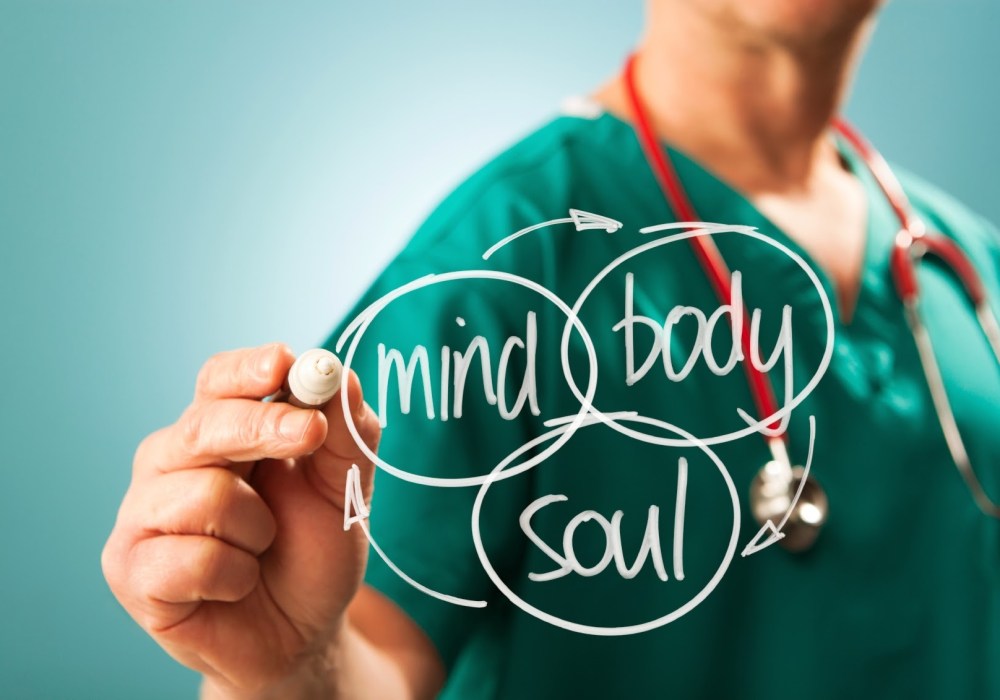
Who heals the Healer?
Doctors, Nurses, Therapists, Clergy, and other Healing Providers
CWD 25/10/2022 Ireland
Who heals the Healers?
We are all in danger of burnouts, but Doctors and us Nurses really do “feel” that pulling at the very essence of our being.
These are very stressful times and many are sick. Physically and emotionally. Usually you would attend your Family Doctor – GP for physical or organic help, or you may attend a Clergy or Therapist for emotional help … or, God forbid you end up on the hospital trolley in A&E (ER). And as you are now in their presence, looking for help, have you given the Healthcare Provider – Doctors, Nurses, Therapists, Clergy – a Thought of Your Time? Who Heals the Healer?
We are by no means immune to cases coming in and some touch us profoundly and we “bring it home”; something we were all taught, never to do. And to quote Rag’n’Bone Man: “I’m only human after all” – at the end of the day, that is exactly who we all are: Human.
Healing for Healers is a unique approach to address compassion fatigue, to listen to your body, and to connect to your inheritance. This includes both your inherited burdens and the true gifts of your lineage. You learn how to release what does not serve you, repair deep wounds, restore balance to the body, and replenish your energy and life force. As healers and care providers it is imperative to have a safe and containing place to receive this kind of support. It is possible to give and care for others while still honouring and providing for your own needs and health.
Example once told to me:
“Your healing space feels very relaxing and soothing. I think my patients would feel comfortable here“, said Dr. Emily Rawlings, as she stands in the middle of my office and looks around. She came to learn about my integrative practice of psychotherapy and intuitive healing as a resource for her patients. Her attention turns to the large coloured painting on the wall of a multi layered heart. She comments on how beautiful it is and how appropriate for the work that takes place here. She pauses for a moment. “I should also come here but it so hard to find the time for myself.” A tear wells up in her eye and she quickly wipes it away as if to dispel the unexpected sting of emotion. “Many of my patients are so ill and I come home so tired”. She lets out a deep sigh. “I get afraid that there won’t be enough left of me for my kids. Sometimes I just feel numb.” I notice her momentary sad and defeated expression. She then straightens out her slightly bent body and looks back at me with the composure of a strong competent doctor.
The kind of Tired that Dr. Rawlings is talking about is not the kind that gets better with a good night’s sleep. Hers is a compassion fatigue. This is a tiredness that lives in our hearts and in our bodies from the empathy that we express for the people we are treating every day. It can take too much out of us emotionally when we are “feeling” with our patients their fears and their feelings of desperation. How can we bring support and caring to our patients when our own inner energetic container is over full? As healers and care givers it is vital to have a mechanism to replenish and restore ourselves. We also must release any lingering feelings that we unintentionally hold on to from our patients. Dr. Rawlings continues to provide her heart felt caring through her will, drive, and commitment to healing. With a depleted body, she pushes beyond, past her ‘tired’, ignoring her body’s aches, pains, and signals to listen.
Thirty plus years ago, I chose a path that led me to care for people who were suffering deeply. The suffering had many forms such as severe burns, physical and emotional violence, and severe mental illness. People needed so much support to navigate the difficulties that life sent their way. Along with the feelings of pride, fulfilment, and joy that I received from this meaningful work, I also experienced the heaviness that comes from sharing in the depths of the human condition. I felt courageous and gratified that I carried this burden for so long without really knowing its impact. As my life became more complex and dense with responsibility, the heaviness increased. I desperately needed to address it.
Energy healing along with deep body listening and body dialogue offered me this opportunity. I was guided to connect with my body by sensing and feeling what it was holding. I was also guided to learn how to release this holding.
During this process I discovered that I was not just a great holder but I was what I call, an ‘inherited holder’. This means one who comes from a long line of strong women holders. How then could I give up my ‘inheritance’? This made it more difficult to discern what was truly serving me in my life and what burdens were not really mine.
What is an Integrated Practice of being a Nurse and Intuitive Energy Healing?
The Intuitive Energy Healing approach to therapy recognizes that throughout our lives, our bodies store memories and traumas in the form of blocks. These blocks or ‘stuck’ energy impact both our physical and emotional health. Negative energy stored for long periods of time manifest as symptoms of depression, anxiety, insomnia, pain, and illness. They also arise as struggles in relationships, in the work place, and in creative expression. Hidden beneath layers of energy blocks are unconscious beliefs formed from earlier life experiences which limit our capacity to make real or healthy choices.
Together the healer and client identify where the blocks are held, discern the underlying beliefs, and find the pathways for release. During this process the client may experience significant and unexpected changes which create openings for growth and healing. The client and healer reflect upon the process and content of the session, building connections between body and mind.
What can I expect in a typical session?
What Methods are used?
Every Intuitive Healer has their own methods and usually it is what they are most comfortable using.
In my case, I use Reiki Energy, Divine Energy, Chakra Energy, Radiesthesia Energy, Colour and Sound Vibrational Energies, Crystal Energy, Acupressure, Aroma Therapy and Massages, to name a few. I may only use two or three, or all of them; this depends on the client’s need for therapy. I am guided and follow intuition.
A typical session begins with traditional talk therapy focusing on those concerns which led the client to seek treatment. In order to deepen the work, we move to an energetic exploration of the body enabling client and healer to identify and clear blocks which are obstacles to healing. The body work may incorporate components of breath work, vocalisation, visualisation, guided imagery, movement, and hands on or hands over energetic healing. The healing moves back and forth between identifying and releasing blocks, and the reflection, understanding and integration of what has occurred. Sessions often close with a take-home exercise individually designed to help the client internalize the discovery process. A session can last up to 2 hours. Most require up to three such sessions to reach their goal, others feel the effects after the 2 hours.
If this resonates with you, call and leave a message, send and SMS or PM me directly – I will get back to you. Catherine.
Many thanks for taking the time reading this blog.
CWD 25.10.2022/Ireland



 Holistic Healthcare Wexford