Why You Feel “Off” Even When Your Blood Tests Are Normal

By Dr Catherine W. Dunne, MSc.D., RGN (GPN), M.H.I.T.
Holistic Healthcare Wexford
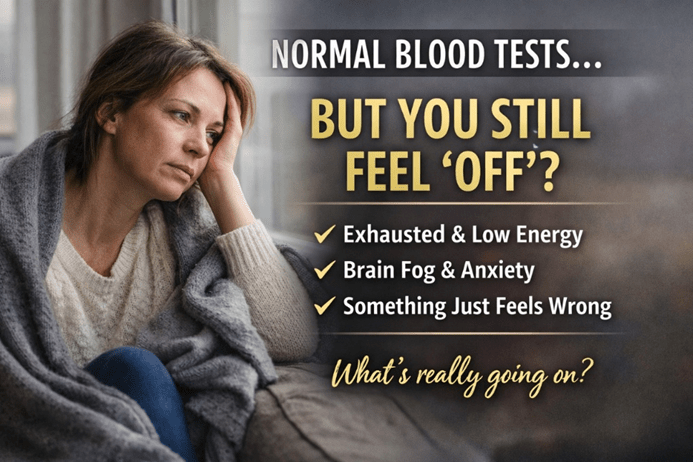
YOU ARE NOT IMAGINING IT

Many people are told the same thing:
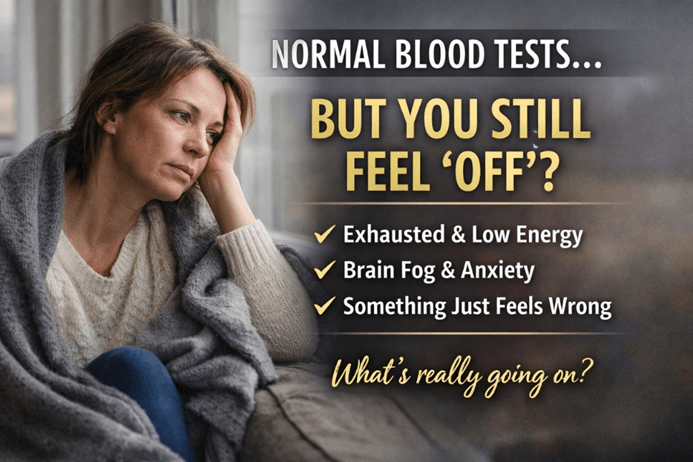
“Your blood tests are normal.”  And yet… you don’t feel normal.

Your energy is low.
Your sleep isn’t refreshing.
Your mood feels flat, anxious, or unpredictable.
Your body just doesn’t feel right.

This is more common than you might think.
And importantly:
It does not mean nothing is wrong.

NORMAL” DOES NOT MEAN OPTIMAL

Standard blood tests are designed to detect disease.
They are not designed to assess how well your body is functioning day to day.

A result can sit comfortably within range, yet still be:

  • low for your individual needs
  • poorly utilised by the body
  • insufficient during times of stress or recovery

This is where many people fall through the gap.

IT’S NOT JUST WHAT YOU TAKE, IT’S WHAT YOUR BODY CAN USE

You might be:

  • eating well
  • taking supplements
  • doing all the right things

And still feel depleted.

Why?

Because the body relies on multiple steps:

  • digestion
  • absorption
  • transport
  • cellular uptake

If any part of that chain is under strain, you can feel the effects long before anything shows up on a lab report.

THE MISSING PIECE IS OFTERN THE NERVOUS SYSTEM

One of the most overlooked factors is nervous system load.
Modern life keeps the body in a constant state of low-grade stress, ongoing alertness, and overstimulation.
Over time, this begins to affect energy production, sleep quality, digestion, and hormone balance.

Many people describe it simply as:
“I can’t switch off.”
That alone can keep the body from restoring properly.

THIS IS WHERE WHOLISTIC CARE COMES IN.

In practice at Holistic Healthcare Wexford, this pattern shows up more and more frequently.
People often arrive feeling dismissed, frustrated, and unsure where to turn next.
This work is not about replacing medical care.
It is about supporting the body’s function, identifying where things are under strain, and helping the system return to balance.

This may include nervous system support, targeted nutritional guidance, and gentle, body-led therapies.

YOU ARE NOT “FINE”. YOU ARE EARLY.

Feeling “off” is often an early signal, not a dead end.

Your body is communicating.
It just hasn’t reached the point of disease.
And that is exactly where the greatest opportunity for change exists.

WHAT YOU CAN DO NEXT

If this resonates with you, start simple:

  • Pause and acknowledge how you actually feel
  • Look at your sleep, stress, and daily load
  • Do not dismiss your symptoms just because tests are “normal”

If you feel you need support:

A holistic consultation can help you make sense of what your body is showing you and what to do next.

FINAL THOUGHT

You know your body.
If something feels off, it is worth listening.
Not everything shows up on paper.
But that does not make it any less real.

I hope you feel inspired. Look after your body, and it will keep you healthy.

Catherine

CWD 01 April 2026/Ireland

About the Author

Dr Catherine W. Dunne is a Registered General Nurse with over 37 years of clinical experience in primary care in Ireland. Alongside her work in General Practice Nursing, she is the founder of Holistic Healthcare Wexford and co-founder of Aumvedas Academy.

With a background that bridges conventional medicine and holistic practice, Catherine has a particular interest in the area where patients are often told “everything is normal,” yet still feel unwell. Her work focuses on helping people understand what their body is communicating, especially in relation to energy, stress, metabolic function, and recovery.

Through a combination of clinical knowledge and holistic support, she works with individuals to restore balance, improve resilience, and support long-term wellbeing.

Based in Wexford, Ireland.

Disclaimer

The information provided in this article is for educational purposes only and is not intended as medical advice. Always consult a qualified healthcare professional before starting any new supplement or health intervention.
Why Some Wounds Just Won’t Heal: What Most People Are Missing

This article explores why some wounds become slow to heal, looking at common underlying factors such as hidden infection, inflammation, and the body’s internal healing environment, and how a more supportive, integrative approach may help restore the natural healing process.

By Dr Catherine W. Dunne, MSc.D., RGN (GPN)

If you’ve ever had a wound that seemed to linger far longer than it should, you’ll know how frustrating it can be.

It starts small.
A cut. A graze. A surgical site.
Then weeks pass… and it’s still there.

For some people, especially those with diabetes, circulatory issues, or ongoing inflammation, wounds can become slow, stubborn, and difficult to manage.

But here’s the part many people are never told:

👉 Not all wounds fail to heal because of the skin.

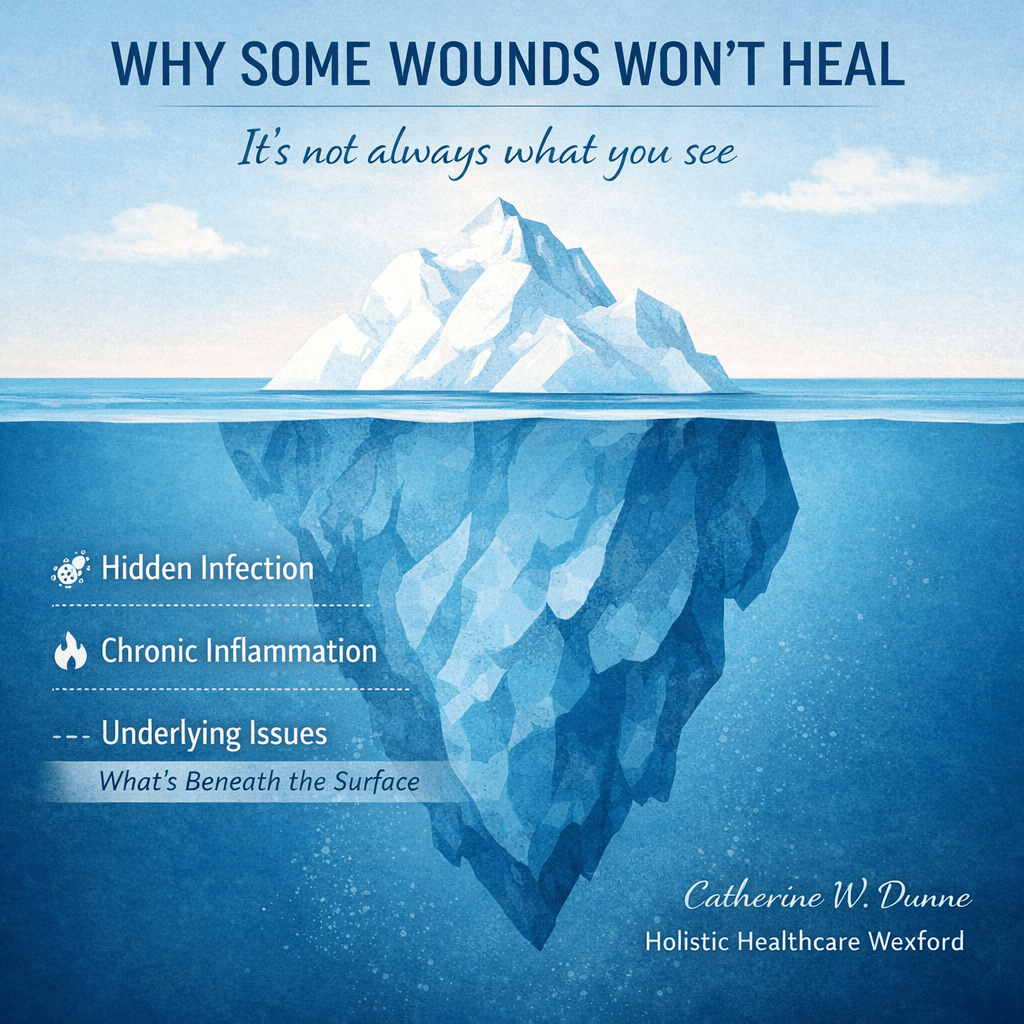
Very often, the issue lies beneath the surface.

The Hidden Problem: Why Healing Gets Stuck

In clinical practice, delayed wound healing is usually linked to three key factors:

1. Persistent Low-Level Infection

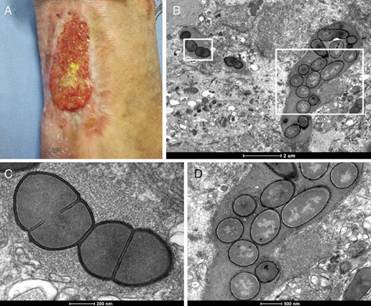
Even when a wound doesn’t look obviously infected, bacteria can still be present.

These microbes don’t always behave in the way we expect.
They don’t just sit on the surface, they organise themselves.

2. Biofilm Formation (The “Invisible Shield”)

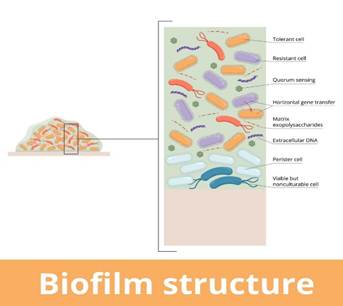
Bacteria can form what’s known as a biofilm, a protective layer that acts like a shield.

Inside this structure:

  • bacteria become harder to kill
  • standard treatments may struggle to reach them
  • the wound remains in a prolonged inflammatory state

This is one of the main reasons wounds become chronic.

3. Ongoing Inflammation

When the body senses something isn’t right, it stays in “repair mode.”

But if that phase never switches off:

  • healing slows
  • tissue regeneration is impaired
  • the wound can stall completely

Why Standard Treatments Don’t Always Work

Modern wound care is excellent in many ways, particularly with:

  • advanced dressings
  • infection control
  • moisture balance

But even with the best care, some wounds:

  • plateau
  • re-open
  • or simply refuse to progress

This is where we begin to look at adjunctive approaches, methods that support the body rather than replace standard care.

A Quietly Powerful Tool: Silver in Wound Care

Silver has been used in wound care for centuries.
In modern practice, it is commonly found in specialised dressings used in hospitals and community settings.

Its value lies in its ability to:

  • reduce harmful bacteria in the wound
  • interfere with how bacteria grow and spread
  • support a cleaner environment for healing

This can be particularly helpful in wounds that appear clean but are not progressing.

More recently, there has been growing interest in colloidal silver, which contains very small (nano-sized) particles suspended in solution.

Research and clinical observation suggest it may:

  • help reduce the number of bacteria present
  • disrupt protective layers that bacteria form to shield themselves (known as biofilms)
  • support a more balanced healing environment

Importantly, when used appropriately, it is considered an adjunct, meaning it works alongside standard wound care rather than replacing it.

A Holistic View of Wound Healing

From a holistic perspective, wound healing is never just about the skin.
It involves:

  • circulation
  • immune function
  • how the body produces and uses energy, regulates blood sugar, and controls inflammation
  • balanced inflammation response

And sometimes, small supportive interventions can help the body return to a natural healing state.

Final Thoughts

If a wound is slow to heal, it does not mean the body has failed.
It usually means something is getting in the way.

Understanding factors such as infection, biofilm, and inflammation can make a significant difference in how we approach care.
When appropriate, integrating supportive therapies alongside standard treatment may help support the healing process.

This article is intended to support understanding and awareness of wound healing and does not replace individual clinical assessment or care.
It usually means something is getting in the way of the natural healing process.

I hope you feel inspired. Look after your body, and it will keep you healthy.

Catherine

CWD 20 March 2026/Ireland

ABOUT THE AUTHOR

Dr Catherine W. Dunne, MSc.D., RGN (GPN), is an experienced General Practice Nurse based in Ireland, with over 37 years of clinical experience, including more than three decades in Irish primary care.

She has a strong clinical background in chronic disease management and wound care, with a particular interest in community-based treatment approaches. Her early nursing training in Germany included exposure to both conventional and complementary wound-care practices, shaping her integrative clinical perspective.

In addition to her nursing work, Dr Dunne is the founder of Holistic Healthcare Wexford and co-founder of Aumvedas Academy, where she provides education in integrative health approaches.

Her work focuses on bridging evidence-based medicine with practical, patient-centred care in modern clinical practice.