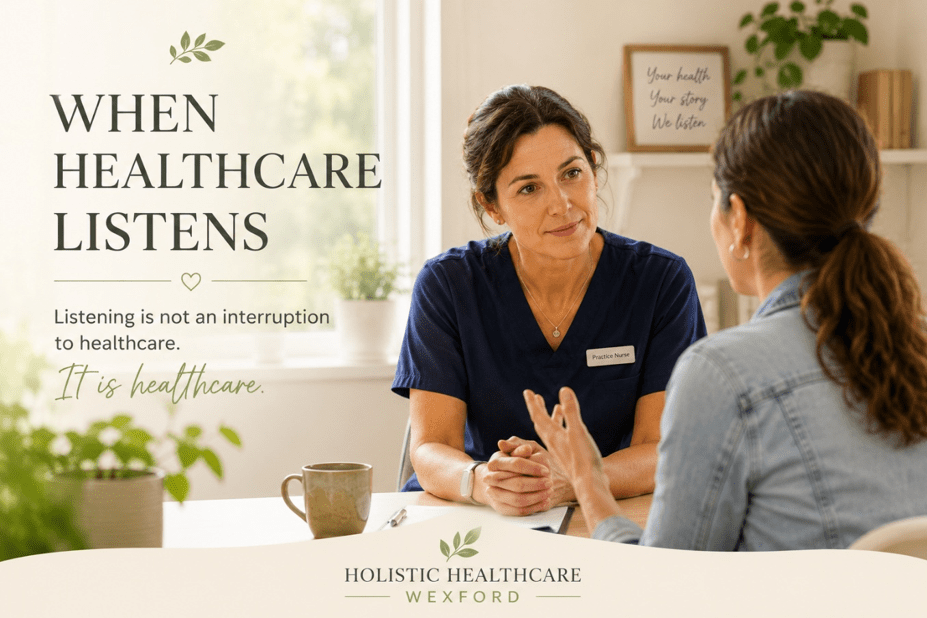
When Healthcare Listens

When Healthcare Listens

By Dr Catherine W. Dunne MSc.D., RGN (GPN), M.H.I.T.

There are moments in healthcare that stay with you long after the consultation has ended.

Not because of a remarkable diagnosis or a breakthrough treatment, but because of something much simpler.

Somebody chose to listen.
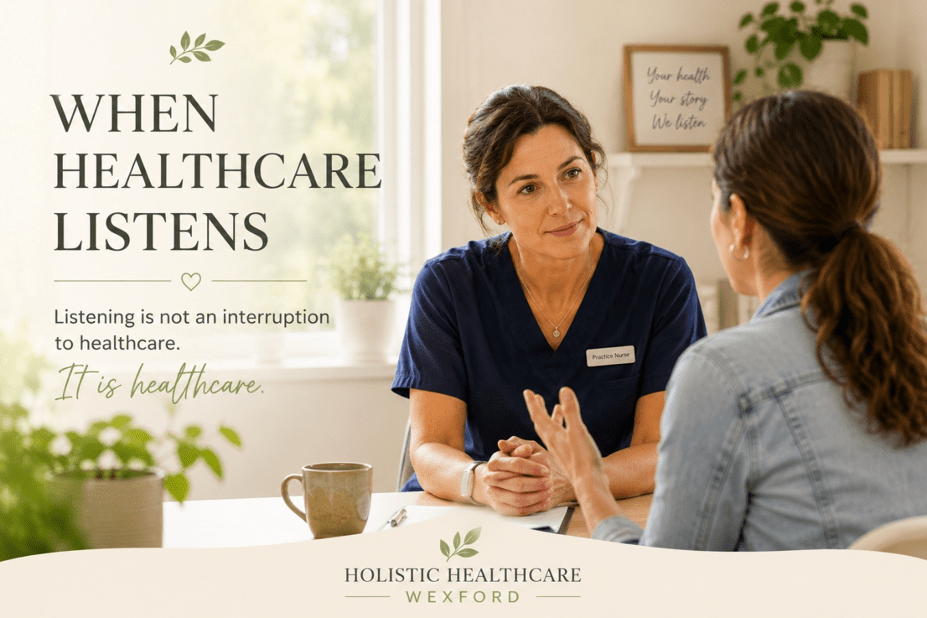
Throughout my years as a General Practice Nurse and Integrative Holistic Practitioner, I have learnt that the most important conversations rarely begin with certainty. They begin with questions.

“Tell me what you’ve noticed.”

“What worries you?”

“What else have you tried?”

“Is there anything you haven’t yet told me?”

These are not signs of uncertainty or weakness. They are signs of good clinical practice.

Over the past few weeks, I have found myself reflecting on something that has very little to do with blood tests, scans or prescriptions.

It has everything to do with listening.

As nurses, we are taught to observe. We assess, examine, investigate and document. We are also taught to question. Does this fit? Have I missed something? Is there another explanation?

Curiosity has always been one of medicine’s greatest strengths. Without it, we would never have discovered antibiotics, insulin or MRI scanners. Every advance in medicine began because someone noticed something unusual and decided it was worth asking another question.

During that time, I had the privilege of observing a patient navigate a particularly complex journey through another country’s healthcare system. The medical details are not the important part of this story. What stayed with me was something much quieter.

It was the conversations.

There were surgeons, oncologists, radiologists and specialist nurses involved. There were differing opinions and decisions that could have life-changing consequences. Yet despite the complexity of the case, one thing stood out above everything else.

People listened.

In today’s healthcare environment, that should perhaps not feel remarkable. Yet sometimes it does.

The patient openly shared every aspect of her support network, including complementary approaches that many people might hesitate to mention. What impressed me was not that every perspective was accepted, but that every perspective was heard. Nobody dismissed her. Equally, clinical decisions remained firmly grounded in scientific medicine.

Instead, the information was acknowledged, documented and placed alongside the scans, the blood tests and the clinical findings. The decisions that followed remained firmly grounded in medical evidence, yet the patient herself remained at the centre of the conversation.

That stayed with me.

Listening does not mean agreeing.

That may be one of the most misunderstood ideas in modern healthcare.

Listening is not the abandonment of science

It is not the acceptance of every explanation.

It is simply the willingness to hear another human being before deciding what comes next.

As healthcare professionals, we do not have to accept every explanation that a patient offers. Nor should we abandon critical thinking. Our responsibility is to evaluate evidence carefully and to practise safely.

But there is a profound difference between saying, “I don’t agree,” and making someone feel they cannot speak.

Patients rarely place their trust in one person alone. They seek support from spouses, friends, family, clergy, counsellors, physiotherapists, herbalists and countless others. Some pray. Some meditate. Some spend time in nature. Some simply need somebody who will sit beside them when life becomes frightening.

The question is not whether we would make the same choices.

The question is whether patients feel safe enough to tell us about them.

When they do, healthcare becomes stronger, not weaker.

Open conversations allow us to identify potential interactions, understand what motivates our patients and build relationships based on honesty rather than secrecy.

Looking back over my nursing career, I have come to realise that some of the most valuable words we can ever say are not particularly technical.

Not “I know.”

Not “You’re wrong.”

Not even “I’ve seen this before.”

Sometimes the most important words are simply:

“Tell me more.”

Those three words invite curiosity rather than judgement.

Perhaps that is where truly patient-centred healthcare begins.

Looking back over my own career, I have come to believe that patients rarely expect us to have every answer. They understand that medicine is complex and that uncertainty is sometimes unavoidable. What they hope for is something much simpler. They hope to be heard.

Perhaps that is why, after so many years in nursing, one of the comments I hear most often from patients is not “thank you for treating me”, but simply, “thank you for listening.” Every time I hear those words, I am reminded that listening is not an interruption to healthcare. It is healthcare.

Not with certainty.

But with the courage to listen.

I hope you feel inspired. Look after your body, and it will keep you healthy.

Catherine
CWD | 10 July 2026 | Ireland

Holistic Healthcare Wexford
Integrative · Mindful · Patient-Centred

About the Author

Dr Catherine W. Dunne MSc.D., RGN (GPN), M.H.I.T. is an Integrative Nurse and Holistic Practitioner based in Ireland with over 37 years of clinical experience. Her work combines evidence-informed nursing practice with holistic healthcare, education, herbal medicine and patient-centred care. She is passionate about building respectful bridges between conventional healthcare and complementary approaches while always placing patient safety, informed choice and open communication at the centre of care.

Author’s Note:

This article was inspired by a real clinical journey. To protect patient confidentiality, all identifying details, locations and contextual information have been removed or altered. The reflections shared are intended to encourage thoughtful discussion about the importance of listening within healthcare and should not be interpreted as personalised medical advice.
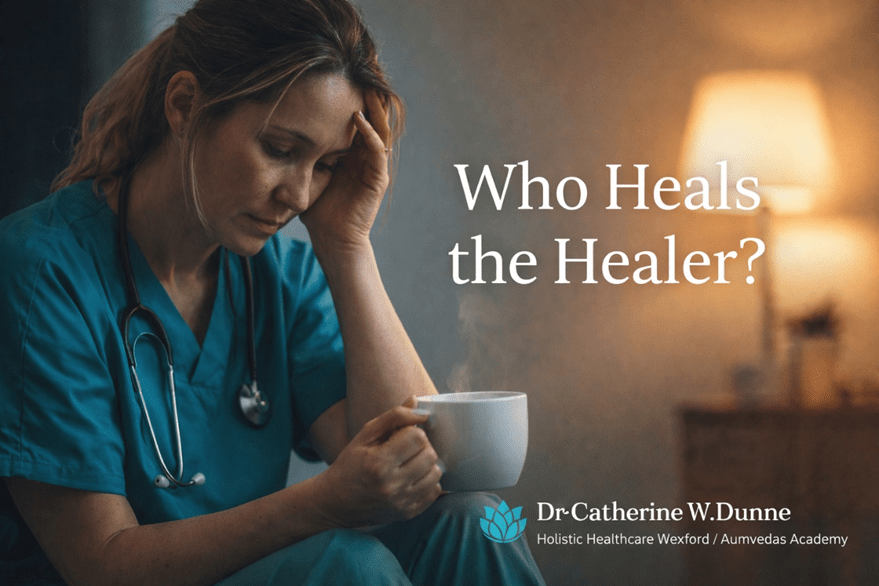
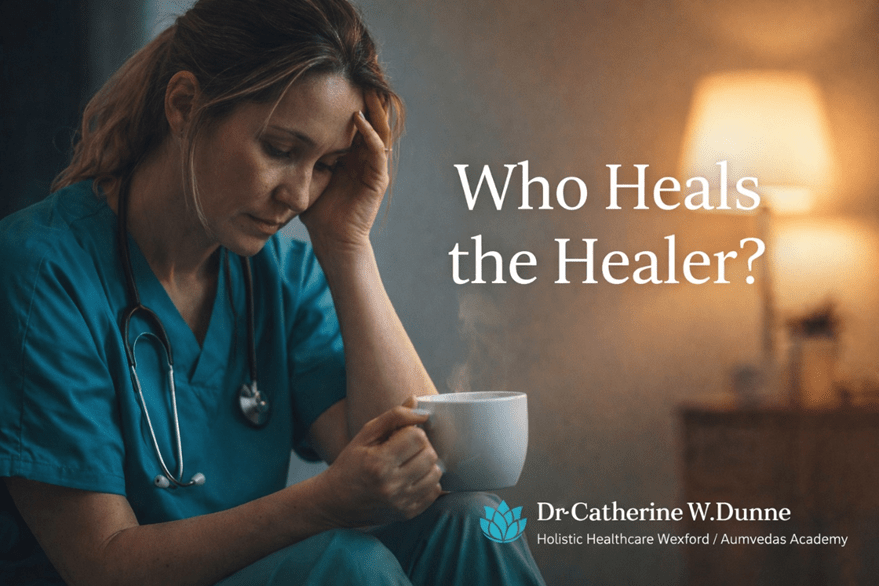
Who Heals the Healer in 2026?

INTRO:

Back in 2022 I wrote the original post “Who Heals the Healer?”
Doctors, Nurses, Therapists, Clergy, and other Healing Providers

CWD 25/10/2022 Ireland

Who heals the Healers?

We are all in danger of burnouts, but Doctors and us Nurses really do “feel” that pulling at the very essence of our being.

These are very stressful times and many are sick. Physically and emotionally. Usually you would attend your Family Doctor – GP for physical or organic help, or you may attend a Clergy or Therapist for emotional help … or, God forbid you end up on the hospital trolley in A&E (ER). And as you are now in their presence, looking for help, have you given the Healthcare Provider – Doctors, Nurses, Therapists, Clergy – a Thought of Your Time? Who Heals the Healer?

We are by no means immune to cases coming in and some touch us profoundly and we “bring it home”; something we were all taught, never to do. And to quote Rag’n’Bone Man: “I’m only human after all” – at the end of the day, that is exactly who we all are: Human.

Healing for Healers is a unique approach to address compassion fatigue, to listen to your body, and to connect to your inheritance. This includes both your inherited burdens and the true gifts of your lineage. You learn how to release what does not serve you, repair deep wounds, restore balance to the body, and replenish your energy and life force. As healers and care providers it is imperative to have a safe and containing place to receive this kind of support. It is possible to give and care for others while still honouring and providing for your own needs and health. …

Now, 4 years on, nothing really has changed, yet something shifted.

By Dr Catherine W. Dunne, MSc.D., RGN (GPN)
Holistic Healthcare Wexford | Co-founder, Aumvedas Academy

Caring for Those Who Carry Everyone Else

There is a quiet group of people in society who are often praised, relied upon, and leaned upon… yet rarely asked a simple question:

How are you, really?

They are the nurses finishing a shift while carrying the weight of three others.
The carers supporting ageing parents while raising children.
The therapists holding space for grief, trauma, and fear.
The doctors making decisions under pressure.
The clergy listening to pain few others ever hear.
The mothers, fathers, partners, neighbours, and friends who are always “the strong one.”

They are the helpers.

And too often, the helpers are exhausted.

The Cost of Always Being the One Who Copes

Many caring people become experts at functioning while depleted.

They keep going through tiredness.
They smile through stress.
They minimise their own needs.
They tell themselves others have it worse.
They postpone rest until “things calm down.”

But the body keeps score.

Stress may begin to show itself through:

  • poor sleep
  • anxiety
  • irritability
  • fatigue
  • headaches
  • muscle tension
  • lowered resilience
  • emotional numbness
  • feeling detached from work once loved

Sometimes it is not weakness. Sometimes it is overload.

“Healers are uniquely vulnerable to burnout because they constantly hold space for others’ pain, regulate heavy emotions, and witness trauma without always receiving the same support in return.”

Burnout Is Not a Personal Failure

We live in a culture that often rewards self-sacrifice and calls it strength.

Yet there comes a point where constant output without replenishment becomes unsustainable. Burnout is not laziness. It is often the natural consequence of prolonged stress, responsibility, and emotional labour without enough recovery.

Even the strongest nervous system has limits.

Who Holds the Holder?

This is the real question.

Who listens to the one who is always listening?
Who comforts the one who comforts others?
Who notices when the capable one is quietly sinking?

Many healers, carers, and professionals do not need grand solutions.

Often they need:

  • permission to pause
  • somewhere safe to speak honestly
  • rest without guilt
  • support without judgement
  • practical help
  • human kindness
  • time in nature
  • space to breathe again

Healing the Healer

Healing does not always mean leaving everything behind and moving to a mountain hut with goats. Though tempting.

Sometimes healing begins with small acts:

A proper meal.
An early night.
A walk by the sea.
Turning the phone off for an hour.
Massage. Prayer. Silence. Laughter. Boundaries. Saying no. Asking for help.

Small repairs done consistently can save a structure.

A Message to Every Helper Reading This

You are allowed to matter too.

You do not need to collapse before you deserve care.
You do not need to prove your exhaustion.
You do not need to earn rest through breaking point.

The world needs good healers, carers, nurses, therapists, parents, and kind-hearted people.

But it also needs them well.

Final Thought:

Restoration for healers relies on four key pillars: grounding the body through gentle movement, restoring mental and emotional balance through breathwork, nature walks, reflective practice, or quiet recovery time, nourishing the system with rest and wholesome food, and ensuring they are supported by others through therapy, supervision, or peer circles. Ignoring these needs can lead to depletion, where healers operate from a state of exhaustion rather than resilience, ultimately compromising their ability to care for others effectively.

So perhaps the question is no longer only Who heals the healer?

Perhaps it is:

When will the healer allow healing in?

I hope you feel inspired. Look after your body, and it will keep you healthy.

Catherine

CWD 16 April 2026/Ireland

Holistic Healthcare Wexford
Integrative · Mindful · Patient-Centred

About the Author

Dr Catherine W. Dunne is a Registered General Nurse with over 37 years of clinical experience in primary care in Ireland. Alongside her work in General Practice Nursing, she is the founder of Holistic Healthcare Wexford and co-founder of Aumvedas Academy.

With a background that bridges conventional medicine and holistic practice, Catherine has a particular interest in the area where patients are often told “everything is normal,” yet still feel unwell. Her work focuses on helping people understand what their body is communicating, especially in relation to energy, stress, metabolic function, and recovery.

Through a combination of clinical knowledge and holistic support, she works with individuals to restore balance, improve resilience, and support long-term wellbeing.

Based in Wexford, Ireland.

Disclaimer

This article is for informational and educational purposes only and is not intended as medical advice. It does not replace consultation with a qualified healthcare professional. Patients should always seek appropriate medical guidance regarding their individual health needs and before making changes to treatment or care.