Self Heal (Prunella vulgaris): The Humble Lawn Herb with Extraordinary Potential

Walk through almost any wildflower meadow or unmown lawn in Ireland during summer and you may find a small purple flower quietly growing beneath your feet. Known as Self Heal, Heal-All, or Carpenter’s Herb, Prunella vulgaris has earned a reputation over centuries as one of nature’s most versatile healing plants.

Despite its modest appearance, Self Heal has been valued in traditional European, Chinese, and Native American herbal medicine for generations.

By Dr Catherine W Dunne MSc.D | M.H.I.T. | Registered Nurse
A Plant with a Long History

The common name “Self Heal” reflects the herb’s traditional reputation for supporting the body’s natural restorative processes. Historically, it was used both internally and externally for wounds, sore throats, digestive complaints, and periods of convalescence following illness.

Traditional herbalists often regarded Self Heal as a herb that helped restore balance when the body was under stress or recovering from physical challenges.

Modern Interest in Prunella

Modern research has identified a range of naturally occurring compounds within Prunella, including:

  • Rosmarinic acid
  • Flavonoids
  • Tannins
  • Triterpenes
  • Polysaccharides

These compounds are being studied for their antioxidant, soothing, and immune-supportive properties.

While research continues, traditional use remains one of the strongest guides to understanding this remarkable plant.

How to Recognise Self Heal

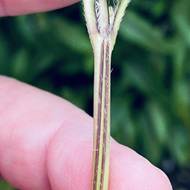
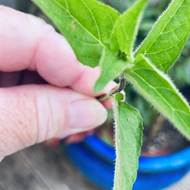
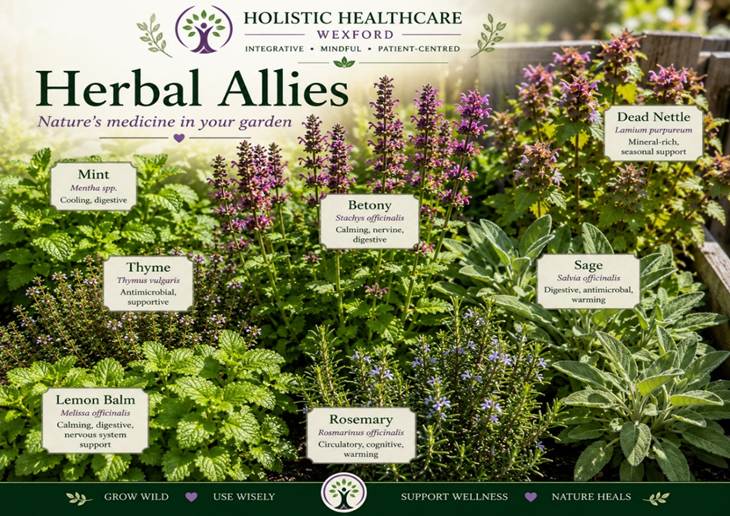
Self Heal belongs to the mint family (Lamiaceae), a large family of plants that includes familiar herbs such as Mint, Thyme, Sage, Lemon Balm, Rosemary, Betony, Ground Ivy and Dead Nettle. While many mint-family plants are aromatic, others such as Self Heal and Dead Nettle have little noticeable scent but still display the family’s characteristic square stems and opposite leaves.
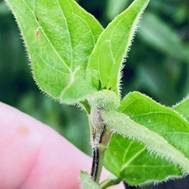
Like many members of the mint family, Self Heal displays several distinctive characteristics:

  • A square stem rather than a round stem
  • Opposite pairs of leaves growing directly across from each other
  • Fine hairs on the stems and leaves
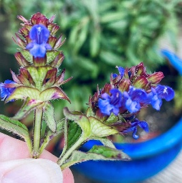
  • Purple or reddish tinges on stems and flower bracts
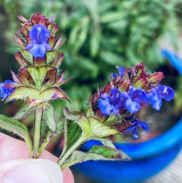
  • Dense flower heads formed from stacked bracts
The flowers are typically blue-violet to purple and emerge from a compact, cone-like flowering head. As the flowers open, they appear in rings around the flower spike, creating the distinctive appearance that makes Self Heal easy to recognise once in bloom.

The leaves are oval to lance-shaped with gently toothed margins and are usually slightly hairy. Young plants can look quite different from mature flowering specimens, often appearing as low-growing clusters of leaves before sending up flowering stems.

Self Heal commonly grows in lawns, meadows, field margins, pathways, and other grassy areas throughout Ireland. It often thrives where mowing is infrequent, creating beautiful patches of purple flowers during summer.

Once you learn to recognise the square stems, opposite leaves, and distinctive flower heads, you may be surprised to discover how often Self Heal has been growing unnoticed beneath your feet.

Self Heal as a Tea
One of the simplest ways to use Self Heal is as an herbal tea.

Traditionally enjoyed for:

  • Sore throats and hoarseness
  • Mouth and gum comfort
  • Digestive upset
  • Seasonal wellness
  • General convalescence and recovery

The dried flowering tops and leaves make a mild, pleasant tea that combines well with:

  • Plantain
  • Betony
  • Lemon Balm
  • Meadowsweet
  • Thyme

For many herbalists, Self Heal tea is a valuable addition to the winter medicine cupboard.

Self Heal as a Tincture

Fresh or dried flowering tops can be extracted in alcohol to create a tincture.

Traditional uses include:

  • Supporting normal immune function
  • Swollen glands and throat discomfort
  • Seasonal challenges
  • General constitutional support

A tincture offers a concentrated preparation and provides a convenient way to use the herb throughout the year.

Self Heal in Vinegars and Oxymels

Self Heal No photo description available.combines beautifully with apple cider vinegar and honey.

An oxymel containing Self Heal, Thyme, Plantain, and seasonal herbs has traditionally been used to support:

  • Winter wellness
  • Throat comfort
  • Respiratory health
  • Family immune support

The addition of honey makes this preparation especially suitable for children and those who dislike herbal teas.

External Uses

Traditionally, Self Heal was used externally as:

  • A wash for minor skin irritations
  • A compress for cuts and abrasions
  • A soothing rinse for the mouth and throat

These uses contributed greatly to the herb’s reputation as a “heal-all” plant.

Harvesting Self Heal

The best time to harvest Self Heal is when the flower heads are fully developed and actively flowering.

Harvest on a dry day after the morning dew has evaporated.

The flowering tops can be:

  • Dried for tea
  • Tinctured fresh
  • Added to vinegars
  • Used in oxymels
  • Infused into oils

Self Heal for Hoarseness, Reflux and Recovery

One of the most interesting modern uses of Self Heal may be in supporting irritated tissues of the mouth, throat, and upper digestive tract.

Many people experience symptoms such as:

  • Persistent throat clearing
  • Hoarseness
  • A burning sensation behind the breastbone
  • A feeling of throat irritation despite normal investigations
  • Lingering throat sensitivity following viral illnesses

Traditionally, herbalists often turned to soothing and restorative herbs when tissues appeared irritated or inflamed.

Self Heal combines particularly well with:

  • Plantain (Plantago spp.)
  • Betony (Stachys officinalis)
  • Thyme (Thymus vulgaris)

Together these herbs create a gentle tea traditionally used to support throat comfort and general respiratory wellbeing.

While Self Heal is not a replacement for medical assessment or prescribed treatment, many people find herbal teas containing these plants offer a soothing and supportive addition to their overall care plan.

Traditionally, Self Heal has also been valued as a restorative herb during periods of convalescence, particularly when the throat, mouth, or upper digestive tract remain sensitive following illness.

Why Self Heal Has Earned a Place in My Herbal Garden

Over recent years, Self Heal has become one of the herbs I reach for most often. Although frequently overlooked as a common lawn flower, I have found it combines beautifully with Plantain, Betony and Thyme in teas intended to support throat comfort, hoarseness and seasonal wellness.

Each summer I harvest and dry the flowering tops for use throughout the winter months. It is one of the simplest, most accessible, and most versatile herbs growing naturally in the Irish landscape.

Sometimes the most valuable remedies are not found in distant rainforests or exotic mountain ranges. Sometimes they are growing quietly beneath our feet.

A Final Thought

In an age where many people search for exotic herbs from distant countries, Self Heal reminds us that some of the most valuable plants may already be growing beneath our feet.

Small, resilient, and quietly powerful, Prunella vulgaris continues to live up to its ancient reputation as one of nature’s most trusted herbal allies.

I hope you feel inspired. Look after your body, and it will keep you healthy.

Catherine

CWD | 21 June 2026 | Ireland

Holistic Healthcare Wexford
Integrative · Mindful · Patient-Centred

About the Author

Dr Catherine W. Dunne MSc.D. is a Registered General Nurse with over 37 years of clinical experience in primary care in Ireland. Alongside her work in General Practice Nursing, she is the founder of Holistic Healthcare Wexford and co-founder of Aumvedas Academy.

With a background that bridges conventional medicine and holistic practice, Catherine has a particular interest in the area where patients are often told “everything is normal,” yet still feel unwell. Her work focuses on helping people understand what their body is communicating, especially in relation to energy, stress, metabolic function, and recovery.

Through a combination of clinical knowledge and holistic support, she works with individuals to restore balance, improve resilience, and support long-term wellbeing.

Based in Wexford, Ireland.

Disclaimer

This article is for informational and educational purposes only and is not intended as medical advice. It does not replace consultation with a qualified healthcare professional. Patients should always seek appropriate medical guidance regarding their individual health needs and before making changes to treatment or care.
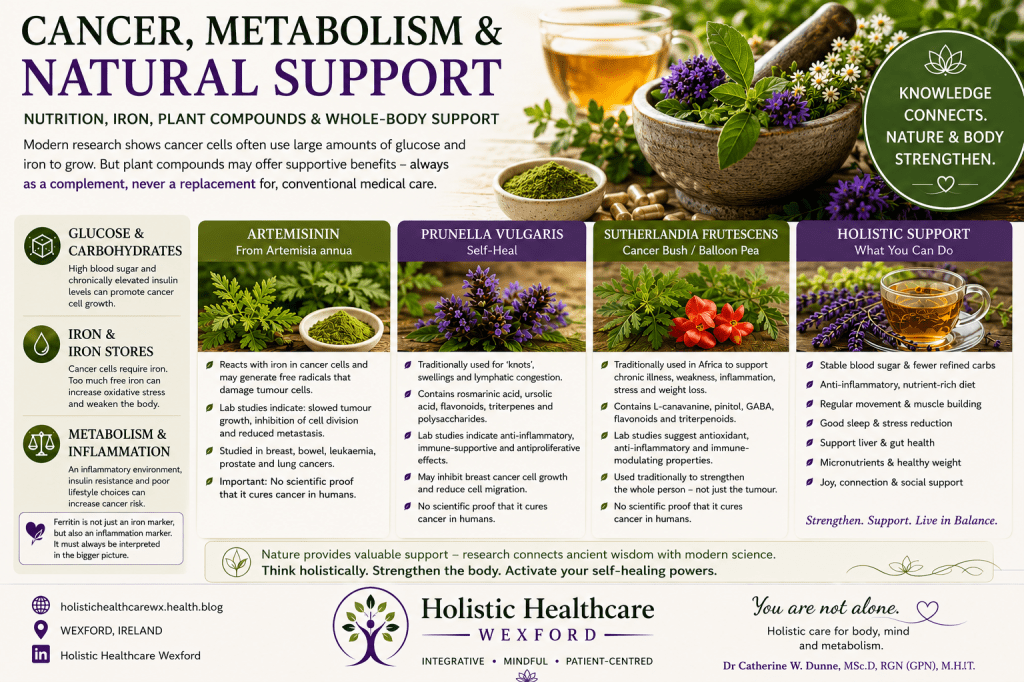
Cancer, Sugar, Carbohydrates and Iron – Why Metabolism is Receiving Greater Attention Today

Many people today are asking whether nutrition, metabolism, chronic inflammation and certain plant compounds may play a role in the development or growth of cancer. Topics such as high sugar intake, heavily processed carbohydrates, iron metabolism and medicinal plants are increasingly being discussed, both within modern research and integrative health approaches.

Science is showing more and more clearly that cancer is not solely a genetic disease, but may also be closely connected to metabolic processes, inflammation, hormonal changes and the overall health of the body.

At the same time, interest is growing in traditional medicinal plants such as Artemisinin (Artemisia annua), Prunella vulgaris and Sutherlandia frutescens, whose compounds have shown possible supportive properties in laboratory studies.

However, one important point remains:

This article is not intended as a cure claim or a replacement for medical treatment. Rather, it aims to bring together current scientific understanding, traditional plant knowledge and holistic health perspectives in a clear and understandable way.

Because sometimes health begins not only with the question:

“How do we fight disease?”

but also with:

“How do we strengthen the person?”

By Dr Catherine W. Dunne, MSc.D., RGN (GPN)
Holistic Healthcare Wexford | Co-founder, Aumvedas Academy

In recent years, researchers have become increasingly interested in why certain metabolic states may influence the growth of cancer cells.

Particular attention has been given to:

  • elevated blood glucose levels
  • diets high in processed carbohydrates
  • chronically raised insulin levels
  • changes in iron metabolism

It is important to understand that the human body requires both glucose and iron for survival. The brain, muscles, immune system and virtually every cell in the body depend upon them. Nevertheless, many studies suggest that cancer cells often “exploit” these systems more aggressively in order to grow rapidly.

The Relationship Between Cancer and Sugar

Many cancer cells consume significantly more glucose than normal cells. This phenomenon has been recognised in oncology for many years and is even the basis of modern PET scans, where radioactive glucose is used to identify metabolically active tumours.

One well-known concept related to this is the so-called Warburg effect, in which cancer cells often favour rapid sugar metabolism (glycolysis) even when oxygen is available.

This does not mean:

“Sugar automatically causes cancer”
or
“Cancer can simply be starved.”

Human metabolism is far more complex than that.

Even during very low-carbohydrate diets, the body continues to produce glucose because it is essential for vital functions.

What may matter more is the overall metabolic environment:

  • chronically elevated insulin levels
  • insulin resistance
  • obesity
  • visceral abdominal fat
  • inflammatory processes
  • lack of movement
  • chronic stress
  • highly processed foods

Particularly problematic are often:

  • refined sugars
  • heavily processed carbohydrates
  • constant snacking
  • sugary drinks
  • ultra-processed foods

Over time, these factors may contribute to chronic inflammation and hormonal imbalance.

Interestingly, chronic stress itself can raise blood glucose levels because cortisol stimulates glucose release from the liver. In other words, the body may remain in a prolonged “high-glucose state” even without excessive sugar intake.

Cancer and Iron – An Often Overlooked Connection

Iron also plays an important role in relation to cancer.

Iron is essential for:

  • cell division
  • oxygen transport
  • energy production
  • DNA synthesis
  • mitochondrial function

Because cancer cells divide rapidly, they often require large amounts of it.

Some tumour types even increase iron uptake into their cells. Researchers have therefore observed altered iron metabolism in several cancers, including breast, bowel and liver cancers.

However, too much free iron may also become problematic.

It can promote oxidative stress and generate free radicals capable of damaging cellular structures and DNA.

Particularly interesting is the fact that after menopause, iron levels naturally rise in many women because monthly blood loss stops. At the same time, inflammation, metabolic dysfunction and hormonal changes often increase.

This does not automatically indicate danger.

However, it helps explain why researchers are paying closer attention to:

  • ferritin levels
  • chronic inflammation
  • metabolic health
  • liver health
  • insulin resistance

Ferritin Is Not Just “Iron”

An important point:

Ferritin is often viewed simply as an iron marker. In reality, ferritin is also an inflammatory marker.

Elevated ferritin levels may occur in:

  • chronic inflammation
  • fatty liver disease
  • infections
  • alcohol burden
  • metabolic syndrome
  • autoimmune disease
  • cancer processes

This is why ferritin should always be interpreted within the wider clinical picture.

The Modern Perspective

Modern research increasingly views cancer as a metabolic disease as well as a genetic one.

This does not mean that sugar or iron alone “cause” cancer.

Rather, a chronically inflamed and metabolically stressed environment may support the growth of already-damaged cells.

For this reason, many integrative approaches today focus on:

  • stable blood sugar regulation
  • reducing heavily processed foods
  • regular movement
  • maintaining healthy muscle mass
  • good sleep
  • stress reduction
  • anti-inflammatory nutrition
  • supporting mitochondrial health

The goal is not fear —
but a better understanding of how deeply nutrition, metabolism, hormones and long-term health are interconnected.

Or more simply:

The body needs sugar and iron to survive.

But when metabolic systems become dysregulated, those same systems may also be exploited by cancer cells.

Possible Supportive Plant Compounds: Artemisinin and Prunella vulgaris

Alongside nutrition, metabolism and inflammation, researchers are increasingly interested in certain plant compounds that may potentially influence the growth or spread of cancer cells.

However, it is important to state clearly:

Many of these approaches remain within the realm of laboratory research, animal models or early experimental studies. They are not currently scientifically confirmed cancer cures.

Nevertheless, there are some interesting observations.

Artemisinin – Originally Known from Malaria Treatment

Artemisinin is derived from the plant Artemisia annua and first became known through malaria treatment.

What made Artemisinin particularly interesting in cancer research was its relationship with iron.

Cancer cells often contain elevated iron levels and increased iron metabolism. Artemisinin reacts with iron and may generate free radicals capable of damaging cancer cells more strongly than healthy cells.

This mechanism attracted significant scientific attention.

Laboratory studies have shown indications of:

  • slowed tumour growth
  • inhibition of cell division
  • promotion of apoptosis (programmed cell death)
  • possible reduction of metastatic activity

Research has included:

  • breast cancer
  • bowel cancer
  • leukaemias
  • prostate cancer
  • lung cancer

Artemisinin is particularly discussed today in relation to:

  • oxidative stress within cancer cells
  • mitochondrial changes
  • iron-dependent metabolic processes

Nevertheless:

Large-scale human clinical trials confirming Artemisinin as a cancer treatment are still lacking.

Therefore, it should never be viewed as a replacement for oncology care, but rather as a possible supportive research avenue within integrative approaches.

Prunella vulgaris – Self-Heal

Prunella vulgaris, also known as Self-Heal, has been traditionally used for centuries for inflammatory swellings, lymphatic congestion and “lumps.”

Modern studies suggest that certain plant compounds may possess possible anti-cancer properties.

These include:

  • rosmarinic acid
  • ursolic acid
  • flavonoids
  • triterpenes
  • polysaccharides

Laboratory findings have suggested:

  • inhibition of breast cancer cell growth
  • possible reduction in cell migration and metastasis
  • anti-inflammatory effects
  • immune-supportive actions
  • promotion of programmed tumour cell death

Interestingly, Prunella vulgaris was historically used long before modern medicine for “breast lumps” and glandular swellings.

Again, however, the evidence currently comes mainly from:

  • cell culture studies
  • animal models
  • early experimental research

There is currently no scientifically confirmed evidence that it cures cancer in humans.

Integrative Support Rather Than False Cure Claims

Modern integrative research is increasingly exploring how:

  • metabolism
  • inflammation
  • immune function
  • mitochondrial health
  • iron metabolism
  • nutrition
    and plant compounds

may interact together.

The focus is less on “miracle cures” and more on the question:

How can the body be supported in a way that is less inflammatory and less metabolically burdensome?

For this reason, many people now also seek support through:

  • anti-inflammatory nutrition
  • stable blood sugar balance
  • stress reduction
  • sleep optimisation
  • movement
  • holistic support
  • plant-based compounds

while conventional medical treatment continues to play a central role.

Because modern research continues to show one thing above all:

The human body is far more complex than simple headlines suggest.

Sutherlandia frutescens – The South African “Cancer Bush”

Another plant attracting increasing interest in integrative research is Sutherlandia frutescens.

Native to South Africa, it is traditionally known as:

  • Cancer Bush
  • Balloon Pea
  • Kankerbos

For centuries it has been used within traditional African herbal medicine to support:

  • chronic illness
  • exhaustion and weakness
  • inflammation
  • stress burden
  • weight loss and wasting
  • weakened immunity

Researchers became interested after laboratory studies suggested possible:

  • antiproliferative effects
  • antioxidant properties
  • immune-modulating actions
  • anti-inflammatory mechanisms

Investigated compounds include:

  • L-canavanine
  • pinitol
  • GABA
  • flavonoids
  • triterpenoids

Some experimental studies suggest that Sutherlandia frutescens may potentially influence the growth of certain cancer cells.

At the same time, the plant was traditionally viewed less as a “tumour destroyer” and more as a strengthening support herb during severe illness.

Many traditional healing systems followed this same philosophy:

Not only treating disease itself —
but supporting the whole person:

  • strength
  • appetite
  • sleep
  • stress regulation
  • immune function
  • overall resilience

Again, it is important to state clearly:

There is currently no scientifically confirmed evidence that Sutherlandia frutescens cures cancer in humans.

It should therefore never replace medical diagnosis or oncology treatment.

Nevertheless, modern research continues exploring how traditional medicinal plants may potentially:

  • modulate inflammation
  • influence oxidative stress
  • support immune function
  • alter metabolic processes within cancer cells

This connection between traditional plant wisdom and modern metabolic research is opening increasingly interesting questions within integrative medicine.

I hope you feel inspired. Look after your body, and it will keep you healthy.

Catherine

CWD | 08.May. 2026 | Ireland

Holistic Healthcare Wexford
Integrative · Mindful · Patient-Centred

About the Author

Dr Catherine W. Dunne MSc.D. is a Registered General Nurse with over 37 years of clinical experience in primary care in Ireland. Alongside her work in General Practice Nursing, she is the founder of Holistic Healthcare Wexford and co-founder of Aumvedas Academy.

With a background that bridges conventional medicine and holistic practice, Catherine has a particular interest in the area where patients are often told “everything is normal,” yet still feel unwell. Her work focuses on helping people understand what their body is communicating, especially in relation to energy, stress, metabolic function, and recovery.

Through a combination of clinical knowledge and holistic support, she works with individuals to restore balance, improve resilience, and support long-term wellbeing.

Based in Wexford, Ireland.

Disclaimer

This article is for informational and educational purposes only and is not intended as medical advice. It does not replace consultation with a qualified healthcare professional. Patients should always seek appropriate medical guidance regarding their individual health needs and before making changes to treatment or care.