The Common Weed That Soothes Bites, Burns, Cuts and Coughs

The Humble Wayside Herb That Earned My Respect

Part of the Holistic Healthcare Wexford Herbal Medicine Library

By Dr Catherine W. Dunne, MSc.D., RGN (GPN), M.H.I.T.

There are certain plants that become more than herbs.

They become part of your story.

For me, Plantain is one of those plants.

During the Covid years, when hand disinfectants became a constant part of daily life, many healthcare workers began experiencing severe skin reactions. I was one of them.

What started as tiny blisters quickly became something much worse.

The photographs below show the progression of the skin reaction I experienced during that period, from the early blister stage through to healing and skin peeling.

The itching was intense.

The pain was extraordinary.

My hands developed clusters of fluid-filled blisters that spread across my palms. As they healed, layers of skin peeled away, leaving raw, tender tissue underneath. Simple tasks became uncomfortable. Washing my hands became an ordeal.

Like many others, I sought conventional treatment. Steroid creams were prescribed and oral steroids were tried. Unfortunately, in my case, the problem persisted.

Desperate for relief, I began researching alternatives.

That search led me to a plant that had been growing quietly around me all along.

Plantain.

I gathered fresh Ribwort Plantain leaves from the cliffs near my home, returned to my kitchen and blended them with olive oil to form a simple green mash.

Then I immersed my hands in it.

The relief was almost immediate.

The burning eased.

The itching settled.

The pain diminished.

For the first time in weeks, my hands felt comfortable.

Over the following two weeks, my skin gradually healed.

Years later, I still remember that experience every time I see Plantain growing beside a path or pushing through a crack in the pavement.

Many people see a weed.

I see one of the most useful herbs I have ever encountered.

By Dr Catherine W Dunne MSc.D | M.H.I.T. | Registered Nurse

Meeting Plantain

Plantain belongs to the genus Plantago, with two species most commonly encountered in Ireland:

  • Ribwort Plantain (Plantago lanceolata)
  • Broadleaf Plantain (Plantago major)

Both produce distinctive leaf rosettes from ground level and send up flower spikes during the growing season.

Ribwort Plantain has narrow spear-shaped leaves with prominent parallel veins.   

Broadleaf Plantain produces larger oval leaves that lie close to the ground.

Once you learn to recognise them, you begin to notice them everywhere.

A Plant That Followed Humanity

Plantain has such a close relationship with people that some Native American tribes referred to it as “White Man’s Footprint” because it seemed to appear wherever European settlers travelled.

The seeds cling easily to footwear, animals and equipment, allowing the plant to spread naturally along pathways and roadsides.

Its success lies in its remarkable toughness.

While many plants struggle in compacted soil, Plantain often thrives.

It is a survivor.

Traditional Uses

For generations, Plantain has been valued as a household remedy.

Traditional herbal uses include:

  • Minor cuts and scrapes
  • Insect bites and stings
  • Skin irritation
  • Minor wounds
  • Sore throats
  • Coughs and respiratory discomfort

A freshly crushed leaf was often applied directly to the skin as a simple field remedy when nothing else was available.

Many country children learned this long before first-aid kits became commonplace.

What Modern Herbalists Appreciate

Modern herbalists continue to value Plantain for its gentle and versatile nature.

The leaves contain a variety of naturally occurring compounds including mucilage, tannins and iridoid glycosides.

Traditionally, Plantain has been used to:

  • Support healthy skin
  • Soothe irritated tissues
  • Support respiratory comfort
  • Provide gentle digestive support
  • Calm minor irritation within the body

Its actions are generally regarded as soothing and restorative rather than stimulating.

Plantain does not force the body in a particular direction.

Instead, it offers support while the body’s own healing processes do the work.

Harvesting Plantain

The leaves are usually gathered during the growing season while young and healthy.

 Fresh leaves may be used immediately, tinctured, infused into oils or dried for later use.

In my own herbal preparations, Plantain is one of the plants I return to again and again.

It finds its way into infused oils, balms and herbal blends, earning its place through reliability rather than reputation.

Why I Grow It

The irony of Plantain is that most gardeners spend their time trying to remove it.

Meanwhile, herbalists are often quietly collecting it.

Perhaps that is part of its charm.

Plantain does not demand attention.

It does not produce spectacular flowers.

It simply grows where it is needed, surviving drought, foot traffic, poor soil and neglect.

Yet beneath this unassuming appearance lies one of the most respected herbs in traditional herbalism.

Sometimes the most valuable plants are the ones growing right beneath our feet.

Final Thought

Several years after my own experience, a patient showed me hands that looked remarkably similar to mine had during that period. She too had tried prescribed treatments with little success. I prepared a Plantain-based salve for her. Months later she returned, eager to show me the improvement. It was a reminder that sometimes the most overlooked plants can leave the deepest impression.

Do you have Ribwort Plantain or Broadleaf Plantain growing in your garden? Have you ever used it traditionally? I’d love to hear your experiences in the comments below.

I hope you feel inspired. Look after your body, and it will keep you healthy.

Catherine

CWD | 23 June 2026 | Ireland

Holistic Healthcare Wexford
Integrative · Mindful · Patient-Centred

About the Author

Dr Catherine W. Dunne MSc.D. is a Registered General Nurse with over 37 years of clinical experience in primary care in Ireland. Alongside her work in General Practice Nursing, she is the founder of Holistic Healthcare Wexford and co-founder of Aumvedas Academy.

With a background that bridges conventional medicine and holistic practice, Catherine has a particular interest in the area where patients are often told “everything is normal,” yet still feel unwell. Her work focuses on helping people understand what their body is communicating, especially in relation to energy, stress, metabolic function, and recovery.

Through a combination of clinical knowledge and holistic support, she works with individuals to restore balance, improve resilience, and support long-term wellbeing.

Based in Wexford, Ireland.

Disclaimer

This article is for informational and educational purposes only and is not intended as medical advice. It does not replace consultation with a qualified healthcare professional. Patients should always seek appropriate medical guidance regarding their individual health needs and before making changes to treatment or care.
Self Heal (Prunella vulgaris): The Humble Lawn Herb with Extraordinary Potential

Part of the Holistic Healthcare Wexford Herbal Medicine Library

By Dr Catherine W. Dunne, MSc.D., RGN (GPN), M.H.I.T.

Walk through almost any wildflower meadow or unmown lawn in Ireland during summer and you may find a small purple flower quietly growing beneath your feet. Known as Self Heal, Heal-All, or Carpenter’s Herb, Prunella vulgaris has earned a reputation over centuries as one of nature’s most versatile healing plants.

Despite its modest appearance, Self Heal has been valued in traditional European, Chinese, and Native American herbal medicine for generations.

A Plant with a Long History

The common name “Self Heal” reflects the herb’s traditional reputation for supporting the body’s natural restorative processes. Historically, it was used both internally and externally for wounds, sore throats, digestive complaints, and periods of convalescence following illness.

Traditional herbalists often regarded Self Heal as a herb that helped restore balance when the body was under stress or recovering from physical challenges.

Modern Interest in Prunella

Modern research has identified a range of naturally occurring compounds within Prunella, including:

  • Rosmarinic acid
  • Flavonoids
  • Tannins
  • Triterpenes
  • Polysaccharides

These compounds are being studied for their antioxidant, soothing, and immune-supportive properties.

While research continues, traditional use remains one of the strongest guides to understanding this remarkable plant.

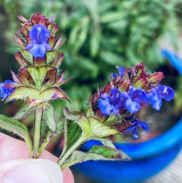
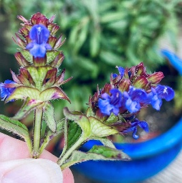
How to Recognise Self Heal

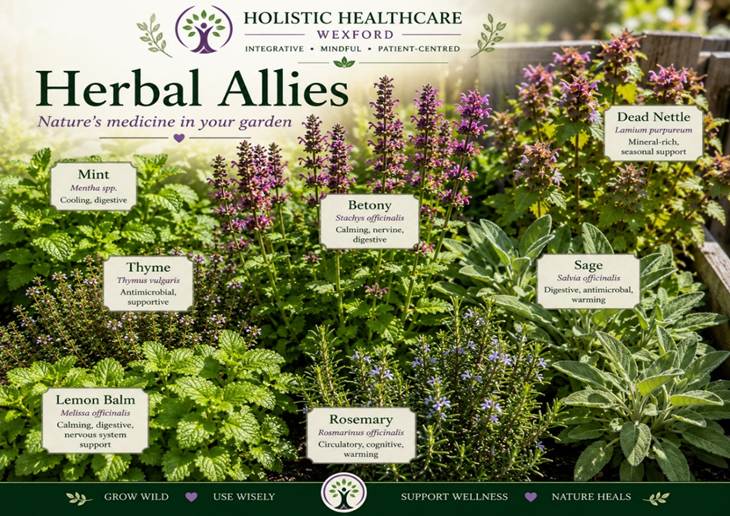
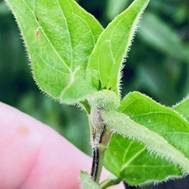
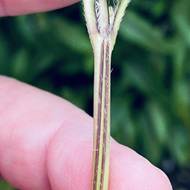
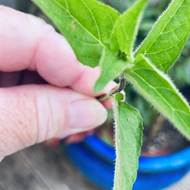
Self Heal belongs to the mint family (Lamiaceae), a large family of plants that includes familiar herbs such as Mint, Thyme, Sage, Lemon Balm, Rosemary, Betony, Ground Ivy and Dead Nettle. While many mint-family plants are aromatic, others such as Self Heal and Dead Nettle have little noticeable scent but still display the family’s characteristic square stems and opposite leaves.

Like many members of the mint family, Self Heal displays several distinctive characteristics:

  • A square stem rather than a round stem
  • Opposite pairs of leaves growing directly across from each other
  • Fine hairs on the stems and leaves
  • Purple or reddish tinges on stems and flower bracts
  • Dense flower heads formed from stacked bracts

The flowers are typically blue-violet to purple and emerge from a compact, cone-like flowering head. As the flowers open, they appear in rings around the flower spike, creating the distinctive appearance that makes Self Heal easy to recognise once in bloom.

The leaves are oval to lance-shaped with gently toothed margins and are usually slightly hairy. Young plants can look quite different from mature flowering specimens, often appearing as low-growing clusters of leaves before sending up flowering stems.

Self Heal commonly grows in lawns, meadows, field margins, pathways, and other grassy areas throughout Ireland. It often thrives where mowing is infrequent, creating beautiful patches of purple flowers during summer.

Once you learn to recognise the square stems, opposite leaves, and distinctive flower heads, you may be surprised to discover how often Self Heal has been growing unnoticed beneath your feet.

Self Heal as a Tea

One of the simplest ways to use Self Heal is as an herbal tea.

Traditionally enjoyed for:

  • Sore throats and hoarseness
  • Mouth and gum comfort
  • Digestive upset
  • Seasonal wellness
  • General convalescence and recovery

The dried flowering tops and leaves make a mild, pleasant tea that combines well with:

  • Plantain
  • Betony
  • Lemon Balm
  • Meadowsweet
  • Thyme

For many herbalists, Self Heal tea is a valuable addition to the winter medicine cupboard.

Self Heal as a Tincture

Fresh or dried flowering tops can be extracted in alcohol to create a tincture.

Traditional uses include:

  • Supporting normal immune function
  • Swollen glands and throat discomfort
  • Seasonal challenges
  • General constitutional support

A tincture offers a concentrated preparation and provides a convenient way to use the herb throughout the year.

Self Heal in Vinegars and Oxymels

Self Heal No photo description available.combines beautifully with apple cider vinegar and honey.

An oxymel containing Self Heal, Thyme, Plantain, and seasonal herbs has traditionally been used to support:

  • Winter wellness
  • Throat comfort
  • Respiratory health
  • Family immune support

The addition of honey makes this preparation especially suitable for children and those who dislike herbal teas.

External Uses

Traditionally, Self Heal was used externally as:

  • A wash for minor skin irritations
  • A compress for cuts and abrasions
  • A soothing rinse for the mouth and throat

These uses contributed greatly to the herb’s reputation as a “heal-all” plant.

Harvesting Self Heal

The best time to harvest Self Heal is when the flower heads are fully developed and actively flowering.

Harvest on a dry day after the morning dew has evaporated.

The flowering tops can be:

  • Dried for tea
  • Tinctured fresh
  • Added to vinegars
  • Used in oxymels
  • Infused into oils

Self Heal for Hoarseness, Reflux and Recovery

One of the most interesting modern uses of Self Heal may be in supporting irritated tissues of the mouth, throat, and upper digestive tract.

Many people experience symptoms such as:

  • Persistent throat clearing
  • Hoarseness
  • A burning sensation behind the breastbone
  • A feeling of throat irritation despite normal investigations
  • Lingering throat sensitivity following viral illnesses

Traditionally, herbalists often turned to soothing and restorative herbs when tissues appeared irritated or inflamed.

Self Heal combines particularly well with:

  • Plantain (Plantago spp.)
  • Betony (Stachys officinalis)
  • Thyme (Thymus vulgaris)

Together these herbs create a gentle tea traditionally used to support throat comfort and general respiratory wellbeing.

While Self Heal is not a replacement for medical assessment or prescribed treatment, many people find herbal teas containing these plants offer a soothing and supportive addition to their overall care plan.

Traditionally, Self Heal has also been valued as a restorative herb during periods of convalescence, particularly when the throat, mouth, or upper digestive tract remain sensitive following illness.

Why Self Heal Has Earned a Place in My Herbal Garden

Over recent years, Self Heal has become one of the herbs I reach for most often. Although frequently overlooked as a common lawn flower, I have found it combines beautifully with Plantain, Betony and Thyme in teas intended to support throat comfort, hoarseness and seasonal wellness.

Each summer I harvest and dry the flowering tops for use throughout the winter months. It is one of the simplest, most accessible, and most versatile herbs growing naturally in the Irish landscape.

Sometimes the most valuable remedies are not found in distant rainforests or exotic mountain ranges. Sometimes they are growing quietly beneath our feet.

A Final Thought

In an age where many people search for exotic herbs from distant countries, Self Heal reminds us that some of the most valuable plants may already be growing beneath our feet.

Small, resilient, and quietly powerful, Prunella vulgaris continues to live up to its ancient reputation as one of nature’s most trusted herbal allies.

I hope you feel inspired. Look after your body, and it will keep you healthy.

Catherine

CWD | 21 June 2026 | Ireland

Holistic Healthcare Wexford
Integrative · Mindful · Patient-Centred

About the Author

Dr Catherine W. Dunne MSc.D. is a Registered General Nurse with over 37 years of clinical experience in primary care in Ireland. Alongside her work in General Practice Nursing, she is the founder of Holistic Healthcare Wexford and co-founder of Aumvedas Academy.

With a background that bridges conventional medicine and holistic practice, Catherine has a particular interest in the area where patients are often told “everything is normal,” yet still feel unwell. Her work focuses on helping people understand what their body is communicating, especially in relation to energy, stress, metabolic function, and recovery.

Through a combination of clinical knowledge and holistic support, she works with individuals to restore balance, improve resilience, and support long-term wellbeing.

Based in Wexford, Ireland.

Disclaimer

This article is for informational and educational purposes only and is not intended as medical advice. It does not replace consultation with a qualified healthcare professional. Patients should always seek appropriate medical guidance regarding their individual health needs and before making changes to treatment or care.