By Dr Catherine W. Dunne MSc.D., RGN (GPN), M.H.I.T.
There are moments in healthcare that stay with you long after the consultation has ended.
Not because of a remarkable diagnosis or a breakthrough treatment, but because of something much simpler.
Somebody chose to listen.
Throughout my years as a General Practice Nurse and Integrative Holistic Practitioner, I have learnt that the most important conversations rarely begin with certainty. They begin with questions.
“Tell me what you’ve noticed.”
“What worries you?”
“What else have you tried?”
“Is there anything you haven’t yet told me?”
These are not signs of uncertainty or weakness. They are signs of good clinical practice.
Over the past few weeks, I have found myself reflecting on something that has very little to do with blood tests, scans or prescriptions.
It has everything to do with listening.
As nurses, we are taught to observe. We assess, examine, investigate and document. We are also taught to question. Does this fit? Have I missed something? Is there another explanation?
Curiosity has always been one of medicine’s greatest strengths. Without it, we would never have discovered antibiotics, insulin or MRI scanners. Every advance in medicine began because someone noticed something unusual and decided it was worth asking another question.
During that time, I had the privilege of observing a patient navigate a particularly complex journey through another country’s healthcare system. The medical details are not the important part of this story. What stayed with me was something much quieter.
It was the conversations.
There were surgeons, oncologists, radiologists and specialist nurses involved. There were differing opinions and decisions that could have life-changing consequences. Yet despite the complexity of the case, one thing stood out above everything else.
People listened.
In today’s healthcare environment, that should perhaps not feel remarkable. Yet sometimes it does.
The patient openly shared every aspect of her support network, including complementary approaches that many people might hesitate to mention. What impressed me was not that every perspective was accepted, but that every perspective was heard. Nobody dismissed her. Equally, clinical decisions remained firmly grounded in scientific medicine.
Instead, the information was acknowledged, documented and placed alongside the scans, the blood tests and the clinical findings. The decisions that followed remained firmly grounded in medical evidence, yet the patient herself remained at the centre of the conversation.
That stayed with me.
Listening does not mean agreeing.
That may be one of the most misunderstood ideas in modern healthcare.
Listening is not the abandonment of science
It is not the acceptance of every explanation.
It is simply the willingness to hear another human being before deciding what comes next.
As healthcare professionals, we do not have to accept every explanation that a patient offers. Nor should we abandon critical thinking. Our responsibility is to evaluate evidence carefully and to practise safely.
But there is a profound difference between saying, “I don’t agree,” and making someone feel they cannot speak.
Patients rarely place their trust in one person alone. They seek support from spouses, friends, family, clergy, counsellors, physiotherapists, herbalists and countless others. Some pray. Some meditate. Some spend time in nature. Some simply need somebody who will sit beside them when life becomes frightening.
The question is not whether we would make the same choices.
The question is whether patients feel safe enough to tell us about them.
When they do, healthcare becomes stronger, not weaker.
Open conversations allow us to identify potential interactions, understand what motivates our patients and build relationships based on honesty rather than secrecy.
Looking back over my nursing career, I have come to realise that some of the most valuable words we can ever say are not particularly technical.
Not “I know.”
Not “You’re wrong.”
Not even “I’ve seen this before.”
Sometimes the most important words are simply:
“Tell me more.”
Those three words invite curiosity rather than judgement.
Perhaps that is where truly patient-centred healthcare begins.
Looking back over my own career, I have come to believe that patients rarely expect us to have every answer. They understand that medicine is complex and that uncertainty is sometimes unavoidable. What they hope for is something much simpler. They hope to be heard.
Perhaps that is why, after so many years in nursing, one of the comments I hear most often from patients is not “thank you for treating me”, but simply, “thank you for listening.” Every time I hear those words, I am reminded that listening is not an interruption to healthcare. It is healthcare.
Not with certainty.
But with the courage to listen.
I hope you feel inspired. Look after your body, and it will keep you healthy.
Dr Catherine W. Dunne MSc.D., RGN (GPN), M.H.I.T. is an Integrative Nurse and Holistic Practitioner based in Ireland with over 37 years of clinical experience. Her work combines evidence-informed nursing practice with holistic healthcare, education, herbal medicine and patient-centred care. She is passionate about building respectful bridges between conventional healthcare and complementary approaches while always placing patient safety, informed choice and open communication at the centre of care.
Author’s Note:
This article was inspired by a real clinical journey. To protect patient confidentiality, all identifying details, locations and contextual information have been removed or altered. The reflections shared are intended to encourage thoughtful discussion about the importance of listening within healthcare and should not be interpreted as personalised medical advice.
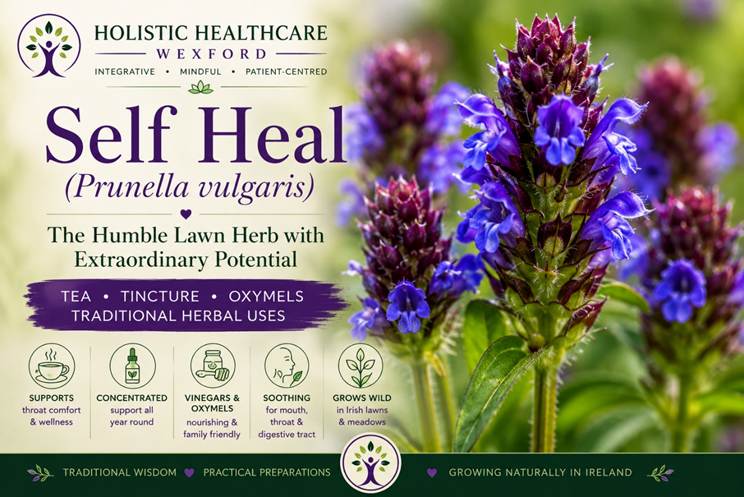
Walk through almost any wildflower meadow or unmown lawn in Ireland during summer and you may find a small purple flower quietly growing beneath your feet. Known as Self Heal, Heal-All, or Carpenter’s Herb, Prunella vulgaris has earned a reputation over centuries as one of nature’s most versatile healing plants.
Despite its modest appearance, Self Heal has been valued in traditional European, Chinese, and Native American herbal medicine for generations.
By Dr Catherine W Dunne MSc.D | M.H.I.T. | Registered Nurse
A Plant with a Long History
The common name “Self Heal” reflects the herb’s traditional reputation for supporting the body’s natural restorative processes. Historically, it was used both internally and externally for wounds, sore throats, digestive complaints, and periods of convalescence following illness.
Traditional herbalists often regarded Self Heal as a herb that helped restore balance when the body was under stress or recovering from physical challenges.
Modern Interest in Prunella
Modern research has identified a range of naturally occurring compounds within Prunella, including:
Rosmarinic acid
Flavonoids
Tannins
Triterpenes
Polysaccharides
These compounds are being studied for their antioxidant, soothing, and immune-supportive properties.
While research continues, traditional use remains one of the strongest guides to understanding this remarkable plant.
How to Recognise Self Heal
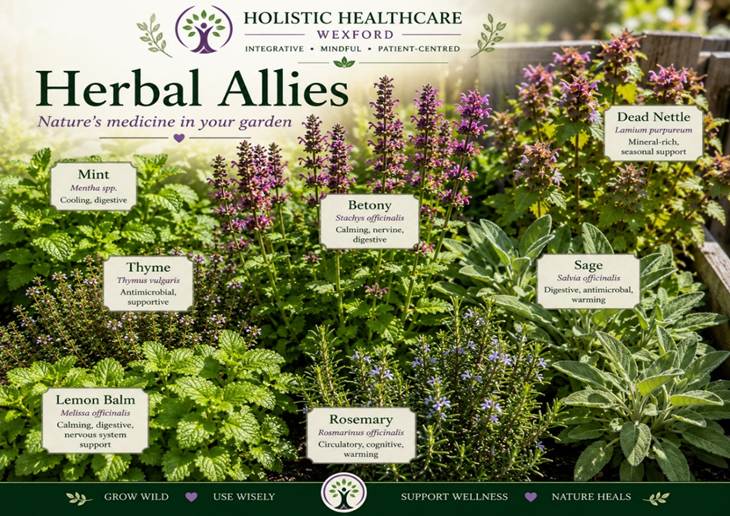
Self Heal belongs to the mint family (Lamiaceae), a large family of plants that includes familiar herbs such as Mint, Thyme, Sage, Lemon Balm, Rosemary, Betony, Ground Ivy and Dead Nettle. While many mint-family plants are aromatic, others such as Self Heal and Dead Nettle have little noticeable scent but still display the family’s characteristic square stems and opposite leaves.
Like many members of the mint family, Self Heal displays several distinctive characteristics:
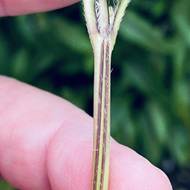
A square stem rather than a round stem
Opposite pairs of leaves growing directly across from each other
Fine hairs on the stems and leaves
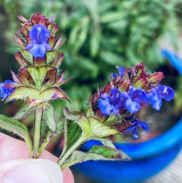
Purple or reddish tinges on stems and flower bracts
Dense flower heads formed from stacked bracts
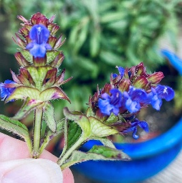
The flowers are typically blue-violet to purple and emerge from a compact, cone-like flowering head. As the flowers open, they appear in rings around the flower spike, creating the distinctive appearance that makes Self Heal easy to recognise once in bloom.
The leaves are oval to lance-shaped with gently toothed margins and are usually slightly hairy. Young plants can look quite different from mature flowering specimens, often appearing as low-growing clusters of leaves before sending up flowering stems.
Self Heal commonly grows in lawns, meadows, field margins, pathways, and other grassy areas throughout Ireland. It often thrives where mowing is infrequent, creating beautiful patches of purple flowers during summer.
Once you learn to recognise the square stems, opposite leaves, and distinctive flower heads, you may be surprised to discover how often Self Heal has been growing unnoticed beneath your feet.
Self Heal as a Tea
One of the simplest ways to use Self Heal is as an herbal tea.
Traditionally enjoyed for:
Sore throats and hoarseness
Mouth and gum comfort
Digestive upset
Seasonal wellness
General convalescence and recovery
The dried flowering tops and leaves make a mild, pleasant tea that combines well with:
Plantain
Betony
Lemon Balm
Meadowsweet
Thyme
For many herbalists, Self Heal tea is a valuable addition to the winter medicine cupboard.
Self Heal as a Tincture
Fresh or dried flowering tops can be extracted in alcohol to create a tincture.
Traditional uses include:
Supporting normal immune function
Swollen glands and throat discomfort
Seasonal challenges
General constitutional support
A tincture offers a concentrated preparation and provides a convenient way to use the herb throughout the year.
Self Heal in Vinegars and Oxymels
Self Heal combines beautifully with apple cider vinegar and honey.
An oxymel containing Self Heal, Thyme, Plantain, and seasonal herbs has traditionally been used to support:
Winter wellness
Throat comfort
Respiratory health
Family immune support
The addition of honey makes this preparation especially suitable for children and those who dislike herbal teas.
External Uses
Traditionally, Self Heal was used externally as:
A wash for minor skin irritations
A compress for cuts and abrasions
A soothing rinse for the mouth and throat
These uses contributed greatly to the herb’s reputation as a “heal-all” plant.
Harvesting Self Heal
The best time to harvest Self Heal is when the flower heads are fully developed and actively flowering.
Harvest on a dry day after the morning dew has evaporated.
The flowering tops can be:
Dried for tea
Tinctured fresh
Added to vinegars
Used in oxymels
Infused into oils
Self Heal for Hoarseness, Reflux and Recovery
One of the most interesting modern uses of Self Heal may be in supporting irritated tissues of the mouth, throat, and upper digestive tract.
Many people experience symptoms such as:
Persistent throat clearing
Hoarseness
A burning sensation behind the breastbone
A feeling of throat irritation despite normal investigations
Lingering throat sensitivity following viral illnesses
Traditionally, herbalists often turned to soothing and restorative herbs when tissues appeared irritated or inflamed.
Self Heal combines particularly well with:
Plantain (Plantago spp.)
Betony (Stachys officinalis)
Thyme (Thymus vulgaris)
Together these herbs create a gentle tea traditionally used to support throat comfort and general respiratory wellbeing.
While Self Heal is not a replacement for medical assessment or prescribed treatment, many people find herbal teas containing these plants offer a soothing and supportive addition to their overall care plan.
Traditionally, Self Heal has also been valued as a restorative herb during periods of convalescence, particularly when the throat, mouth, or upper digestive tract remain sensitive following illness.
Why Self Heal Has Earned a Place in My Herbal Garden
Over recent years, Self Heal has become one of the herbs I reach for most often. Although frequently overlooked as a common lawn flower, I have found it combines beautifully with Plantain, Betony and Thyme in teas intended to support throat comfort, hoarseness and seasonal wellness.
Each summer I harvest and dry the flowering tops for use throughout the winter months. It is one of the simplest, most accessible, and most versatile herbs growing naturally in the Irish landscape.
Sometimes the most valuable remedies are not found in distant rainforests or exotic mountain ranges. Sometimes they are growing quietly beneath our feet.
A Final Thought
In an age where many people search for exotic herbs from distant countries, Self Heal reminds us that some of the most valuable plants may already be growing beneath our feet.
Small, resilient, and quietly powerful, Prunella vulgaris continues to live up to its ancient reputation as one of nature’s most trusted herbal allies.
I hope you feel inspired. Look after your body, and it will keep you healthy.
Dr Catherine W. Dunne MSc.D. is a Registered General Nurse with over 37 years of clinical experience in primary care in Ireland. Alongside her work in General Practice Nursing, she is the founder of Holistic Healthcare Wexford and co-founder of Aumvedas Academy.
With a background that bridges conventional medicine and holistic practice, Catherine has a particular interest in the area where patients are often told “everything is normal,” yet still feel unwell. Her work focuses on helping people understand what their body is communicating, especially in relation to energy, stress, metabolic function, and recovery.
Through a combination of clinical knowledge and holistic support, she works with individuals to restore balance, improve resilience, and support long-term wellbeing.
Based in Wexford, Ireland.
Disclaimer
This article is for informational and educational purposes only and is not intended as medical advice. It does not replace consultation with a qualified healthcare professional. Patients should always seek appropriate medical guidance regarding their individual health needs and before making changes to treatment or care.
Many women are surprised when anxiety appears, or reappears, during menopause. Some have never struggled with it before. Others may remember difficult patches earlier in life, only to feel those sensations return years later.
Racing thoughts. Panic feelings. A sense of dread for no clear reason. Poor sleep. Palpitations. Feeling suddenly overwhelmed by things once easily managed.
It can feel confusing, especially when life on the outside may appear stable. Children grown. Career established. More wisdom than ever before. Yet the body seems to be sounding an alarm.
What if menopause is not always the beginning of the story?
What if, for some women, it is a later chapter in a pattern that may have shown itself years earlier?
By Dr Catherine W. Dunne, MSc.D., RGN (GPN) Holistic Healthcare Wexford | Co-founder, Aumvedas Academy
Hormonal change can affect the nervous system
Many women tolerate hormonal shifts with little difficulty. Others seem more sensitive during times of transition.
These life stages may include:
puberty
monthly cycle changes
pregnancy
after childbirth
perimenopause
menopause and post-menopause
For some, it is not simply hormone levels that matter. It may be the changing levels, fluctuating signals, and how the nervous system responds to them.
Oestrogen and progesterone influence serotonin, GABA, sleep regulation, body temperature control, and stress response systems. When those rhythms change, anxiety can become louder.
Looking back: were there earlier signs?
Some women only connect the dots later in life.
They may remember:
panic attacks during pregnancy
feeling highly anxious after giving birth
intense PMS or mood swings in younger years
anxiety worsening before periods
feeling more reactive during stressful hormonal phases
needing longer to recover after major life stress
At the time, these episodes may have seemed unrelated. Years later, menopause can bring similar sensations back into view.
This does not mean something is “wrong” with you.
It may simply mean your body has certain windows of sensitivity during times of change.
Why menopause can feel so intense
Menopause is not only about periods stopping. It is a wider neurological, metabolic, and emotional transition.
Many factors may combine:
changing oestrogen levels
disrupted sleep
hot flushes and night waking
increased cortisol sensitivity
thyroid imbalance
low magnesium
low iron or B12
blood sugar swings
years of accumulated stress load
caring responsibilities
grief, identity change, or empty nest feelings
Sometimes anxiety is the final messenger carrying all of the above.
The good news
When women understand that menopause anxiety may have biological roots, shame often lifts.
They stop saying:
“I am losing the plot.”
And start saying:
“My body is asking for support.”
That shift matters.
What can help
Support should always be individual, but helpful areas to explore include:
speaking with your GP or healthcare provider
checking thyroid, iron, B12, vitamin D, glucose and general health markers
reducing caffeine and alcohol if sensitive
regular meals to stabilise blood sugar
magnesium-rich foods or supplements where appropriate
walking, daylight exposure and gentle movement
nervous system calming practices such as breathwork, meditation, Reiki or mindfulness
talking therapies if stress or trauma is part of the picture
discussing HRT or other medical options if suitable
A final word
If anxiety has returned in menopause, it does not mean you are failing or losing control.
For some women, the signs may have been there years ago.
Sometimes later life is when we finally notice the patterns that were there all along.
I hope you feel inspired. Look after your body, and it will keep you healthy.
Dr Catherine W. Dunne MSc.D. is a Registered General Nurse with over 37 years of clinical experience in primary care in Ireland. Alongside her work in General Practice Nursing, she is the founder of Holistic Healthcare Wexford and co-founder of Aumvedas Academy.
With a background that bridges conventional medicine and holistic practice, Catherine has a particular interest in the area where patients are often told “everything is normal,” yet still feel unwell. Her work focuses on helping people understand what their body is communicating, especially in relation to energy, stress, metabolic function, and recovery.
Through a combination of clinical knowledge and holistic support, she works with individuals to restore balance, improve resilience, and support long-term wellbeing.
Based in Wexford, Ireland.
Disclaimer
This article is for informational and educational purposes only and is not intended as medical advice. It does not replace consultation with a qualified healthcare professional. Patients should always seek appropriate medical guidance regarding their individual health needs and before making changes to treatment or care.
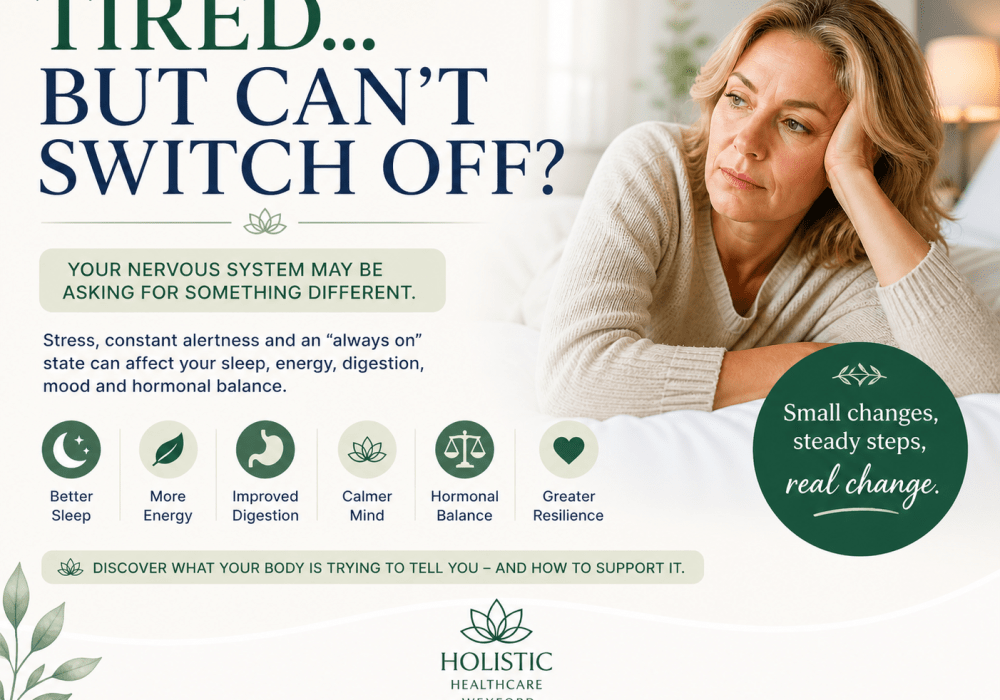
“I’m tired, but I can’t switch off.” “My mind keeps going.” “I feel on edge for no real reason.”
You might not call it your nervous system. But that is often exactly where this begins.
The body is not designed to stay “on” all the time
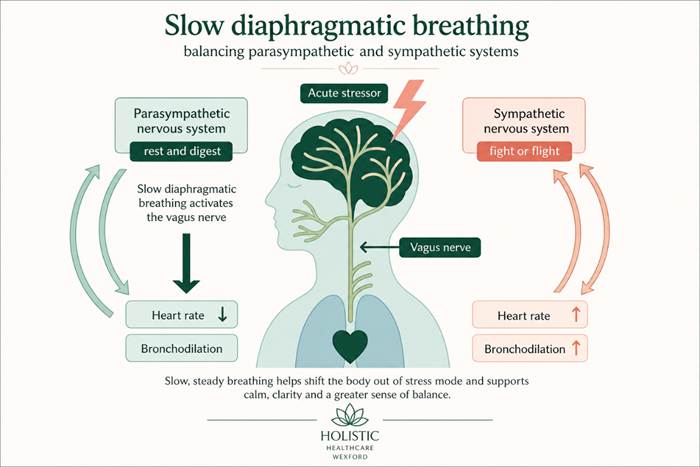
The nervous system has one very important job: to respond to what is happening around you, and then help the body return to a state of rest once the moment has passed.
In today’s world, that second part is often missing.
Instead, the body remains in a low level of alertness for much of the day. Not dramatic.
“Not obvious. Just constant.”
That constant background tension can slowly wear people down without them fully realising it.
By Dr Catherine W. Dunne, MSc.D., RGN (GPN), M.H.I.T. Holistic Healthcare Wexford
What that can feel like
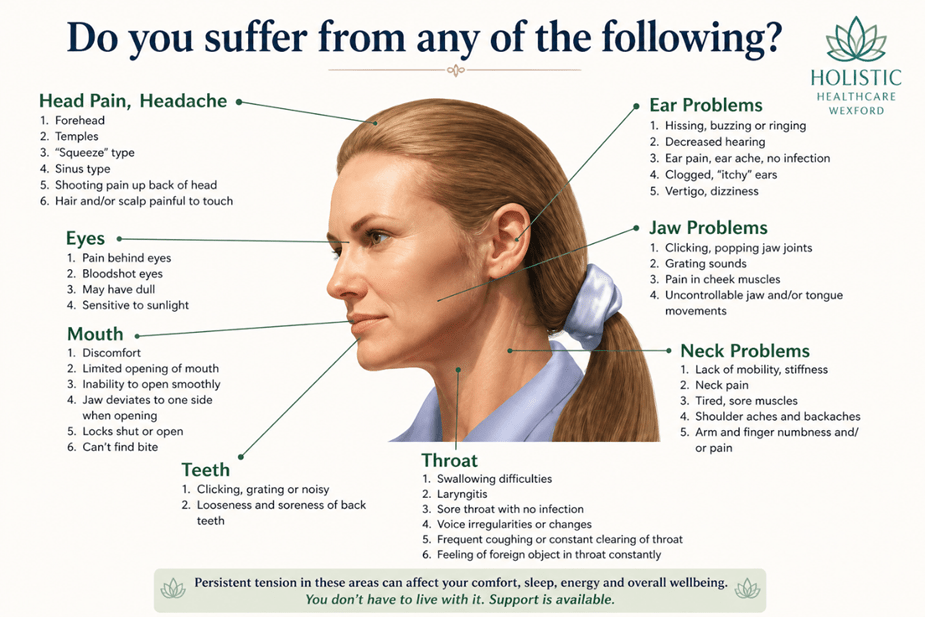
It does not always show up as “stress” in the way people expect. More often, it can feel like:
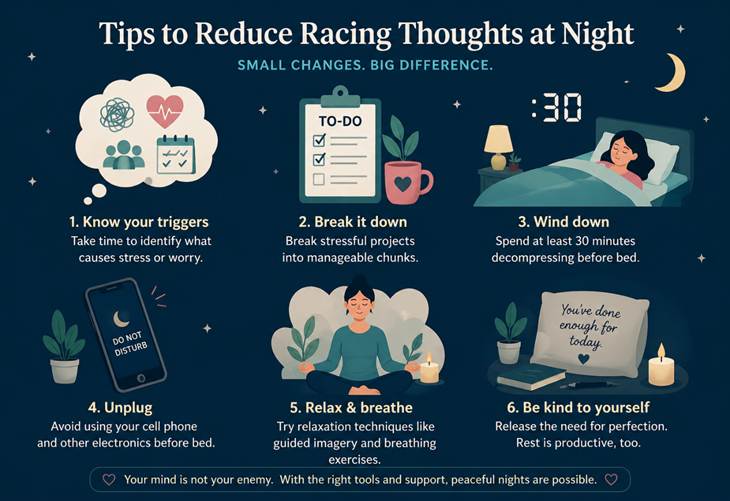
difficulty switching off
light or broken sleep
waking tired
tension in the shoulders, jaw, or chest
digestive discomfort
feeling overwhelmed by small things
irritability or low patience
feeling unlike yourself
Many people simply say:
“I don’t feel like myself.”
Why this matters more than people realise
When the body stays in this state for too long, it begins to affect how everything else functions.
Energy begins to dip. Sleep becomes lighter and less restorative. Digestion may slow or become unsettled. Hormonal balance can begin to shift. Focus and resilience may drop.
Over time, the body is no longer recovering properly. That is often when people begin to feel persistently off.
This is where things get missed
Standard tests can still come back as “normal”.
Because this is not always about disease. It is often about how the system is functioning.
The nervous system plays a central role in sleep, digestion, stress tolerance, hormones, mood, and overall resilience. When it is under strain, the whole body can feel the effects.
What the body may be asking for
Often, it is not asking for more pressure, pushing, or stimulation.
It may be asking for:
regular quiet moments
proper rest without guilt
less constant input
steadier routines
movement that calms rather than exhausts
deeper breathing
support and reassurance
time to recover
This is not weakness. It is physiology.
How this is supported in practice
In clinic at Holistic Healthcare Wexford, this is a pattern I see often. People arrive believing they need to “try harder”, when in truth many need the opposite.
The focus is often on helping the body feel safe enough to settle again. When that begins to happen, people commonly notice:
deeper sleep
clearer thinking
improved energy
less internal tension
better coping capacity
a sense of calm returning
Sometimes later life is when we finally notice the patterns that were there all along.
What you can start doing now
Keep it simple. The nervous system responds well to consistency, not perfection.
Step away from stimulation for short periods during the day
Get morning daylight where possible
Reduce doom-scrolling and late-night screen time
Eat regularly and stay hydrated
Walk outdoors, especially in nature
Notice jaw and shoulder tension and consciously release it
Protect sleep as a priority, not a luxury
Build small moments of peace into ordinary days
You do not need to overhaul your life overnight. Small steady changes often bring the greatest shift.
Final thought
Your body is not working against you.
It is responding to the load it is under.
When the nervous system is supported, everything else often begins to follow.
I hope you feel inspired. Look after your body, and it will keep you healthy.
Dr Catherine W. Dunne MSc.D. is a Registered General Nurse with over 37 years of clinical experience in primary care in Ireland. Alongside her work in General Practice Nursing, she is the founder of Holistic Healthcare Wexford and co-founder of Aumvedas Academy.
With a background that bridges conventional medicine and holistic practice, Catherine has a particular interest in the area where patients are often told “everything is normal,” yet still feel unwell. Her work focuses on helping people understand what their body is communicating, especially in relation to energy, stress, metabolic function, and recovery.
Through a combination of clinical knowledge and holistic support, she works with individuals to restore balance, improve resilience, and support long-term wellbeing.
Based in Wexford, Ireland.
Disclaimer
This article is for informational and educational purposes only and is not intended as medical advice. It does not replace consultation with a qualified healthcare professional. Patients should always seek appropriate medical guidance regarding their individual health needs and before making changes to treatment or care.
You are tired, irritable, bloated, anxious, forgetful, not sleeping properly, gaining weight around the middle, and feeling unlike yourself.
Yet blood tests may come back “normal”.
For many women over 35, especially through peri-menopause, this is where frustration begins. They know something has changed, but often feel unheard or dismissed.
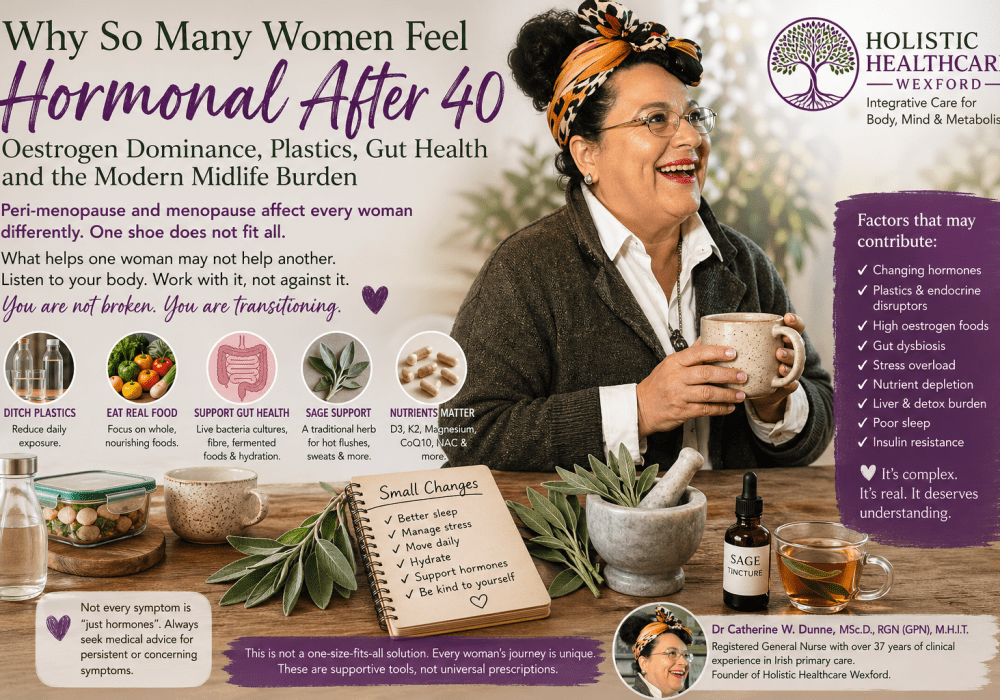
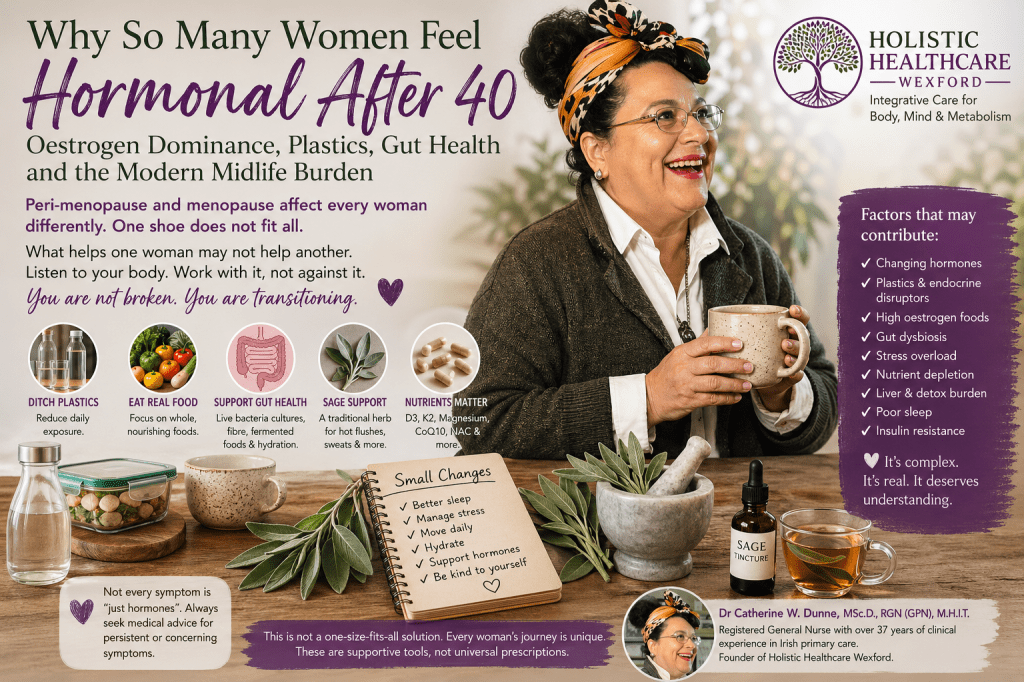
One common pattern behind these symptoms is what is often called Oestrogen Dominance.
This does not always mean high oestrogen on a blood test. More often, it means oestrogen is relatively stronger than progesterone, or the body is struggling to process and clear hormones efficiently.
By Dr Catherine W. Dunne, MSc.D., RGN (GPN) Holistic Healthcare Wexford | Co-founder, Aumvedas Academy
What Does Oestrogen Dominance Mean?
Hormones work in balance, not isolation.
Oestrogen has many important roles. It supports bones, skin, mood, brain function, the cardiovascular system and reproductive health. But when it outweighs progesterone, symptoms can begin to appear.
This often happens during peri-menopause, when progesterone may fall sooner and faster than oestrogen.
The result can be a body that feels hormonally unsettled.
Common Signs Women Notice
heavier or irregular periods
breast tenderness
bloating and fluid retention
mood swings or irritability
anxiety or inner tension
poor sleep
headaches
brain fog
reduced stress tolerance
stubborn weight gain, especially midsection
feeling unlike yourself
And yes, many women simply know something is changing long before any test confirms it.
Walking into doorframes may also feature. We shall call that advanced hormonal navigation.
Many women enter their forties expecting a few hot flushes, some skipped periods, and perhaps the occasional mood swing. What they often get instead is a confusing collection of symptoms that seem to arrive all at once: bloating, weight gain around the middle, poor sleep, anxiety, breast tenderness, headaches, heavy or erratic periods, low mood, brain fog, irritability, and the unsettling feeling that they are somehow no longer themselves.
They go for blood tests. They are told everything is normal. They are advised to “manage stress” or accept that it is simply age.
Yet many women know in their bones that something has shifted.
One of the most common phrases used online to describe this experience is oestrogen dominance. It is not a formal medical diagnosis in the same way diabetes or hypothyroidism is, but it is often used to describe a very real pattern: when oestrogenic influence outweighs the balancing effects of progesterone, or when the body is carrying a broader hormonal burden that affects how a woman feels.
This does not always mean oestrogen is high on a blood test. More often, it means oestrogen is relatively stronger than progesterone, or the body is struggling to process, clear and regulate hormones efficiently. In other words, the issue may not be one hormone acting alone. It may be the whole terrain.
The Midlife Hormone Shift Begins Before Menopause
Many women assume menopause begins when periods stop. In reality, the turbulence often starts years earlier.
During perimenopause, ovulation becomes less predictable. Progesterone often declines first, while oestrogen may surge, dip or fluctuate wildly. This can create the classic picture associated with relative oestrogen excess: heavier periods, PMS-like symptoms, fluid retention, mood swings, poor sleep, breast tenderness, migraines and irritability.
When menopause arrives, periods cease, but symptoms do not necessarily vanish. Many women then face a new landscape of sleep disturbance, hot flushes, weight redistribution, vaginal dryness, anxiety, lowered resilience and fatigue.
Even post-menopause, hormones still matter. Fat tissue can continue to produce oestrogen through aromatase activity, lifestyle factors influence hormone metabolism, and environmental chemicals may continue to affect signalling pathways.
So no, the hormone story does not end at menopause. It simply changes chapter.
We Are the Plastic Container Generation
One part of the modern story that deserves far more attention is environmental exposure.
We became the convenience generation. We store food in plastic tubs, heat leftovers in plastic containers, drink water from bottles left in warm cars, wrap food in cling film, and begin our mornings with scalding tea or coffee in takeaway cups lined with plastic polymers and topped with plastic lids.
Many plastics contain compounds such as bisphenols, including BPA, BPS and BPF, as well as phthalates. These chemicals have been studied for their endocrine-disrupting potential, meaning they may interfere with natural hormone signalling.
The issue is not one takeaway coffee, one plastic lunchbox or one bottle of water. It is the small, repeated exposure over years.
Heat increases concern. Microwaving food in plastic, dishwashing worn containers repeatedly, pouring hot liquids into plastic-lined cups, or leaving bottles in sunlight may increase chemical migration. Even thermal till receipts have historically used bisphenol compounds, which can be absorbed through the skin.
This does not mean panic or perfectionism. It means awareness. Simple changes can reduce unnecessary load: use glass containers where possible, choose ceramic mugs, use stainless steel bottles, avoid heating food in plastic, and take a reusable cup for takeaway drinks.
Sometimes the body is not failing women. Sometimes the environment is working against them.
Food Quality Still Matters
Another overlooked area is the quality of the modern food supply.
One of the most significant concerns in discussions around oestrogen dominance is high-oestrogenic or hormonally disruptive food exposure. Commercially raised animals may be exposed to growth-promoting systems designed to increase size, speed of growth or milk production, depending on the country and farming system. Consumers are increasingly aware that what happens in the food chain does not magically stop at the plate.
Conventional produce may also carry residues from pesticides, herbicides and fungicides. Some of these compounds have been studied for endocrine-disrupting effects and may interfere with natural hormone activity, blood sugar regulation and metabolism. While residues may be present only in small amounts on individual fruits or vegetables, the concern is cumulative exposure over time.
This is why many people choose organic, local, pasture-raised or lower-intervention foods where feasible. Not out of fear, but because reducing the overall body burden makes sense.
Processed foods create a separate problem. Ultra-processed diets are often low in fibre, magnesium and protective plant compounds, while being high in refined sugars, additives, poor-quality fats and calorie density. This combination can worsen insulin resistance, inflammation and weight gain, all of which can influence hormone balance.
The real issue is rarely one “bad food”. It is the sum total of modern eating patterns.
Your Gut Helps Regulate Oestrogen
One of the most fascinating and under-discussed areas of women’s health is the gut-hormone connection.
The gut microbiome helps regulate circulating oestrogen through a group of bacterial genes often referred to as the estrobolome. These gut bacteria influence enzymes such as beta-glucuronidase, which are involved in whether oestrogens are eliminated from the body or reactivated and recirculated.
When gut flora is diverse and healthy, hormones are more likely to be processed and cleared efficiently. When gut balance is disturbed through repeated antibiotics, poor diet, chronic stress, constipation, alcohol excess, IBS-type patterns, dysbiosis or conditions such as SIBO, oestrogen recirculation may increase.
Many women with hormonal symptoms also report bloating, sluggish bowels, food sensitivities, recurrent thrush, IBS-type symptoms, and worsening PMS or peri-menopausal symptoms.
That is not coincidence.
Supporting gut health may include increasing fibre, vegetables, resistant starches, fermented foods where tolerated, adequate hydration and regular movement. In some cases, live bacteria cultures, often called probiotics, may help support gut flora and restore microbial balance, especially after antibiotics or periods of digestive disruption.
A healthy bowel habit is one of the least glamorous but most practical hormone tools available. Not glamorous, no. Useful? Absolutely.
Liver, Elimination and the Hormone Clearance Pathway
The liver plays a major role in processing hormones, including oestrogen. Once hormones have been metabolised by the liver, they still need to leave the body through bile and bowel elimination.
If a woman is constipated, inflamed, sleep deprived, nutrient depleted, drinking too much alcohol, under chronic stress or living on processed foods, the system can become less efficient. This does not mean the liver is “broken”. It means the workload is too high and the support is too low.
Good hormone clearance depends on the basics: enough protein, fibre, minerals, hydration, bowel regularity, sleep and reduced toxic load.
Simple, yes. Easy in modern life? Not always.
Where Sage Fits In
Sage is one of the old traditional women’s herbs that deserves renewed respect.
It has long been used for hot flushes, night sweats, excessive perspiration, digestive sluggishness, brain fog, and that overheated, unsettled feeling many women recognise during perimenopause and menopause.
Sage is not a magic hormone cure, and it should not be presented as something that “fixes” oestrogen dominance. Its value is more practical than that. It may support women through the symptoms of hormonal transition, especially where sweating, flushes and digestive heaviness are part of the picture.
The simplest form is sage tea. Use one teaspoon of dried sage leaf, or three to five fresh leaves, in a cup of hot water. Cover and steep for around ten minutes. One cup daily may offer gentle support, while up to two cups daily may be used during hot flush phases.
Sage tincture is another option, commonly taken as twenty to thirty drops in water once or twice daily, depending on product strength.
Regular culinary use also has value. Sage works beautifully in soups, roasted vegetables, stuffing, poultry dishes and savoury cooking. Small regular use often beats heroic one-off efforts.
Sage should be used cautiously in pregnancy, breastfeeding, seizure disorders, or where medications and health conditions require professional advice.
The Wild Yam Myth
For years, wild yam supplements were marketed as natural progesterone support.
Wild yam contains diosgenin, a plant compound used in laboratories as a starting material to manufacture steroid hormones. However, the human body does not naturally convert wild yam into progesterone. That conversion requires industrial processing.
So while some women may feel better using wild yam products, it should not be presented as equivalent to progesterone replacement.
Meanwhile, many women do not realise that in Ireland and Europe, regulated body-identical hormone therapies such as oestradiol and micronised progesterone are already available through licensed medical care and are generally preferred by professional menopause bodies over unregulated compounded alternatives.
That does not mean every woman needs HRT. It means women deserve accurate information rather than marketing fog.
Nutrients That Matter More Than Many Realise
Hormones do not work in isolation. They depend on healthy cells, nervous system balance, mineral sufficiency, mitochondrial energy and sleep.
This is why some women feel dramatically better when foundations are corrected.
Vitamin D3 is particularly relevant in Ireland, where low sunlight exposure is common. It functions more like a hormone messenger than a simple vitamin and influences mood, immunity and bone health.
Vitamin K2 is often paired with D3 to support healthy calcium handling.
Magnesium is one of the most important minerals for midlife women. It supports sleep, nervous system calm, muscle relaxation, blood sugar balance, vitamin D metabolism and stress resilience.
CoQ10 supports mitochondrial energy production and may be especially relevant in fatigue states, ageing and for women using statins.
NAC, or N-acetyl cysteine, supports glutathione pathways and antioxidant defence and is often discussed in relation to inflammation, metabolic health and resilience.
These are not magic pills. They are part of restoring the terrain in which hormones must function.
What Women Need Most
Many women do not need another lecture telling them to “just relax”.
They need a proper conversation that recognises the complexity of modern midlife health.
They may be dealing with changing hormones, sleep debt, stress overload, mineral depletion, low vitamin D, insulin resistance, environmental chemical burden, gut imbalance, caring responsibilities and years of putting everyone else first.
That is not a minor issue. That is a full-body systems load.
And yes, walking into doorframes, forgetting why you entered a room and losing your words mid-sentence may also feature. We shall call that advanced hormonal navigation.
What Can Help Practically?
The answer is rarely one tablet, one test or one buzzword. It is usually a return to fundamentals.
Eat enough protein. Build meals around real food. Increase fibre gradually. Support bowel regularity. Reduce plastic exposure where possible. Stop heating food in plastic. Choose better-quality food where feasible. Move daily. Strength train if able. Prioritise sleep. Correct nutrient deficiencies. Support gut flora. Reduce alcohol. Use herbs wisely. Seek medical support when symptoms are significant.
And most importantly, listen to the body before it has to shout.
One Size Does Not Fit All
It is also important to say this clearly: no two women experience perimenopause, menopause or post-menopause in exactly the same way.
One woman may struggle mainly with sleep and anxiety. Another may have heavy bleeding and migraines. Another may have hot flushes, joint aches, weight gain, vaginal dryness, low mood, or no major symptoms at all.
This is why the suggestions in this article should not be treated as a “one-for-all” prescription. They are general educational supports, not a personalised treatment plan. What helps one woman may not suit another, especially where medications, medical history, hormone-sensitive conditions, thyroid issues, diabetes, mental health concerns or other factors are involved.
Women deserve individualised care, not a conveyor-belt approach. Midlife health is not a template. It is a conversation.
Important Reality Check
Not every symptom in midlife is “just hormones”.
Persistent heavy bleeding, severe pain, sudden changes, unexplained weight loss, profound fatigue, depression, palpitations, post-menopausal bleeding or concerning symptoms deserve proper medical review.
Women should not be dismissed, but neither should everything be blamed on hormones without careful assessment.
Final Thought
Perimenopause and menopause do not create weakness. They reveal where the body has been carrying strain for years.
When women understand that, everything changes.
The body is not being dramatic. It is communicating.
Sometimes healing begins not with being told that everything is normal, but with finally being understood.
I hope you feel inspired. Look after your body, and it will keep you healthy.
Dr Catherine W. Dunne MSc.D. is a Registered General Nurse with over 37 years of clinical experience in primary care in Ireland. Alongside her work in General Practice Nursing, she is the founder of Holistic Healthcare Wexford and co-founder of Aumvedas Academy.
With a background that bridges conventional medicine and holistic practice, Catherine has a particular interest in the area where patients are often told “everything is normal,” yet still feel unwell. Her work focuses on helping people understand what their body is communicating, especially in relation to energy, stress, metabolic function, and recovery.
Through a combination of clinical knowledge and holistic support, she works with individuals to restore balance, improve resilience, and support long-term wellbeing.
Based in Wexford, Ireland.
Disclaimer
This article is for informational and educational purposes only and is not intended as medical advice. It does not replace consultation with a qualified healthcare professional. Patients should always seek appropriate medical guidance regarding their individual health needs and before making changes to treatment or care.
We often hear the phrase “keep hoping”. It is offered with kindness, especially during difficult times. Illness, grief, uncertainty, financial strain, heartbreak. Hope is handed out like a warm blanket.
But lately I have been wondering if hope, on its own, is always as powerful as we think.
Hope can sometimes leave a person waiting.
“I hope things improve. I hope I feel better. I hope someone helps. I hope life changes.“
By Dr Catherine W. Dunne, MSc.D., RGN (GPN) Holistic Healthcare Wexford | Co-founder, Aumvedas Academy
There is nothing wrong with hope in itself. It can be a spark in dark times. It can carry someone through a difficult night. But hope often contains uncertainty. It leans on something outside ourselves. It waits for tomorrow.
Faith feels different.
Faith is steadier. Faith is deeper. Faith says:
I trust there is a way forward. I believe I can meet what comes. I know I will not be broken by this. I trust that even in difficulty, something meaningful can grow.
This matters in modern life because many people are left in a state of constant waiting. Waiting for better news. Waiting for better health. Waiting for the perfect moment. Waiting for someone else to fix what feels broken.
Faith does not always require religion. Faith can be spiritual, personal, practical, or deeply human. It can be faith in God, faith in life, faith in truth, faith in your own resilience.
Hope asks for a result. Faith strengthens the person.
Waiting can quietly drain the spirit.
Faith, by contrast, invites movement.
A person with faith still takes action. They rest when needed. They seek help when needed. They change habits. They keep walking. They do not sit frozen at the roadside asking life for permission.
This can apply to health as much as anything else.
Many people say, “I hope I get better.”
A more powerful shift may be:
I believe my body can respond to support. I trust small steps matter. I know healing often begins quietly.
That change in language can change posture, mindset, and energy.
Hope may light the candle. Faith keeps it burning when the wind arrives.
Perhaps what many people need today is not less hope, but deeper foundations beneath it.
Hope with action. Hope with courage. Hope supported by faith.
Because when life becomes uncertain, faith helps us stand while hope alone may keep us seated.
And sometimes standing is where healing begins.
I hope you feel inspired. Look after your body, and it will keep you healthy.
Dr Catherine W. Dunne MSc.D. is a Registered General Nurse with over 37 years of clinical experience in primary care in Ireland. Alongside her work in General Practice Nursing, she is the founder of Holistic Healthcare Wexford and co-founder of Aumvedas Academy.
With a background that bridges conventional medicine and holistic practice, Catherine has a particular interest in the area where patients are often told “everything is normal,” yet still feel unwell. Her work focuses on helping people understand what their body is communicating, especially in relation to energy, stress, metabolic function, and recovery.
Through a combination of clinical knowledge and holistic support, she works with individuals to restore balance, improve resilience, and support long-term wellbeing.
Based in Wexford, Ireland.
Disclaimer
This article is for informational and educational purposes only and is not intended as medical advice. It does not replace consultation with a qualified healthcare professional. Patients should always seek appropriate medical guidance regarding their individual health needs and before making changes to treatment or care.
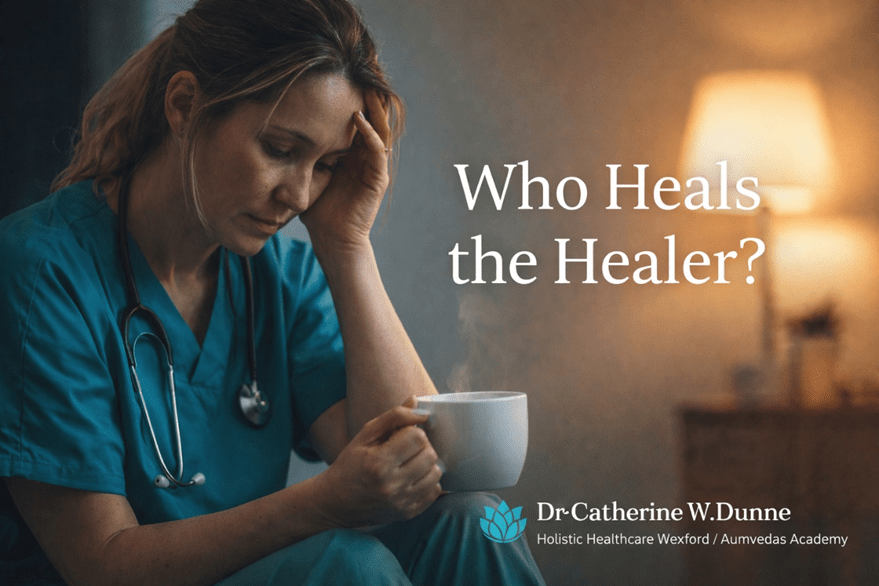
Back in 2022 I wrote the original post “Who Heals the Healer?” Doctors, Nurses, Therapists, Clergy, and other Healing Providers
CWD 25/10/2022 Ireland
Who heals the Healers?
We are all in danger of burnouts, but Doctors and us Nurses really do “feel” that pulling at the very essence of our being.
These are very stressful times and many are sick. Physically and emotionally. Usually you would attend your Family Doctor – GP for physical or organic help, or you may attend a Clergy or Therapist for emotional help … or, God forbid you end up on the hospital trolley in A&E (ER). And as you are now in their presence, looking for help, have you given the Healthcare Provider – Doctors, Nurses, Therapists, Clergy – a Thought of Your Time? Who Heals the Healer?
We are by no means immune to cases coming in and some touch us profoundly and we “bring it home”; something we were all taught, never to do. And to quote Rag’n’Bone Man: “I’m only human after all” – at the end of the day, that is exactly who we all are: Human.
Healing for Healers is a unique approach to address compassion fatigue, to listen to your body, and to connect to your inheritance. This includes both your inherited burdens and the true gifts of your lineage. You learn how to release what does not serve you, repair deep wounds, restore balance to the body, and replenish your energy and life force. As healers and care providers it is imperative to have a safe and containing place to receive this kind of support. It is possible to give and care for others while still honouring and providing for your own needs and health. …
Now, 4 years on, nothing really has changed, yet something shifted.
By Dr Catherine W. Dunne, MSc.D., RGN (GPN) Holistic Healthcare Wexford | Co-founder, Aumvedas Academy
Caring for Those Who Carry Everyone Else
There is a quiet group of people in society who are often praised, relied upon, and leaned upon… yet rarely asked a simple question:
How are you, really?
They are the nurses finishing a shift while carrying the weight of three others. The carers supporting ageing parents while raising children. The therapists holding space for grief, trauma, and fear. The doctors making decisions under pressure. The clergy listening to pain few others ever hear. The mothers, fathers, partners, neighbours, and friends who are always “the strong one.”
They are the helpers.
And too often, the helpers are exhausted.
The Cost of Always Being the One Who Copes
Many caring people become experts at functioning while depleted.
They keep going through tiredness. They smile through stress. They minimise their own needs. They tell themselves others have it worse. They postpone rest until “things calm down.”
But the body keeps score.
Stress may begin to show itself through:
poor sleep
anxiety
irritability
fatigue
headaches
muscle tension
lowered resilience
emotional numbness
feeling detached from work once loved
Sometimes it is not weakness. Sometimes it is overload.
“Healers are uniquely vulnerable to burnout because they constantly hold space for others’ pain, regulate heavy emotions, and witness trauma without always receiving the same support in return.”
Burnout Is Not a Personal Failure
We live in a culture that often rewards self-sacrifice and calls it strength.
Yet there comes a point where constant output without replenishment becomes unsustainable. Burnout is not laziness. It is often the natural consequence of prolonged stress, responsibility, and emotional labour without enough recovery.
Even the strongest nervous system has limits.
Who Holds the Holder?
This is the real question.
Who listens to the one who is always listening? Who comforts the one who comforts others? Who notices when the capable one is quietly sinking?
Many healers, carers, and professionals do not need grand solutions.
Often they need:
permission to pause
somewhere safe to speak honestly
rest without guilt
support without judgement
practical help
human kindness
time in nature
space to breathe again
Healing the Healer
Healing does not always mean leaving everything behind and moving to a mountain hut with goats. Though tempting.
Sometimes healing begins with small acts:
A proper meal. An early night. A walk by the sea. Turning the phone off for an hour. Massage. Prayer. Silence. Laughter. Boundaries. Saying no. Asking for help.
Small repairs done consistently can save a structure.
A Message to Every Helper Reading This
You are allowed to matter too.
You do not need to collapse before you deserve care. You do not need to prove your exhaustion. You do not need to earn rest through breaking point.
The world needs good healers, carers, nurses, therapists, parents, and kind-hearted people.
But it also needs them well.
Final Thought:
Restoration for healers relies on four key pillars: grounding the body through gentle movement, restoring mental and emotional balance through breathwork, nature walks, reflective practice, or quiet recovery time, nourishing the system with rest and wholesome food, and ensuring they are supported by others through therapy, supervision, or peer circles. Ignoring these needs can lead to depletion, where healers operate from a state of exhaustion rather than resilience, ultimately compromising their ability to care for others effectively.
So perhaps the question is no longer only Who heals the healer?
Perhaps it is:
When will the healer allow healing in?
I hope you feel inspired. Look after your body, and it will keep you healthy.
Dr Catherine W. Dunne is a Registered General Nurse with over 37 years of clinical experience in primary care in Ireland. Alongside her work in General Practice Nursing, she is the founder of Holistic Healthcare Wexford and co-founder of Aumvedas Academy.
With a background that bridges conventional medicine and holistic practice, Catherine has a particular interest in the area where patients are often told “everything is normal,” yet still feel unwell. Her work focuses on helping people understand what their body is communicating, especially in relation to energy, stress, metabolic function, and recovery.
Through a combination of clinical knowledge and holistic support, she works with individuals to restore balance, improve resilience, and support long-term wellbeing.
Based in Wexford, Ireland.
Disclaimer
This article is for informational and educational purposes only and is not intended as medical advice. It does not replace consultation with a qualified healthcare professional. Patients should always seek appropriate medical guidance regarding their individual health needs and before making changes to treatment or care.
By Dr Catherine W. Dunne, MSc.D., RGN (GPN) Holistic Healthcare Wexford | Co-founder, Aumvedas Academy
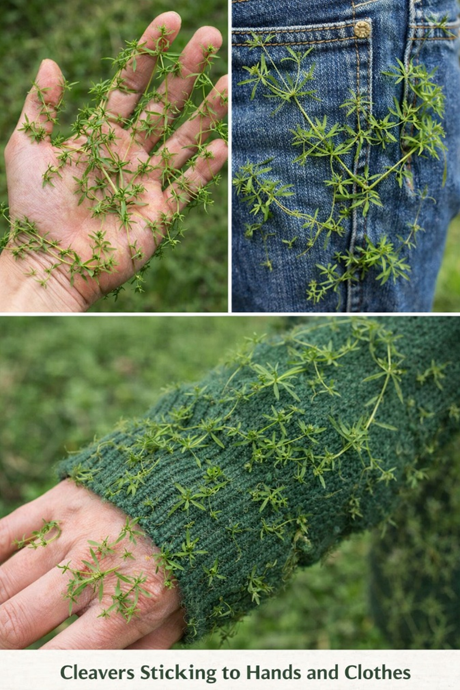
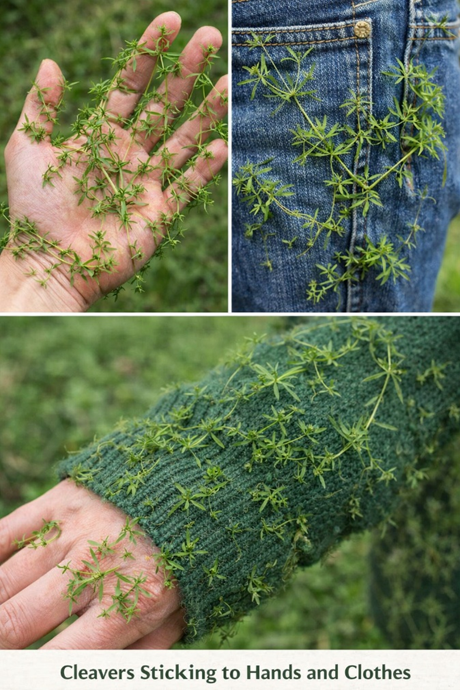
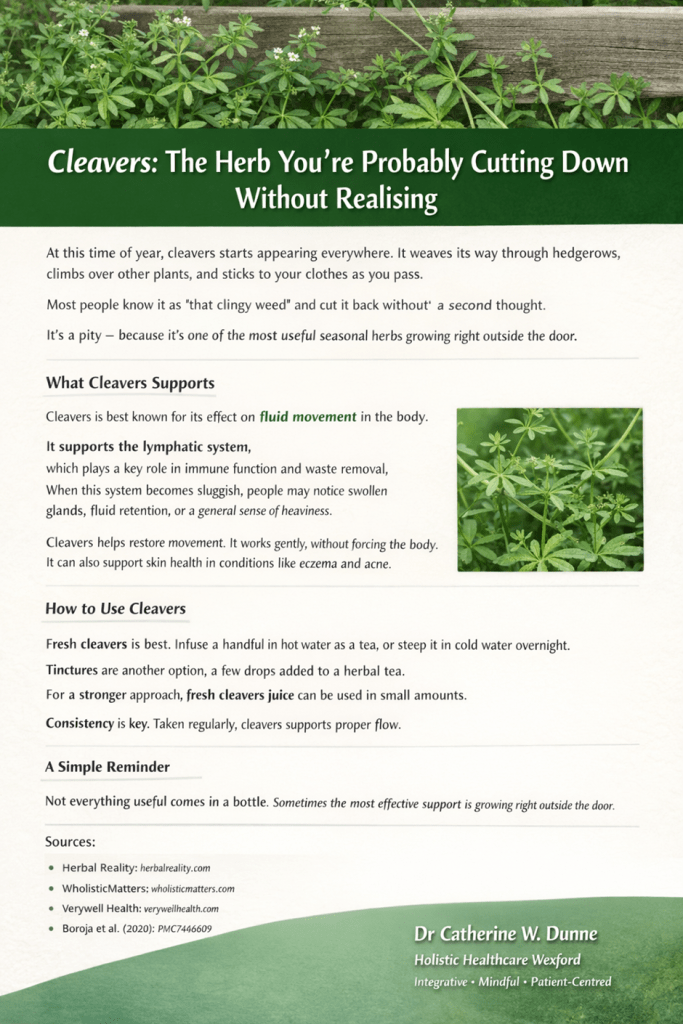
At this time of year, cleavers starts appearing everywhere. It weaves its way through hedgerows, climbs over other plants, and sticks to your clothes as you pass.
Most people know it as “that clingy weed” and cut it back without a second thought.
It’s a pity – because it’s one of the most useful seasonal herbs growing right outside the door.
Cleavers (Galium aparine) has a long history of traditional use, particularly in supporting the lymphatic and urinary systems. While modern research is still developing, there is enough evidence, combined with long-standing herbal practice, to show it has a valuable role when used correctly.
What Cleavers Supports
Cleavers is best known for its effect on fluid movement in the body.
It supports the lymphatic system, which plays a key role in immune function and waste removal. When this system becomes sluggish, people may notice swollen glands, fluid retention, or a general sense of heaviness.
Cleavers helps restore movement. It works gently, without forcing the body, making it suitable for ongoing use over a period of time.
There is also a clear link between lymphatic congestion and skin health. Conditions such as eczema, acne, and psoriasis can sometimes reflect what is happening internally. Supporting lymphatic flow may help improve these from the inside out.
In addition, cleavers has mild diuretic properties, helping the kidneys process and eliminate excess fluid. It is also recognised for its anti-inflammatory and antioxidant compounds, which contribute to its overall supportive role.
How to Use Cleavers
Fresh cleavers is always the best option when available.
A simple way to use it is as a tea. A handful of fresh herb can be infused in hot water and taken once or twice daily. It can also be prepared as a cold infusion, which preserves some of its more delicate constituents and is particularly suitable in warmer or more inflammatory conditions.
Cleavers can also be taken as a tincture. A few drops added to a warm herbal tea such as nettle or red clover is an easy and practical way to take it.
For those who prefer a stronger approach, fresh cleavers juice has traditionally been used in small amounts.
As with any herb, consistency matters more than intensity. Taken regularly over time, cleavers supports the body in restoring proper flow.
Cleavers Benefits:
Strong, consistent evidence:
Lymphatic support
Diuretic action
Skin link
Anti-inflammatory properties
Emerging / suggestive:
Immune modulation
A Simple Reminder:
Not everything useful comes in a bottle.
Sometimes the most effective support is already growing nearby – unnoticed and often removed before it’s ever given a chance.
Dr Catherine W. Dunne is a Registered General Nurse with over 37 years of clinical experience in primary care in Ireland. Alongside her work in General Practice Nursing, she is the founder of Holistic Healthcare Wexford and co-founder of Aumvedas Academy.
With a background that bridges conventional medicine and holistic practice, Catherine has a particular interest in the area where patients are often told “everything is normal,” yet still feel unwell. Her work focuses on helping people understand what their body is communicating, especially in relation to energy, stress, metabolic function, and recovery.
Through a combination of clinical knowledge and holistic support, she works with individuals to restore balance, improve resilience, and support long-term wellbeing.
Based in Wexford, Ireland.
Disclaimer
This article is for informational and educational purposes only and is not intended as medical advice. It does not replace consultation with a qualified healthcare professional. Patients should always seek appropriate medical guidance regarding their individual health needs and before making changes to treatment or care.
Before assuming something complex is wrong, it is always wise to make sure the body has the nutrients it quietly depends on every day.
Dr Catherine W. Dunne MSc.D., RGN Holistic HealthCare Wexford & Aumvedas Academy Nurse, Medical Intuitive and Holistic Practitioner
They do not arrive with much fanfare. They are not advertised everywhere. And yet, when they begin to run low, the body starts sending little signals that something is not quite right.
Zinc is one of those nutrients.
It plays a role in hundreds of processes throughout the body — immunity, digestion, hormone balance, brain chemistry, sleep regulation, wound healing, and how well we cope with stress.
In practice, I often see people struggling with a collection of symptoms rather than a single complaint. Poor sleep, frequent infections, low resilience to stress, digestive discomfort, brain fog, or stubborn fatigue.
Sometimes the missing piece is not complicated at all. Sometimes it is simply that the body has run a little short of the minerals it depends on every day. And zinc is one of the most important of those.
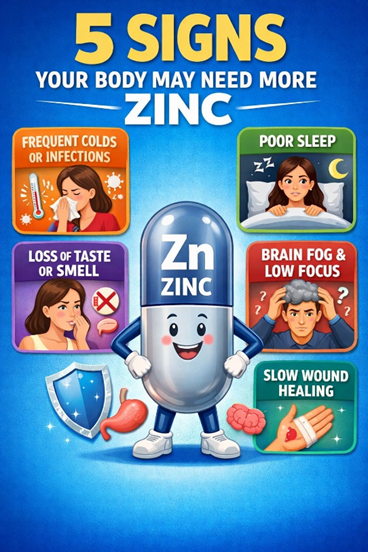
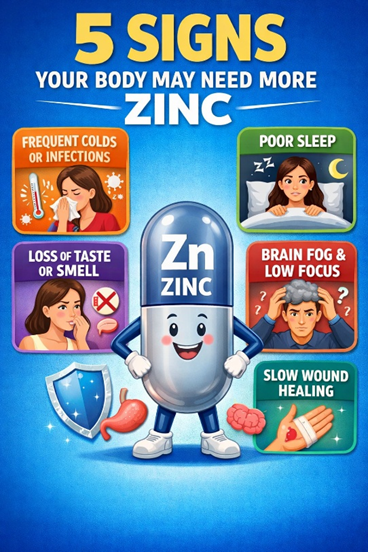
Here are five early signs your body may be asking for more zinc:
Why zinc matters so much
Zinc is involved in more than 300 enzyme reactions in the body and influences thousands of cellular processes.
It supports:
immune defence
wound healing
skin repair
hormone production
pancreatic function
neurotransmitter balance
cognitive performance
antioxidant protection
tissue growth and repair
It also plays an important role in the brain, thymus gland, digestive system, and stress response.
In other words, zinc is deeply woven into how the body maintains balance.
Early signs zinc may be running low
Zinc deficiency rarely announces itself dramatically in the beginning. Instead, it tends to show up as small persistent changes that people often dismiss.
Some early clues may include:
reduced taste or smell
poor appetite
bloating or digestive discomfort
slow wound healing
frequent colds or infections
white spots on fingernails
thinning hair
low mood
poor sleep
reduced stress tolerance
None of these symptoms alone proves a deficiency, of course. But when several appear together, it is often worth taking a closer look at nutritional foundations.
Zinc, stress and the cortisol connection
Modern life places the body under considerable stress — emotional stress, work stress, sleep disruption, inflammation, infections, and environmental factors.
One of the body’s main stress hormones is cortisol.
In short bursts, cortisol is helpful. It allows us to respond quickly and manage challenges. But when stress becomes chronic, cortisol can begin to disrupt several systems in the body.
One of the things chronic stress does is increase zinc loss.
At the same time, zinc is needed to support the immune system, regulate inflammation, and stabilise the nervous system. So when stress increases, the body may actually require more zinc, while at the same time losing more of it.
Over time this can become a loop:
stress increases cortisol ↓ cortisol contributes to zinc depletion ↓ low zinc reduces resilience ↓ fatigue and inflammation rise ↓ stress becomes harder to manage
Breaking that cycle sometimes begins with restoring the body’s basic nutritional building blocks.
Zinc and the immune system
Zinc is essential for the healthy function of the thymus gland, which sits behind the breastbone.
The thymus plays a central role in the development of T-cells, the immune cells that help recognise and fight infections.
When zinc levels fall, the thymus becomes less active and immune resilience can decline. This may partly explain why people with low zinc status sometimes notice that they seem to “catch everything” going around.
As we age, thymus activity naturally declines, which makes maintaining good zinc levels even more relevant.
Zinc and the brain
The brain contains surprisingly high concentrations of zinc.
It participates in the regulation of several neurotransmitters including:
dopamine
serotonin
GABA
glutamate
These chemical messengers influence mood, motivation, attention, memory, and sleep.
When zinc levels are suboptimal, people may notice changes such as:
brain fog
reduced concentration
lower mood
mental fatigue
disrupted sleep patterns
This is one reason zinc has attracted increasing attention in research around mood, cognitive function, and attention regulation.
A quiet conversation around attention and ADHD
Something I hear more often now in practice is adults wondering whether long-standing struggles with focus, motivation or mental organisation may be related to ADHD.
Many adults are seeking assessments for the first time in their lives.
While ADHD is a complex neurodevelopmental condition with many contributing factors, nutrition does influence brain chemistry in meaningful ways.
Zinc, for example, plays a role in dopamine metabolism, a neurotransmitter that is strongly linked with attention, reward signalling, and motivation.
Several studies have found that some children — and adults — with attention difficulties show lower zinc levels than average.
This does not mean zinc deficiency causes ADHD. Human biology is never that simple.
But it does remind us that before labelling the brain as “broken”, it is wise to make sure the body has the nutritional tools it needs to function well.
Sometimes the brain is not faulty. Sometimes it is simply under-supported.
What if you do not eat shellfish or red meat?
Oysters and shellfish are among the richest sources of zinc in the human diet. Red meat is another significant contributor.
If these foods are not eaten, zinc intake can become marginal over time, especially if the diet is high in grains and legumes.
Plant foods contain phytates, which reduce zinc absorption.
Vegetarians and vegans can absolutely maintain good zinc status, but it requires a little more intention.
Helpful plant sources include:
pumpkin seeds
sesame seeds or tahini
cashews
chickpeas
lentils
hemp seeds
Traditional preparation methods such as soaking, sprouting and fermenting help improve mineral absorption from plant foods.
Does fish oil provide zinc?
No.
Omega-3 fish oils contain fatty acids such as EPA and DHA, but they do not provide meaningful amounts of zinc. Minerals remain in the tissue of the food, not in the extracted oil.
Whole foods provide minerals. Oils provide fats.
Both have their place, but they are not interchangeable.
Should zinc be taken with copper?
Zinc and copper work together in the body and need to remain balanced.
Taking higher doses of zinc for long periods can gradually reduce copper absorption. Copper is important for iron metabolism, connective tissue health and nervous system function.
For this reason, many practitioners recommend ensuring copper intake remains adequate when zinc is supplemented for several months.
Nature often balances these minerals together in foods such as shellfish, nuts and organ meats.
Choosing a zinc supplement
If supplementation is needed, some of the better absorbed forms include:
zinc picolinate
zinc bisglycinate
zinc citrate
These tend to be easier for the body to absorb than zinc oxide.
For many adults, 15–25 mg daily is a common supportive range, though individual needs can vary.
Higher doses are sometimes used short term but should be approached thoughtfully.
How long should zinc be taken?
For general support, zinc can often be taken daily for a few months, then reviewed.
A practical approach used by many people is:
2 to 3 months of supplementation
followed by a short break or reassessment
This is especially wise if symptoms improve, diet changes, or the person is also using a multi-mineral formula.
As always, the goal is not to live by the supplement drawer like it is a tiny pharmacy in the kitchen. The real aim is to restore balance and support the body well enough that it needs less propping up over time.
A final thought
Zinc may not be the most glamorous nutrient, but it is one of the most important.
It influences immunity, digestion, brain chemistry, sleep, stress resilience, hormone function and tissue repair. When it is low, the body often sends out early whispers long before it starts shouting.
For those who cannot eat shellfish, oysters or red meat, zinc is worth paying attention to. For those under chronic stress, struggling with poor sleep, frequent infections or slow recovery, it may be one of the missing pieces.
As with so much in health, the body works as an integrated system. Zinc does not act alone, but without it, many systems begin to falter.
Sometimes the smallest minerals carry the biggest workload.
Disclaimer: The information provided in this article is for educational and informational purposes only and is not intended as medical advice. It should not be used to diagnose, treat, cure, or prevent any medical condition. Always consult with a qualified healthcare professional before starting any new supplement, nutritional programme, or health intervention, particularly if you have an existing medical condition, are pregnant, breastfeeding, or taking prescription medications.
Individual nutritional needs can vary, and what is appropriate for one person may not be suitable for another.
This article is intended to support informed health awareness and should not replace personalised medical guidance.
I hope you feel inspired. Look after your body, and it will keep you healthy.
Catherine
CWD 16 March 2026/Ireland
About the Author
Dr. Catherine W. Dunne MSc.D., RGN is a nurse, holistic practitioner, and educator based in Wexford, Ireland. With over 30 years of experience in healthcare and energy-based healing modalities, she integrates conventional medical knowledge with holistic approaches to support whole-person well-being.
Catherine is the founder of Holistic HealthCare Wexford and co-founder of Aumvedas Academy, where she teaches courses in holistic health, energy medicine, and integrative healing practices.
Her work focuses on empowering people to understand the body as an intelligent system capable of healing when supported with the right knowledge, nutrition, and energetic balance.





 combines beautifully with apple cider vinegar and honey.











 Holistic Healthcare Wexford