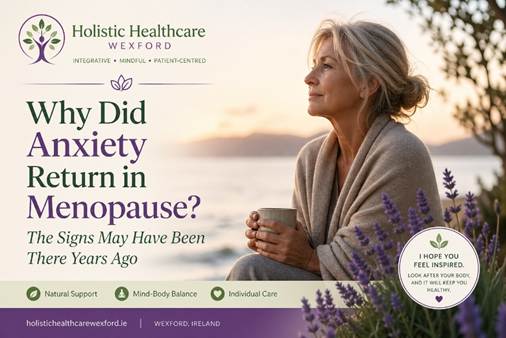
Many women are surprised when anxiety appears, or reappears, during menopause. Some have never struggled with it before. Others may remember difficult patches earlier in life, only to feel those sensations return years later.
Racing thoughts. Panic feelings. A sense of dread for no clear reason. Poor sleep. Palpitations. Feeling suddenly overwhelmed by things once easily managed.
It can feel confusing, especially when life on the outside may appear stable. Children grown. Career established. More wisdom than ever before. Yet the body seems to be sounding an alarm.
What if menopause is not always the beginning of the story?
What if, for some women, it is a later chapter in a pattern that may have shown itself years earlier?
By Dr Catherine W. Dunne, MSc.D., RGN (GPN)
Holistic Healthcare Wexford | Co-founder, Aumvedas Academy
Hormonal change can affect the nervous system
Many women tolerate hormonal shifts with little difficulty. Others seem more sensitive during times of transition.
These life stages may include:
- puberty
- monthly cycle changes
- pregnancy
- after childbirth
- perimenopause
- menopause and post-menopause
For some, it is not simply hormone levels that matter. It may be the changing levels, fluctuating signals, and how the nervous system responds to them.
Oestrogen and progesterone influence serotonin, GABA, sleep regulation, body temperature control, and stress response systems. When those rhythms change, anxiety can become louder.
Looking back: were there earlier signs?
Some women only connect the dots later in life.
They may remember:
- panic attacks during pregnancy
- feeling highly anxious after giving birth
- intense PMS or mood swings in younger years
- anxiety worsening before periods
- feeling more reactive during stressful hormonal phases
- needing longer to recover after major life stress
At the time, these episodes may have seemed unrelated. Years later, menopause can bring similar sensations back into view.
This does not mean something is “wrong” with you.
It may simply mean your body has certain windows of sensitivity during times of change.
Why menopause can feel so intense
Menopause is not only about periods stopping. It is a wider neurological, metabolic, and emotional transition.
Many factors may combine:
- changing oestrogen levels
- disrupted sleep
- hot flushes and night waking
- increased cortisol sensitivity
- thyroid imbalance
- low magnesium
- low iron or B12
- blood sugar swings
- years of accumulated stress load
- caring responsibilities
- grief, identity change, or empty nest feelings
Sometimes anxiety is the final messenger carrying all of the above.
The good news
When women understand that menopause anxiety may have biological roots, shame often lifts.
They stop saying:
“I am losing the plot.”
And start saying:
“My body is asking for support.”
That shift matters.
What can help
Support should always be individual, but helpful areas to explore include:
- speaking with your GP or healthcare provider
- checking thyroid, iron, B12, vitamin D, glucose and general health markers
- reducing caffeine and alcohol if sensitive
- regular meals to stabilise blood sugar
- magnesium-rich foods or supplements where appropriate
- walking, daylight exposure and gentle movement
- nervous system calming practices such as breathwork, meditation, Reiki or mindfulness
- talking therapies if stress or trauma is part of the picture
- discussing HRT or other medical options if suitable
A final word
If anxiety has returned in menopause, it does not mean you are failing or losing control.
For some women, the signs may have been there years ago.
Sometimes later life is when we finally notice the patterns that were there all along.
I hope you feel inspired. Look after your body, and it will keep you healthy.
Catherine

CWD | 02 May 2026 | Ireland
Holistic Healthcare Wexford
Integrative · Mindful · Patient-Centred
About the Author
Dr Catherine W. Dunne MSc.D. is a Registered General Nurse with over 37 years of clinical experience in primary care in Ireland. Alongside her work in General Practice Nursing, she is the founder of Holistic Healthcare Wexford and co-founder of Aumvedas Academy.
With a background that bridges conventional medicine and holistic practice, Catherine has a particular interest in the area where patients are often told “everything is normal,” yet still feel unwell. Her work focuses on helping people understand what their body is communicating, especially in relation to energy, stress, metabolic function, and recovery.
Through a combination of clinical knowledge and holistic support, she works with individuals to restore balance, improve resilience, and support long-term wellbeing.
Based in Wexford, Ireland.
Disclaimer
This article is for informational and educational purposes only and is not intended as medical advice. It does not replace consultation with a qualified healthcare professional. Patients should always seek appropriate medical guidance regarding their individual health needs and before making changes to treatment or care.
 Holistic Healthcare Wexford
Hello Catherine
Thank you for putting this information out there.
Warm wishes
Bernadette
Sent from my iPad
LikeLiked by 1 person
Hello Bernadette. I hope that there was something in this article that “rang home” to you and opened the doorway to better understanding. Warm Wishes.
Catherine
LikeLike