By Dr Catherine W. Dunne, MSc.D., RGN (GPN), M.H.I.T. Holistic Healthcare Wexford
YOU ARE NOT IMAGINING IT
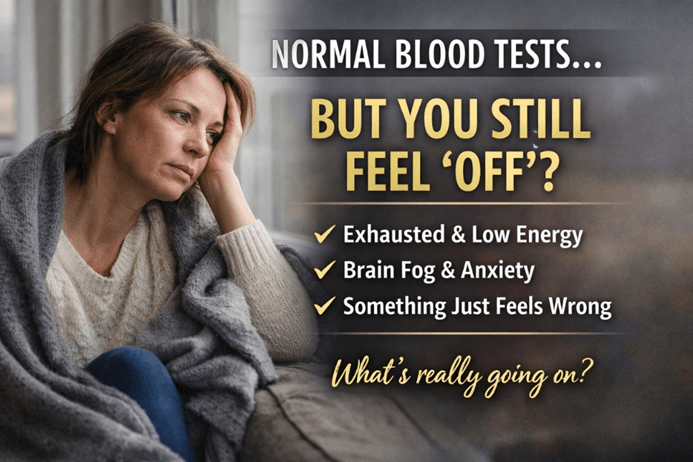
Many people are told the same thing: “Your blood tests are normal.” And yet… you don’t feel normal.
Your energy is low. Your sleep isn’t refreshing. Your mood feels flat, anxious, or unpredictable. Your body just doesn’t feel right.
This is more common than you might think. And importantly: It does not mean nothing is wrong.
NORMAL” DOES NOT MEAN OPTIMAL
Standard blood tests are designed to detect disease. They are not designed to assess how well your body is functioning day to day.
A result can sit comfortably within range, yet still be:
low for your individual needs
poorly utilised by the body
insufficient during times of stress or recovery
This is where many people fall through the gap.
IT’S NOT JUST WHAT YOU TAKE, IT’S WHAT YOUR BODY CAN USE
You might be:
eating well
taking supplements
doing all the right things
And still feel depleted.
Why?
Because the body relies on multiple steps:
digestion
absorption
transport
cellular uptake
If any part of that chain is under strain, you can feel the effects long before anything shows up on a lab report.
THE MISSING PIECE IS OFTERN THE NERVOUS SYSTEM
One of the most overlooked factors is nervous system load. Modern life keeps the body in a constant state of low-grade stress, ongoing alertness, and overstimulation. Over time, this begins to affect energy production, sleep quality, digestion, and hormone balance.
Many people describe it simply as: “I can’t switch off.” That alone can keep the body from restoring properly.
THIS IS WHERE WHOLISTIC CARE COMES IN.
In practice at Holistic Healthcare Wexford, this pattern shows up more and more frequently. People often arrive feeling dismissed, frustrated, and unsure where to turn next. This work is not about replacing medical care. It is about supporting the body’s function, identifying where things are under strain, and helping the system return to balance.
This may include nervous system support, targeted nutritional guidance, and gentle, body-led therapies.
YOU ARE NOT “FINE”. YOU ARE EARLY.
Feeling “off” is often an early signal, not a dead end.
Your body is communicating. It just hasn’t reached the point of disease. And that is exactly where the greatest opportunity for change exists.
WHAT YOU CAN DO NEXT
If this resonates with you, start simple:
Pause and acknowledge how you actually feel
Look at your sleep, stress, and daily load
Do not dismiss your symptoms just because tests are “normal”
If you feel you need support:
A holistic consultation can help you make sense of what your body is showing you and what to do next.
FINAL THOUGHT
You know your body. If something feels off, it is worth listening. Not everything shows up on paper. But that does not make it any less real.
I hope you feel inspired. Look after your body, and it will keep you healthy.
Catherine
CWD 01 April 2026/Ireland
About the Author
Dr Catherine W. Dunne is a Registered General Nurse with over 37 years of clinical experience in primary care in Ireland. Alongside her work in General Practice Nursing, she is the founder of Holistic Healthcare Wexford and co-founder of Aumvedas Academy.
With a background that bridges conventional medicine and holistic practice, Catherine has a particular interest in the area where patients are often told “everything is normal,” yet still feel unwell. Her work focuses on helping people understand what their body is communicating, especially in relation to energy, stress, metabolic function, and recovery.
Through a combination of clinical knowledge and holistic support, she works with individuals to restore balance, improve resilience, and support long-term wellbeing.
Based in Wexford, Ireland.
Disclaimer
The information provided in this article is for educational purposes only and is not intended as medical advice. Always consult a qualified healthcare professional before starting any new supplement or health intervention.
You can take Vitamin D, Magnesium, and Calcium—and still not get the results you expect. Sometimes, the missing piece is not what you take, but what helps your body use it.
By Dr Catherine W. Dunne, MSc.D., RGN (GPN) Holistic Healthcare Wexford
Boron is one of those nutrients.
It may only be required in trace amounts, but its impact on bone health, hormones, inflammation, and Vitamin D function makes it a valuable addition to a well-structured health plan.
Bone Health: More Than Just Calcium
When it comes to bones, most people think of Calcium. But Calcium alone is only part of the picture.
Boron helps the body to improve Calcium retention, enhance Magnesium utilisation, and support Vitamin D activation. This creates a more efficient system for maintaining bone density and strength.
Emerging research also suggests Boron may help reduce joint discomfort and stiffness, particularly in osteoarthritis, by supporting a balanced inflammatory response.
In clinical practice, this is often seen in patients whose bone markers or symptoms do not improve despite adequate Calcium and Vitamin D intake.
A Natural Anti-Inflammatory Support
Chronic, low-grade inflammation is at the root of many modern health concerns.
Boron has been shown to reduce inflammatory markers such as CRP, modulate immune responses, and support tissue recovery.
This makes it a useful addition in cases of joint pain, post-viral fatigue, and general inflammatory states.
In clinical settings, this may be relevant in patients presenting with persistent low-grade inflammatory symptoms.
Hormonal Balance: A Quiet Regulator
One of Boron’s most interesting roles is its influence on hormones.
It has been shown to influence free testosterone levels, support healthy oestrogen metabolism, and reduce sex hormone binding globulin (SHBG).
This means more hormones are available in their active form, which may benefit perimenopause, menopause, and low energy states.
Boron and Vitamin D: A Powerful Partnership
Boron plays a supportive role in how the body uses Vitamin D.
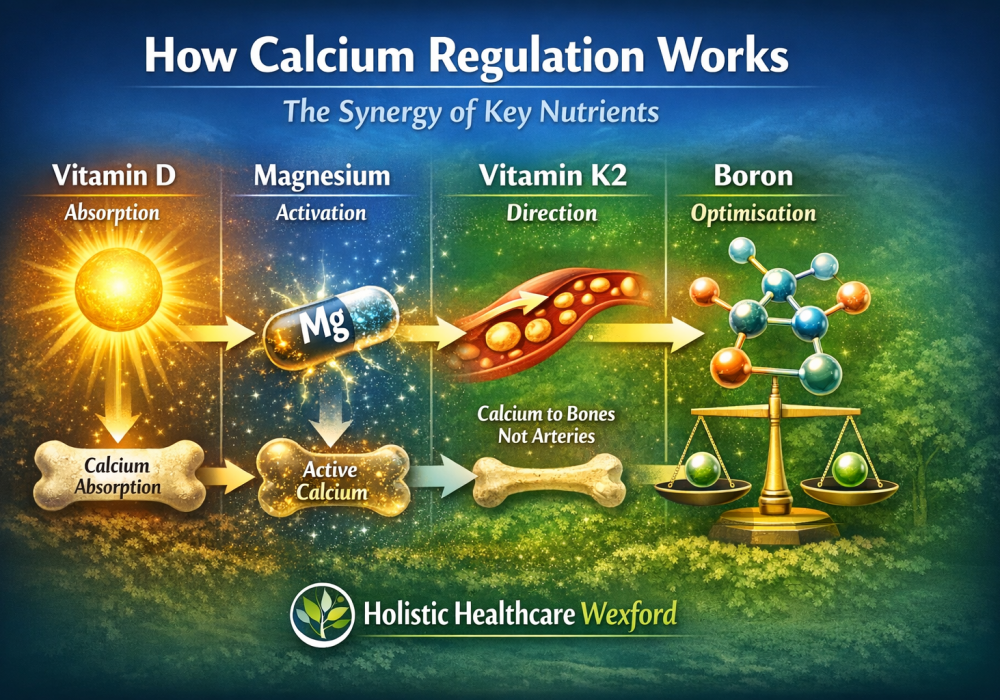
It helps extend the half-life of Vitamin D, improve Magnesium efficiency, and support proper Calcium direction alongside Vitamin K2.
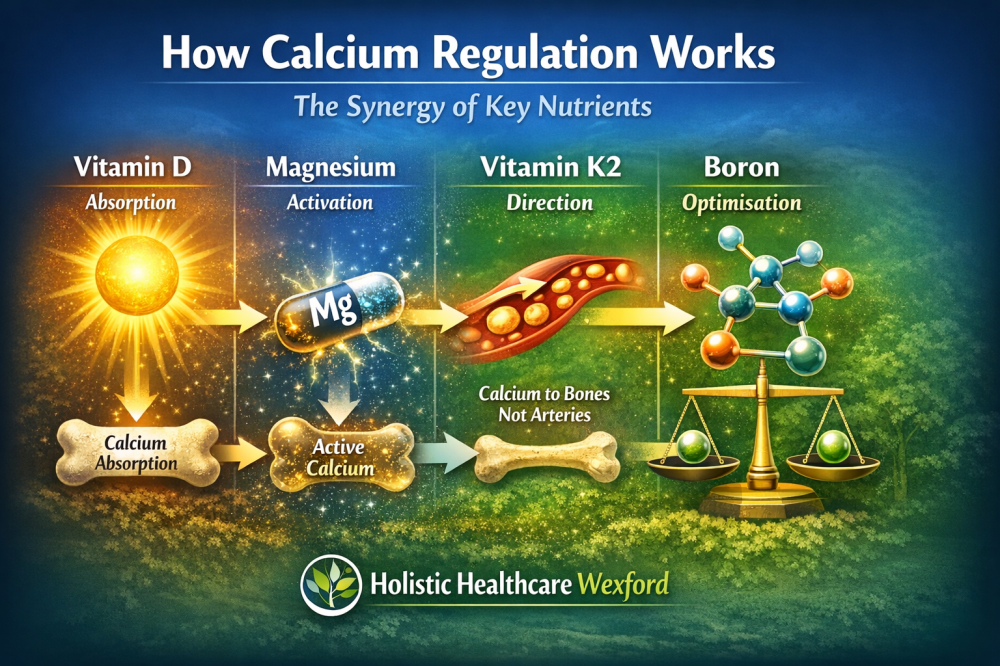
Together, Vitamin D, Magnesium, Vitamin K2, and Boron create a more balanced and effective system.
Boron may also play a supportive role in thyroid function through its interaction with mineral balance and hormone regulation.
This is how these nutrients work together in the body:
Cognitive and Nervous System Support
Low Boron intake has been associated with reduced concentration, slower cognitive processing, and brain fog.
Adequate levels may support mental clarity and neurological function.
Dietary Sources of Boron
Boron is found naturally in avocados, raisins, prunes, nuts (especially almonds), and leafy green vegetables.
However, modern diets often provide lower than optimal intake.
Supplementation
Typical intake ranges from 3 mg daily for general support, with 6 mg often used in short-term therapeutic protocols.
There is rarely a need to exceed this range.
Safety Considerations
Avoid high doses in pregnancy and use caution in kidney disease. As with all nutrients, balance is key.
Clinical Perspective
Boron is often the missing link in protocols where bone support, Vitamin D response, hormonal balance, or inflammation management are not progressing as expected.
Final Thoughts
Boron helps the body use what is already there more efficiently. In many cases, health does not improve because something is missing but because what is already there is not being used properly.
Boron does not replace your core nutrients, it helps them work properly.
I hope you feel inspired. Look after your body, and it will keep you healthy.
Catherine
CWD 27 March 2026/Ireland
About the Author
Dr Catherine W. Dunne MSc.D., RGN, M.H.I.T. is a nurse, holistic practitioner, and educator based in Wexford, Ireland. With over 35 years of experience in healthcare and energy-based healing modalities, she integrates conventional medical knowledge with holistic approaches to support whole-person well-being.
Catherine is the founder of Holistic HealthCare Wexford and co-founder of Aumvedas Academy, where she teaches courses in holistic health, energy medicine, and integrative healing practices.
Her work focuses on empowering people to understand the body as an intelligent system capable of healing when supported with the right knowledge, nutrition, and energetic balance.
Learn more: Holistic HealthCare Wexford Aumvedas Academy
Disclaimer
The information provided in this article is for educational purposes only and is not intended as medical advice. Always consult a qualified healthcare professional before starting any new supplement or health intervention.
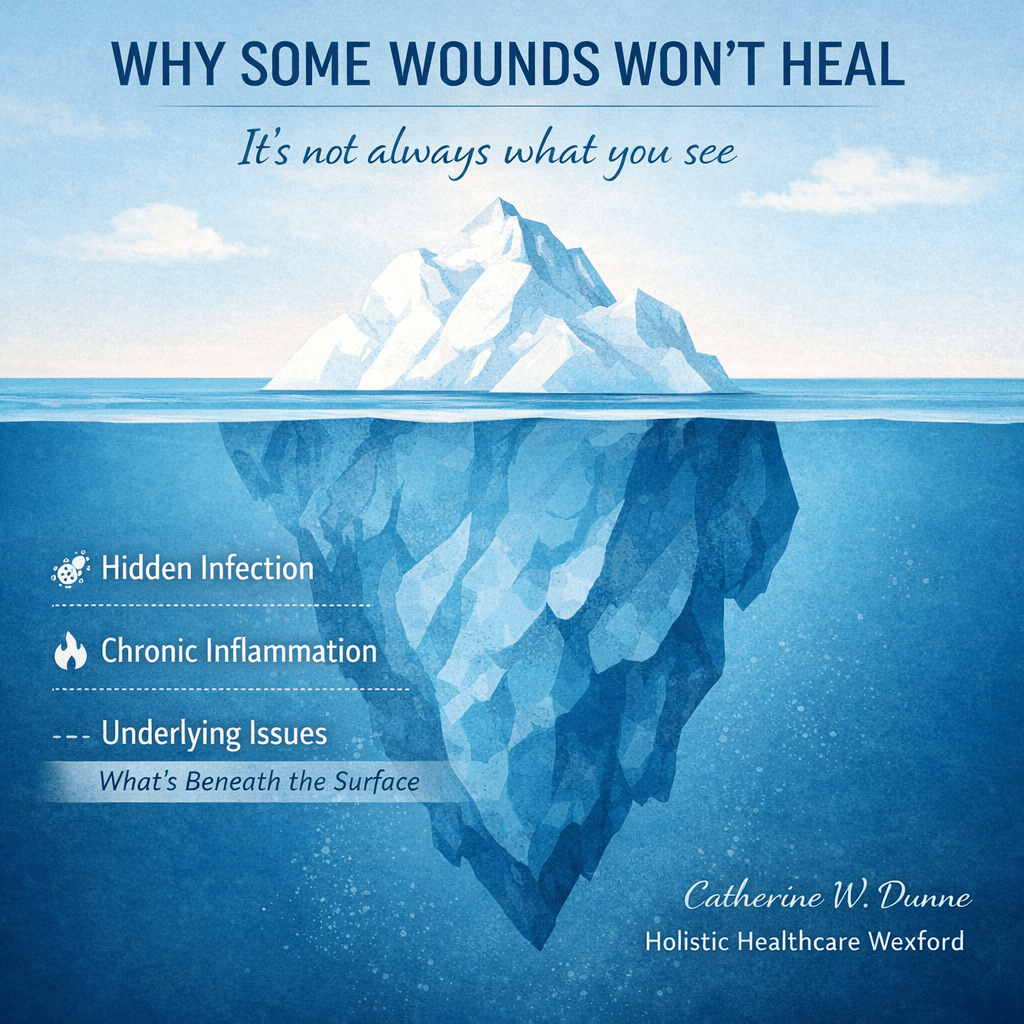
This article explores why some wounds become slow to heal, looking at common underlying factors such as hidden infection, inflammation, and the body’s internal healing environment, and how a more supportive, integrative approach may help restore the natural healing process.
By Dr Catherine W. Dunne, MSc.D., RGN (GPN)
If you’ve ever had a wound that seemed to linger far longer than it should, you’ll know how frustrating it can be.
It starts small. A cut. A graze. A surgical site. Then weeks pass… and it’s still there.
For some people, especially those with diabetes, circulatory issues, or ongoing inflammation, wounds can become slow, stubborn, and difficult to manage.
But here’s the part many people are never told:
👉 Not all wounds fail to heal because of the skin.
Very often, the issue lies beneath the surface.
The Hidden Problem: Why Healing Gets Stuck
In clinical practice, delayed wound healing is usually linked to three key factors:
1. Persistent Low-Level Infection
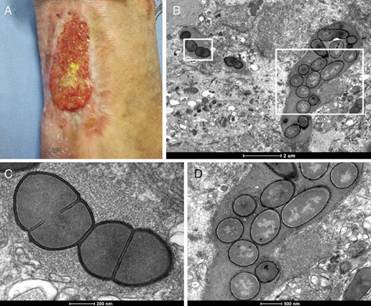
Even when a wound doesn’t look obviously infected, bacteria can still be present.
These microbes don’t always behave in the way we expect. They don’t just sit on the surface, they organise themselves.
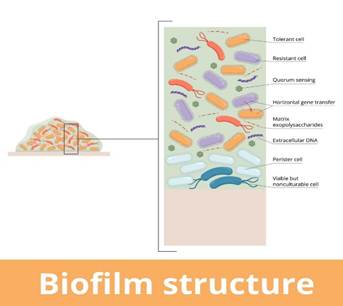
2. Biofilm Formation (The “Invisible Shield”)
Bacteria can form what’s known as a biofilm, a protective layer that acts like a shield.
Inside this structure:
bacteria become harder to kill
standard treatments may struggle to reach them
the wound remains in a prolonged inflammatory state
This is one of the main reasons wounds become chronic.
3. Ongoing Inflammation
When the body senses something isn’t right, it stays in “repair mode.”
But if that phase never switches off:
healing slows
tissue regeneration is impaired
the wound can stall completely
Why Standard Treatments Don’t Always Work
Modern wound care is excellent in many ways, particularly with:
advanced dressings
infection control
moisture balance
But even with the best care, some wounds:
plateau
re-open
or simply refuse to progress
This is where we begin to look at adjunctive approaches, methods that support the body rather than replace standard care.
A Quietly Powerful Tool: Silver in Wound Care
Silver has been used in wound care for centuries. In modern practice, it is commonly found in specialised dressings used in hospitals and community settings.
Its value lies in its ability to:
reduce harmful bacteria in the wound
interfere with how bacteria grow and spread
support a cleaner environment for healing
This can be particularly helpful in wounds that appear clean but are not progressing.
More recently, there has been growing interest in colloidal silver, which contains very small (nano-sized) particles suspended in solution.
Research and clinical observation suggest it may:
help reduce the number of bacteria present
disrupt protective layers that bacteria form to shield themselves (known as biofilms)
support a more balanced healing environment
Importantly, when used appropriately, it is considered an adjunct, meaning it works alongside standard wound care rather than replacing it.
A Holistic View of Wound Healing
From a holistic perspective, wound healing is never just about the skin. It involves:
circulation
immune function
how the body produces and uses energy, regulates blood sugar, and controls inflammation
balanced inflammation response
And sometimes, small supportive interventions can help the body return to a natural healing state.
Final Thoughts
If a wound is slow to heal, it does not mean the body has failed. It usually means something is getting in the way.
Understanding factors such as infection, biofilm, and inflammation can make a significant difference in how we approach care. When appropriate, integrating supportive therapies alongside standard treatment may help support the healing process.
This article is intended to support understanding and awareness of wound healing and does not replace individual clinical assessment or care. It usually means something is getting in the way of the natural healing process.
I hope you feel inspired. Look after your body, and it will keep you healthy.
Catherine
CWD 20 March 2026/Ireland
ABOUT THE AUTHOR
Dr Catherine W. Dunne, MSc.D., RGN (GPN), is an experienced General Practice Nurse based in Ireland, with over 37 years of clinical experience, including more than three decades in Irish primary care.
She has a strong clinical background in chronic disease management and wound care, with a particular interest in community-based treatment approaches. Her early nursing training in Germany included exposure to both conventional and complementary wound-care practices, shaping her integrative clinical perspective.
In addition to her nursing work, Dr Dunne is the founder of Holistic Healthcare Wexford and co-founder of Aumvedas Academy, where she provides education in integrative health approaches.
Her work focuses on bridging evidence-based medicine with practical, patient-centred care in modern clinical practice.
Bevor wir annehmen, dass etwas Komplexes im Körper nicht stimmt, lohnt es sich oft zuerst zu prüfen, ob der Körper alle Nährstoffe bekommt, auf die er jeden Tag angewiesen ist.
Dr. Catherine W. Dunne MSc.D., RGN Holistic HealthCare Wexford & Aumvedas Academy Krankenschwester, Medical Intuitive und Holistische Therapeutin
Es gibt bestimmte Nährstoffe, die den Körper im Hintergrund zusammenhalten. Sie kommen ohne großes Aufsehen. Sie werden kaum beworben. Und doch beginnt der Körper kleine Signale zu senden, wenn sie fehlen.
Zink gehört zu diesen Nährstoffen.
Es ist an hunderten Prozessen im Körper beteiligt – darunter Immunfunktion, Verdauung, Hormonbalance, Gehirnchemie, Schlafregulation, Wundheilung und die Fähigkeit unseres Körpers, mit Stress umzugehen.
In meiner Praxis sehe ich häufig Menschen, die nicht nur ein einzelnes Symptom haben, sondern eine Kombination aus Beschwerden: schlechter Schlaf, häufige Infekte, geringe Stressresistenz, Verdauungsprobleme, „Brain Fog“ oder anhaltende Müdigkeit.
Manchmal ist die fehlende Lösung gar nicht kompliziert. Manchmal hat der Körper einfach zu wenig von den Mineralstoffen, die er täglich benötigt.
Und Zink gehört zu den wichtigsten davon.
Haftungsausschluss
Die in diesem Artikel bereitgestellten Informationen dienen ausschließlich zu Bildungs- und Informationszwecken und stellen keine medizinische Beratung dar. Sie sind nicht dazu bestimmt, eine medizinische Diagnose zu ersetzen oder zur Diagnose, Behandlung, Heilung oder Vorbeugung von Krankheiten verwendet zu werden.
Die Inhalte dieses Artikels ersetzen keine individuelle Beratung durch einen Arzt oder eine andere qualifizierte medizinische Fachperson. Konsultieren Sie immer eine entsprechende Fachperson, bevor Sie neue Nahrungsergänzungsmittel, Ernährungsprogramme oder gesundheitliche Maßnahmen beginnen, insbesondere wenn Sie an einer bestehenden Erkrankung leiden, schwanger sind, stillen oder verschreibungspflichtige Medikamente einnehmen.
Der individuelle Nährstoffbedarf kann variieren, und was für eine Person geeignet ist, muss nicht unbedingt für eine andere passend sein.
Dieser Artikel soll das Gesundheitsbewusstsein fördern und dient der allgemeinen Information, ersetzt jedoch keine persönliche medizinische Beratung oder Behandlung.
Warum Zink so wichtig ist
Zink ist an mehr als 300 Enzymreaktionen im Körper beteiligt und beeinflusst tausende zelluläre Prozesse.
Es unterstützt unter anderem:
• das Immunsystem • die Wundheilung • die Hautregeneration • die Hormonproduktion • die Funktion der Bauchspeicheldrüse • die Balance von Neurotransmittern • kognitive Leistungsfähigkeit • antioxidativen Schutz • Wachstum und Gewebereparatur
Zink spielt außerdem eine wichtige Rolle im Gehirn, im Thymus, im Verdauungssystem und in der Stressregulation.
Mit anderen Worten: Zink ist tief in die Funktionsweise unseres Körpers eingebunden.
Frühe Anzeichen eines Zinkmangels
Ein Zinkmangel zeigt sich selten sofort deutlich. Häufig treten zunächst kleine Veränderungen auf, die leicht übersehen werden.
Frühe Hinweise können sein:
• verminderter Geschmack oder Geruchssinn • Appetitlosigkeit • Blähungen oder Verdauungsbeschwerden • langsame Wundheilung • häufige Erkältungen oder Infekte • weiße Flecken auf den Fingernägeln • dünner werdendes Haar • gedrückte Stimmung • schlechter Schlaf • reduzierte Stressresistenz
Keines dieser Symptome allein beweist einen Zinkmangel. Wenn jedoch mehrere gleichzeitig auftreten, lohnt es sich, die Ernährungsgrundlagen genauer zu betrachten.
Zink, Stress und Cortisol
Das moderne Leben setzt unseren Körper oft unter erheblichen Stress – emotional, beruflich, durch Schlafmangel, Entzündungen oder Infektionen.
Das wichtigste Stresshormon ist Cortisol.
In kurzen Phasen ist Cortisol hilfreich. Es hilft uns, Herausforderungen zu bewältigen. Wenn Stress jedoch chronisch wird, kann Cortisol verschiedene Körpersysteme aus dem Gleichgewicht bringen.
Chronischer Stress erhöht unter anderem den Verlust von Zink im Körper.
Gleichzeitig benötigt der Körper Zink, um das Immunsystem zu unterstützen, Entzündungen zu regulieren und das Nervensystem zu stabilisieren.
Es kann ein Kreislauf entstehen:
Stress erhöht Cortisol ↓ Cortisol fördert Zinkverlust ↓ Niedrige Zinkwerte reduzieren die Widerstandskraft ↓ Müdigkeit und Entzündungen nehmen zu ↓ Stress wird schwieriger zu bewältigen
Diesen Kreislauf zu durchbrechen beginnt oft damit, dem Körper wieder die grundlegenden Nährstoffe zu geben, die er braucht.
Zink und das Immunsystem
Zink ist entscheidend für die Funktion des Thymus, einer kleinen Drüse hinter dem Brustbein.
Der Thymus ist wichtig für die Entwicklung von T-Zellen, die eine zentrale Rolle in der Immunabwehr spielen. Wenn Zink fehlt, kann die Aktivität des Thymus abnehmen und die Immunabwehr geschwächt werden. Das kann erklären, warum Menschen mit niedrigem Zinkstatus häufiger Infekte bekommen.
Zink und das Gehirn
Das Gehirn enthält überraschend hohe Mengen an Zink.
Es beeinflusst wichtige Neurotransmitter wie:
• Dopamin • Serotonin • GABA • Glutamat
Diese Botenstoffe steuern Stimmung, Motivation, Aufmerksamkeit, Gedächtnis und Schlaf.
Wenn Zinkwerte niedrig sind, können Menschen unter anderem bemerken:
Immer mehr Erwachsene fragen sich heute, ob ihre langjährigen Schwierigkeiten mit Konzentration oder Organisation mit ADHS zusammenhängen könnten. ADHS ist eine komplexe neurobiologische Störung mit vielen möglichen Einflussfaktoren. Dennoch spielt Ernährung eine Rolle für die Gehirnchemie.
Zink beeinflusst beispielsweise den Stoffwechsel von Dopamin, einem Neurotransmitter, der eng mit Aufmerksamkeit und Motivation verbunden ist. Mehrere Studien zeigen, dass einige Kinder und Erwachsene mit Aufmerksamkeitsproblemen niedrigere Zinkwerte haben.
Das bedeutet nicht, dass Zinkmangel ADHS verursacht. Die Zusammenhänge sind komplex. Es erinnert uns jedoch daran, dass der Körper zuerst ausreichend mit den nötigen Nährstoffen versorgt sein sollte.
Manchmal ist das Gehirn nicht „defekt“. Manchmal ist es einfach unterversorgt.
Wenn man keine Meeresfrüchte oder rotes Fleisch isst
Austern und Meeresfrüchte gehören zu den reichsten natürlichen Zinkquellen. Auch rotes Fleisch liefert viel Zink. Wer diese Lebensmittel nicht isst, kann mit der Zeit weniger Zink aufnehmen, besonders wenn die Ernährung viele Getreideprodukte enthält. Pflanzliche Lebensmittel enthalten Phytate, die die Aufnahme von Zink verringern.
Einweichen, Keimen oder Fermentieren kann die Mineralstoffaufnahme verbessern.
Enthält Fischöl Zink?
Nein.
Omega-3-Fischöle enthalten Fettsäuren wie EPA und DHA, aber keine nennenswerten Mengen an Zink. Mineralstoffe bleiben im Gewebe der Nahrung – nicht im extrahierten Öl.
Sollte Zink zusammen mit Kupfer eingenommen werden?
Zink und Kupfer arbeiten im Körper zusammen und sollten im Gleichgewicht bleiben. Wenn Zink über längere Zeit in höheren Mengen eingenommen wird, kann die Aufnahme von Kupfer reduziert werden.
Deshalb ist es sinnvoll, auf eine ausreichende Kupferzufuhr zu achten.
Schlussgedanke
Zink ist vielleicht kein glamouröser Nährstoff, aber einer der wichtigsten. Es beeinflusst Immunsystem, Verdauung, Gehirnchemie, Schlaf, Stressresistenz und Hormonfunktion.Wenn Zink fehlt, beginnt der Körper oft lange vorher zu flüstern, bevor er laut wird.
Manchmal tragen die kleinsten Mineralstoffe die größte Verantwortung.
Ich hoffe, dieser Beitrag inspiriert Sie. Achten Sie gut auf Ihren Körper – er wird es Ihnen danken.
Catherine
CWD 16. März 2026 / Irland
Über die Autorin
Dr. Catherine W. Dunne MSc.D., RGN ist Krankenschwester, ganzheitliche Therapeutin und Dozentin mit Sitz in Wexford, Irland. Mit über 30 Jahren Erfahrung im Gesundheitswesen und in verschiedenen energetischen Heilmethoden verbindet sie konventionelles medizinisches Wissen mit ganzheitlichen Ansätzen, um das Wohlbefinden des Menschen auf körperlicher, geistiger und energetischer Ebene zu unterstützen.
Catherine ist Gründerin von Holistic HealthCare Wexford und Mitbegründerin der Aumvedas Academy, wo sie Kurse in ganzheitlicher Gesundheit, Energiearbeit und integrativen Heilmethoden unterrichtet.
Ihre Arbeit konzentriert sich darauf, Menschen dabei zu unterstützen, den menschlichen Körper als intelligentes System zu verstehen – ein System, das zur Heilung fähig ist, wenn es mit dem richtigen Wissen, einer ausgewogenen Ernährung und energetischer Balance unterstützt wird.
Before assuming something complex is wrong, it is always wise to make sure the body has the nutrients it quietly depends on every day.
Dr Catherine W. Dunne MSc.D., RGN Holistic HealthCare Wexford & Aumvedas Academy Nurse, Medical Intuitive and Holistic Practitioner
They do not arrive with much fanfare. They are not advertised everywhere. And yet, when they begin to run low, the body starts sending little signals that something is not quite right.
Zinc is one of those nutrients.
It plays a role in hundreds of processes throughout the body — immunity, digestion, hormone balance, brain chemistry, sleep regulation, wound healing, and how well we cope with stress.
In practice, I often see people struggling with a collection of symptoms rather than a single complaint. Poor sleep, frequent infections, low resilience to stress, digestive discomfort, brain fog, or stubborn fatigue.
Sometimes the missing piece is not complicated at all. Sometimes it is simply that the body has run a little short of the minerals it depends on every day. And zinc is one of the most important of those.
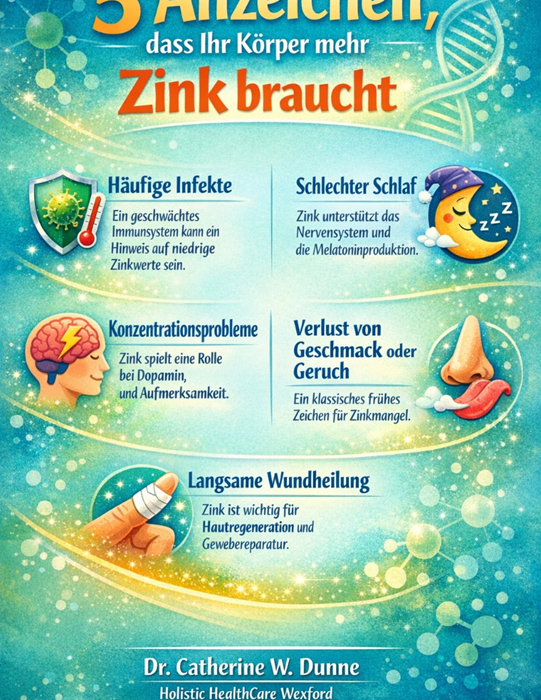
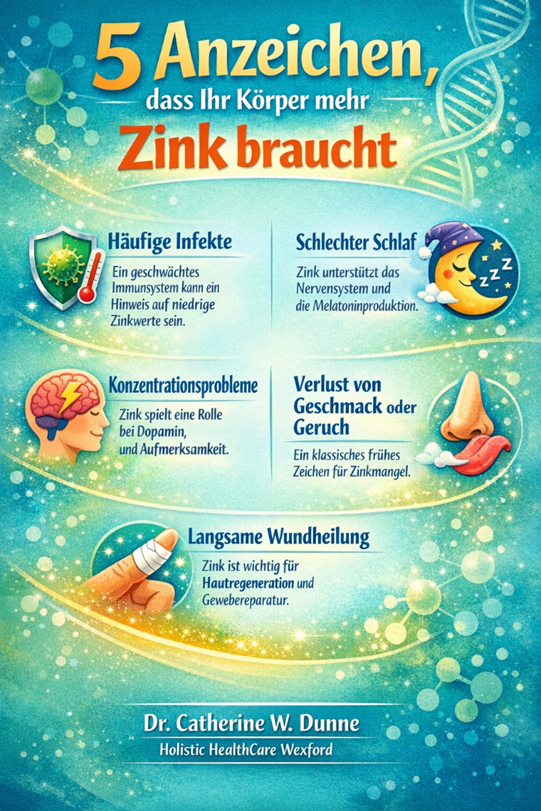
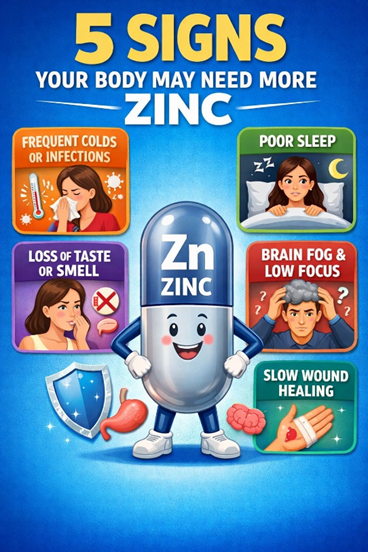
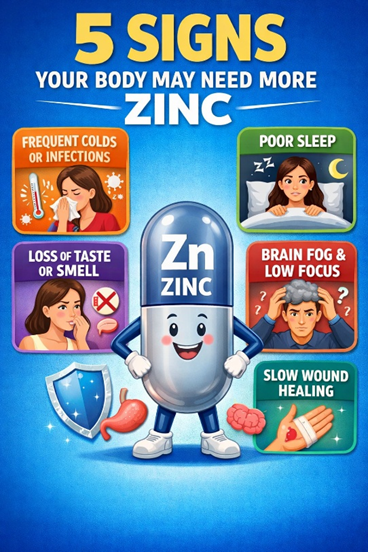
Here are five early signs your body may be asking for more zinc:
Why zinc matters so much
Zinc is involved in more than 300 enzyme reactions in the body and influences thousands of cellular processes.
It supports:
immune defence
wound healing
skin repair
hormone production
pancreatic function
neurotransmitter balance
cognitive performance
antioxidant protection
tissue growth and repair
It also plays an important role in the brain, thymus gland, digestive system, and stress response.
In other words, zinc is deeply woven into how the body maintains balance.
Early signs zinc may be running low
Zinc deficiency rarely announces itself dramatically in the beginning. Instead, it tends to show up as small persistent changes that people often dismiss.
Some early clues may include:
reduced taste or smell
poor appetite
bloating or digestive discomfort
slow wound healing
frequent colds or infections
white spots on fingernails
thinning hair
low mood
poor sleep
reduced stress tolerance
None of these symptoms alone proves a deficiency, of course. But when several appear together, it is often worth taking a closer look at nutritional foundations.
Zinc, stress and the cortisol connection
Modern life places the body under considerable stress — emotional stress, work stress, sleep disruption, inflammation, infections, and environmental factors.
One of the body’s main stress hormones is cortisol.
In short bursts, cortisol is helpful. It allows us to respond quickly and manage challenges. But when stress becomes chronic, cortisol can begin to disrupt several systems in the body.
One of the things chronic stress does is increase zinc loss.
At the same time, zinc is needed to support the immune system, regulate inflammation, and stabilise the nervous system. So when stress increases, the body may actually require more zinc, while at the same time losing more of it.
Over time this can become a loop:
stress increases cortisol ↓ cortisol contributes to zinc depletion ↓ low zinc reduces resilience ↓ fatigue and inflammation rise ↓ stress becomes harder to manage
Breaking that cycle sometimes begins with restoring the body’s basic nutritional building blocks.
Zinc and the immune system
Zinc is essential for the healthy function of the thymus gland, which sits behind the breastbone.
The thymus plays a central role in the development of T-cells, the immune cells that help recognise and fight infections.
When zinc levels fall, the thymus becomes less active and immune resilience can decline. This may partly explain why people with low zinc status sometimes notice that they seem to “catch everything” going around.
As we age, thymus activity naturally declines, which makes maintaining good zinc levels even more relevant.
Zinc and the brain
The brain contains surprisingly high concentrations of zinc.
It participates in the regulation of several neurotransmitters including:
dopamine
serotonin
GABA
glutamate
These chemical messengers influence mood, motivation, attention, memory, and sleep.
When zinc levels are suboptimal, people may notice changes such as:
brain fog
reduced concentration
lower mood
mental fatigue
disrupted sleep patterns
This is one reason zinc has attracted increasing attention in research around mood, cognitive function, and attention regulation.
A quiet conversation around attention and ADHD
Something I hear more often now in practice is adults wondering whether long-standing struggles with focus, motivation or mental organisation may be related to ADHD.
Many adults are seeking assessments for the first time in their lives.
While ADHD is a complex neurodevelopmental condition with many contributing factors, nutrition does influence brain chemistry in meaningful ways.
Zinc, for example, plays a role in dopamine metabolism, a neurotransmitter that is strongly linked with attention, reward signalling, and motivation.
Several studies have found that some children — and adults — with attention difficulties show lower zinc levels than average.
This does not mean zinc deficiency causes ADHD. Human biology is never that simple.
But it does remind us that before labelling the brain as “broken”, it is wise to make sure the body has the nutritional tools it needs to function well.
Sometimes the brain is not faulty. Sometimes it is simply under-supported.
What if you do not eat shellfish or red meat?
Oysters and shellfish are among the richest sources of zinc in the human diet. Red meat is another significant contributor.
If these foods are not eaten, zinc intake can become marginal over time, especially if the diet is high in grains and legumes.
Plant foods contain phytates, which reduce zinc absorption.
Vegetarians and vegans can absolutely maintain good zinc status, but it requires a little more intention.
Helpful plant sources include:
pumpkin seeds
sesame seeds or tahini
cashews
chickpeas
lentils
hemp seeds
Traditional preparation methods such as soaking, sprouting and fermenting help improve mineral absorption from plant foods.
Does fish oil provide zinc?
No.
Omega-3 fish oils contain fatty acids such as EPA and DHA, but they do not provide meaningful amounts of zinc. Minerals remain in the tissue of the food, not in the extracted oil.
Whole foods provide minerals. Oils provide fats.
Both have their place, but they are not interchangeable.
Should zinc be taken with copper?
Zinc and copper work together in the body and need to remain balanced.
Taking higher doses of zinc for long periods can gradually reduce copper absorption. Copper is important for iron metabolism, connective tissue health and nervous system function.
For this reason, many practitioners recommend ensuring copper intake remains adequate when zinc is supplemented for several months.
Nature often balances these minerals together in foods such as shellfish, nuts and organ meats.
Choosing a zinc supplement
If supplementation is needed, some of the better absorbed forms include:
zinc picolinate
zinc bisglycinate
zinc citrate
These tend to be easier for the body to absorb than zinc oxide.
For many adults, 15–25 mg daily is a common supportive range, though individual needs can vary.
Higher doses are sometimes used short term but should be approached thoughtfully.
How long should zinc be taken?
For general support, zinc can often be taken daily for a few months, then reviewed.
A practical approach used by many people is:
2 to 3 months of supplementation
followed by a short break or reassessment
This is especially wise if symptoms improve, diet changes, or the person is also using a multi-mineral formula.
As always, the goal is not to live by the supplement drawer like it is a tiny pharmacy in the kitchen. The real aim is to restore balance and support the body well enough that it needs less propping up over time.
A final thought
Zinc may not be the most glamorous nutrient, but it is one of the most important.
It influences immunity, digestion, brain chemistry, sleep, stress resilience, hormone function and tissue repair. When it is low, the body often sends out early whispers long before it starts shouting.
For those who cannot eat shellfish, oysters or red meat, zinc is worth paying attention to. For those under chronic stress, struggling with poor sleep, frequent infections or slow recovery, it may be one of the missing pieces.
As with so much in health, the body works as an integrated system. Zinc does not act alone, but without it, many systems begin to falter.
Sometimes the smallest minerals carry the biggest workload.
Disclaimer: The information provided in this article is for educational and informational purposes only and is not intended as medical advice. It should not be used to diagnose, treat, cure, or prevent any medical condition. Always consult with a qualified healthcare professional before starting any new supplement, nutritional programme, or health intervention, particularly if you have an existing medical condition, are pregnant, breastfeeding, or taking prescription medications.
Individual nutritional needs can vary, and what is appropriate for one person may not be suitable for another.
This article is intended to support informed health awareness and should not replace personalised medical guidance.
I hope you feel inspired. Look after your body, and it will keep you healthy.
Catherine
CWD 16 March 2026/Ireland
About the Author
Dr. Catherine W. Dunne MSc.D., RGN is a nurse, holistic practitioner, and educator based in Wexford, Ireland. With over 30 years of experience in healthcare and energy-based healing modalities, she integrates conventional medical knowledge with holistic approaches to support whole-person well-being.
Catherine is the founder of Holistic HealthCare Wexford and co-founder of Aumvedas Academy, where she teaches courses in holistic health, energy medicine, and integrative healing practices.
Her work focuses on empowering people to understand the body as an intelligent system capable of healing when supported with the right knowledge, nutrition, and energetic balance.
For many years we were told something simple about bone health:
By Dr Catherine W. Dunne MSc.D., RGN Holistic HealthCare Wexford & Aumvedas Academy Nurse, Medical Intuitive and Holistic Practitioner
Take calcium and a little vitamin D.
But modern research is showing that calcium metabolism is far more sophisticated than that. The body relies on a small team of nutrients working together — most importantly vitamin D3, magnesium and vitamin K2.
When these nutrients are balanced, calcium is more likely to support healthy bones rather than accumulating in places where it should not be.
Understanding how this system works can help us make better choices for long-term health.
What do vitamin D3, magnesium and vitamin K2 do together?
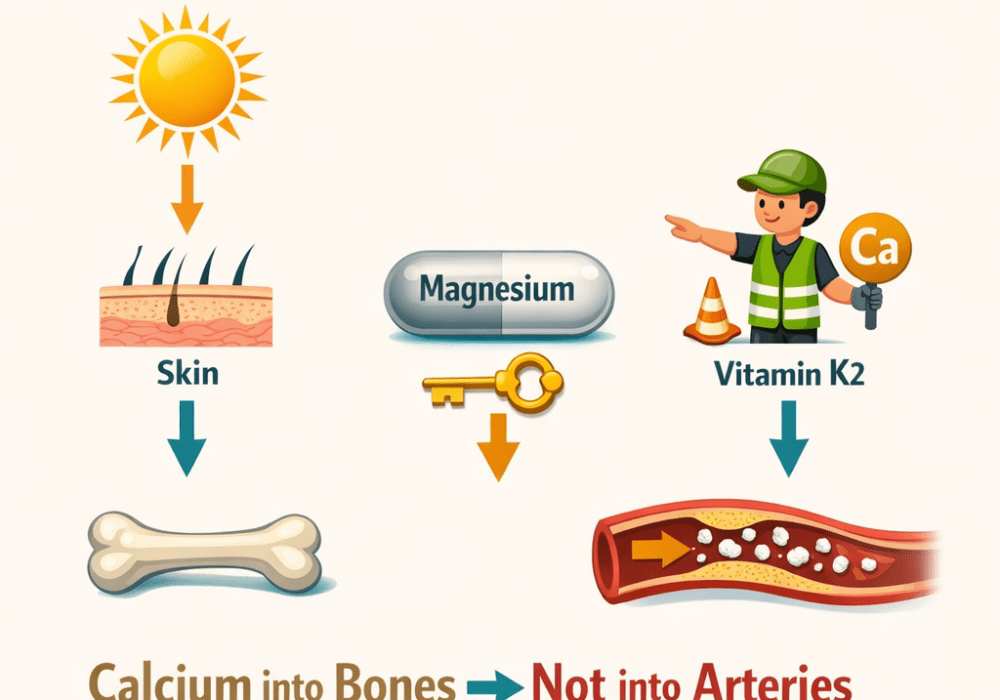
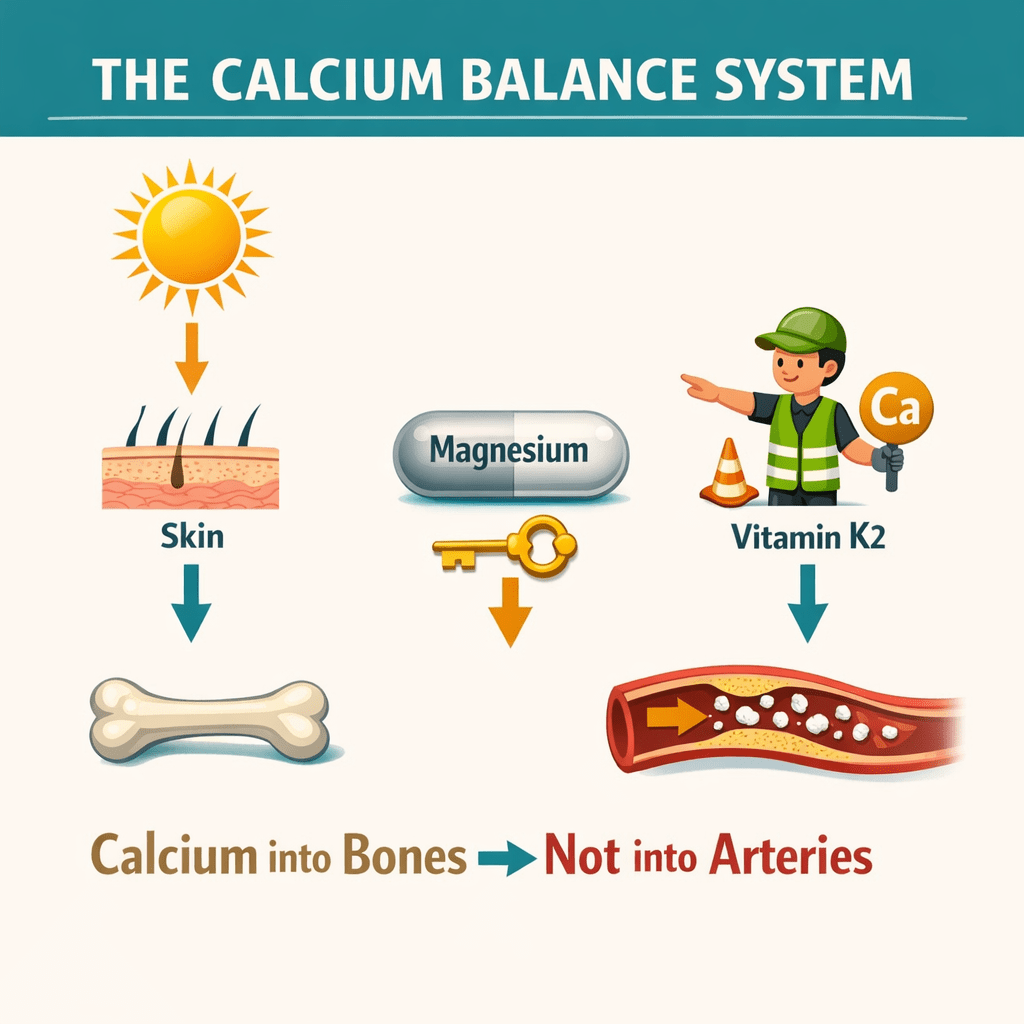
Vitamin D3 helps the body absorb calcium from food, magnesium activates vitamin D so it can function properly, and vitamin K2 directs calcium into bones while helping prevent deposits in arteries and soft tissues. Together, these nutrients support healthy calcium balance, bone strength and overall metabolic health.
Vitamin D3 – The Sunshine Signal
Vitamin D is often called a vitamin, but in reality it behaves more like a hormone.
Production begins in the skin when ultraviolet-B sunlight converts a cholesterol-related molecule called 7-dehydrocholesterol into vitamin D3.
Once activated by the liver and kidneys, vitamin D influences hundreds of genes involved in:
• calcium absorption • immune regulation • inflammation control • muscle strength • bone metabolism
One of its most important roles is helping the body absorb calcium from food.
Without sufficient vitamin D, the body may absorb only a small fraction of the calcium we eat.
Low vitamin D levels have also been associated in research studies with a range of conditions including:
• osteoporosis • autoimmune diseases such as multiple sclerosis • certain cancers including breast and bowel cancer.
This does not mean vitamin D alone prevents these diseases, but it highlights how important it is in maintaining normal physiological balance.
Magnesium – The Quiet Enabler
Here is a fact that many people do not realise.
Vitamin D cannot function properly without magnesium.
Magnesium is required for the enzymes that activate vitamin D in the body. Without adequate magnesium, vitamin D may remain largely inactive.
Magnesium also plays important roles in:
• parathyroid hormone regulation • nerve and muscle function • heart rhythm stability • bone mineralisation.
Unfortunately magnesium deficiency has become common in modern diets due to soil depletion, processed foods and certain medications.
When magnesium levels are low, increasing calcium intake alone often fails to correct imbalances.
Vitamin K2 – The Calcium Guide
If vitamin D increases calcium absorption, another important question arises:
Where does that calcium go?
Vitamin K2 helps answer that question.
This nutrient activates specialised proteins that guide calcium into the bones while helping prevent calcium deposits in arteries and soft tissues.
Two important vitamin K2-dependent proteins include:
• Osteocalcin, which binds calcium into the bone matrix • Matrix GLA protein, which helps prevent vascular calcification.
In simple terms, vitamin K2 acts like a traffic controller for calcium, helping ensure it strengthens bones rather than accumulating where it does not belong.
Why Calcium From Food Is Often Preferable
Calcium is clearly important for bone health, but more is not always better.
Many people can obtain adequate calcium through foods such as:
• dairy products • leafy green vegetables • almonds and sesame seeds • small fish eaten with bones.
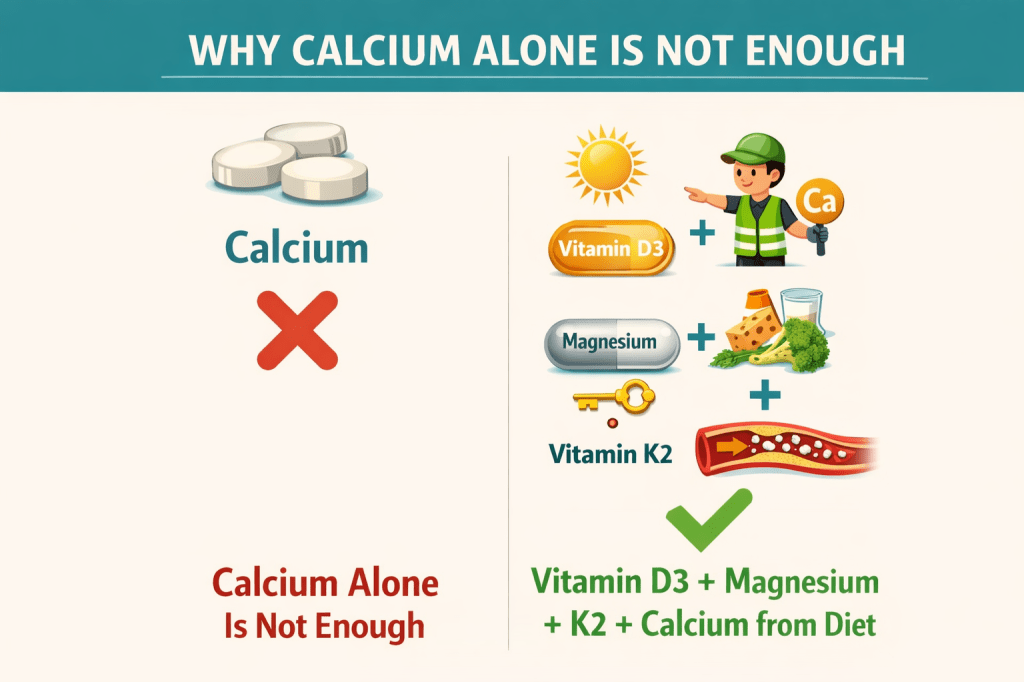
Supplements may be appropriate in certain situations, but high calcium intake without sufficient vitamin D, magnesium and K2 may not support healthy calcium balance.
For this reason, many clinicians now emphasise dietary calcium alongside nutrient balance rather than relying solely on supplements.
Vitamin D and the Immune System
Beyond bone health, vitamin D plays an important role in immune regulation.
Immune cells contain vitamin D receptors, and adequate levels appear to help maintain balanced immune responses.
Researchers have explored links between vitamin D status and conditions such as:
• multiple sclerosis • autoimmune diseases • breast cancer • colorectal (bowel) cancer.
While vitamin D is not a treatment for these conditions, maintaining healthy levels may support the body’s natural defence systems.
Interestingly, the prevalence of multiple sclerosis increases in populations living further from the equator, where sunlight exposure — and therefore vitamin D production — is lower.
A Simple Way to Think About the System
Instead of focusing on a single nutrient, it helps to think of calcium regulation as a partnership.
Vitamin D3 helps the body absorb calcium.
Magnesium activates vitamin D and supports metabolic processes.
Vitamin K2 directs calcium into bones and away from soft tissues.
Calcium provides the structural building blocks for bones and teeth.
When these nutrients work together, the body is better able to maintain balance.
Diagram showing how Vitamin D3, magnesium and vitamin K2 work together to regulate calcium and support bone health.
Supporting Healthy Nutrient Levels
Some practical ways to support this system include:
• sensible sunlight exposure where possible • eating a varied diet rich in vegetables, nuts and seeds • including fermented foods or high-quality dairy where tolerated • discussing testing or supplementation with a healthcare professional when appropriate.
Every individual is different, and personalised guidance is always best.
Health rarely depends on one nutrient or one supplement.
The body works through networks of nutrients and signals, each supporting the other.
Understanding how vitamin D3, magnesium and vitamin K2 interact gives us a clearer picture of how the body manages calcium, supports bone health and maintains overall wellbeing.
Sometimes the most effective approach is simply helping the body restore its natural balance.
I hope you feel inspired. Look after your body, and it will keep you healthy.
Catherine
CWD 14 March 2026/Ireland
Dr Catherine W. Dunne MSc.D., RGN, M.H.I.T. is a nurse, holistic practitioner, and educator based in Wexford, Ireland. With over 35 years of experience in healthcare and energy-based healing modalities, she integrates conventional medical knowledge with holistic approaches to support whole-person well-being.
Catherine is the founder of Holistic HealthCare Wexford and co-founder of Aumvedas Academy, where she teaches courses in holistic health, energy medicine, and integrative healing practices.
Her work focuses on empowering people to understand the body as an intelligent system capable of healing when supported with the right knowledge, nutrition, and energetic balance.
Learn more: Holistic HealthCare Wexford Aumvedas Academy
Disclaimer
The information provided in this article is for educational purposes only and is not intended as medical advice. Always consult a qualified healthcare professional before starting any new supplement or health intervention.
By Dr. Catherine W. Dunne | Holistic HealthCare Wexford & Aumvedas Academy Dr Catherine W Dunne MSc. D., RGN, Reiki Master (RGMT), M.H.I.T: Master Acupressure. Practitioner of Reflexology. Expert in Aromatherapy. Specialized in Deep Tissue/Myo-fascia Massages. Proficient in Infrared Treatments. Vibrational Sound and Colour Therapist. Tissue Salt Advisor. Pendulum Healing Dowser. Chakra Practitioner. Tao Cosmic Healing Practitioner. Practitioner of Plant and Herb Medicine and licensed Nurse.
Das Jahr des Feuerpferdes bringt Bewegung — nicht als Symbol, sondern als lebendige Kraft im menschlichen Körper und in der lebendigen Erde.
Am 17. Februar 2026 tritt ein Feld beschleunigter Energie in Erscheinung. Es kommt nicht leise. Es wartet nicht auf Bereitschaft. Es stellt Bewegung dort wieder her, wo Stagnation lange bestanden hat.
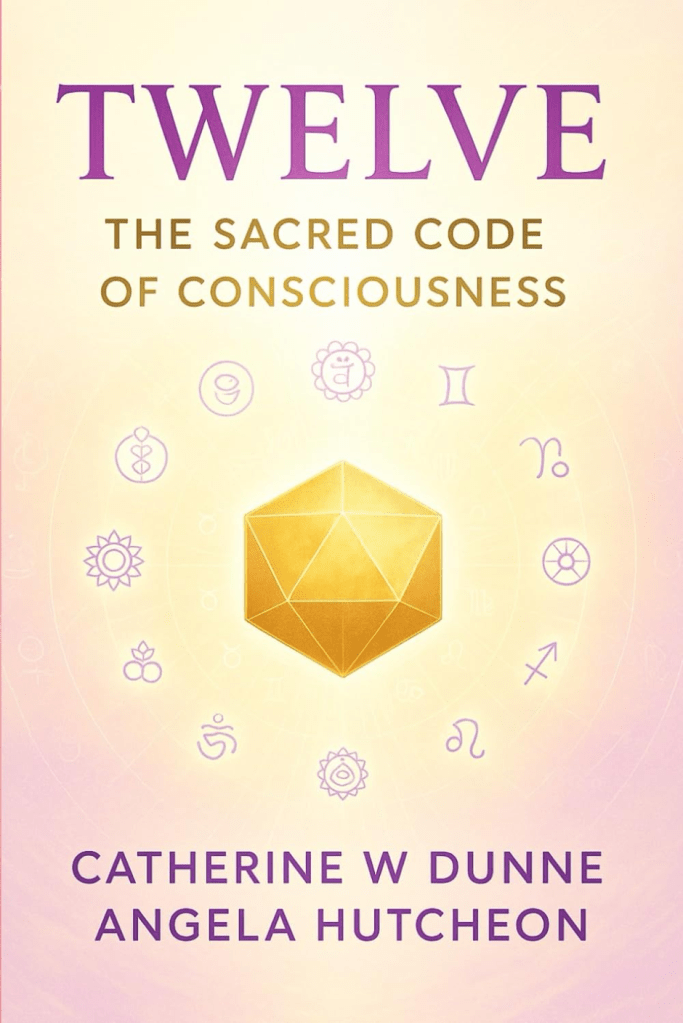
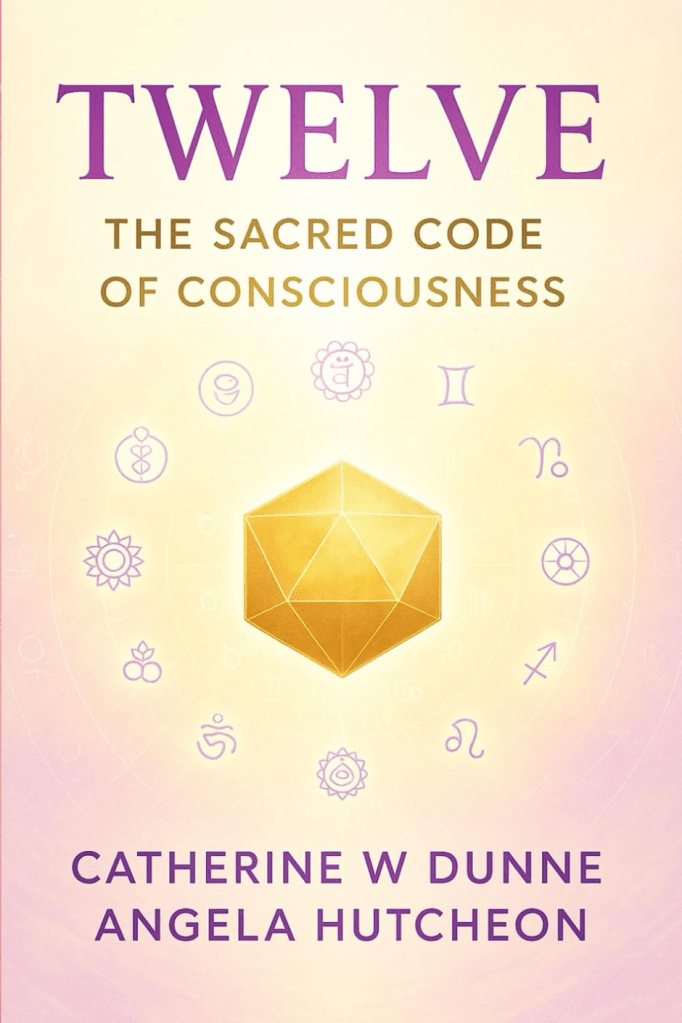
In meinem Buch Twelve: The Sacred Code of Consciousness beschreibe ich die grundlegende Architektur, durch die sich Lebenskraft organisiert — die heilige Struktur, welche bestimmt, wie Energie sich bewegt, entwickelt und verkörpert. Das Jahr des Feuerpferdes offenbart diese Architektur in lebendiger Bewegung. Was zuvor verstanden wurde, wird nun erfahren.
Dies ist ein Jahr des Erwachens durch Verkörperung. Ein Jahr, in dem Energie aufsteigt, Wahrheit sichtbar wird und Bewusstsein Form im Materiellen sucht.
Die Energie des Feuerpferdes — Der aufsteigende Strom des Lebens
Das Feuerpferd wirkt nicht vom Verstand nach unten. Es wirkt vom Boden nach oben.
Es bewegt sich wie ein aufsteigender Strom durch den Körper — aktiviert die Wirbelsäule, weckt das Nervensystem und stellt den natürlichen Fluss der Lebenskraft wieder her. Seine Reinigung ist nicht zerstörerisch, sondern regenerierend. Es entfernt nichts, was lebendig ist. Es bringt lediglich Bewegung dorthin zurück, wo Leben erstarrt ist.
Wo Energie fliesst, folgt Heilung. Wo Widerstand besteht, entsteht Druck.
Diese Bewegung entspricht dem uralten Weg der Kundalini — der Intelligenz des Lebens, die durch das menschliche System aufsteigt. Sie spiegelt zugleich die Bewegung der Erde selbst wider, wenn Gaia ihre eigenen aufsteigenden Kräfte durch Land, Meer und Atmosphäre ausdrückt.
Das Feuerpferd entzündet die Kraft. Die im Werk Twelve beschriebene zwölfteilige Architektur bietet den Weg, auf dem sich diese Kraft entfaltet.
Erhältlich auf Amzon
Die zwölf Bewegungen der Feuerpferd-Energie
Der aufsteigende Strom des Feuerpferdes entfaltet sich in zwölf Aktivierungsphasen — eine heilige Abfolge, durch die Bewusstsein verkörpert wird.
1. Entzündung — Die Lebenskraft erwacht
Ein inneres Erwachen beginnt. Vitalität kehrt zurück. Das innere Feuer erinnert sich selbst.
2. Erdung — Verbindung mit der Erde stabilisiert die Energie
Energie sucht Verankerung im Körper und in der Erde. Die Füsse werden zu Toren der Stabilität.
3. Zirkulation — Energie beginnt zu fliessen
Der Atem vertieft sich. Das Blut bewegt sich. Das Nervensystem erwacht.
4. Reinigung — Stagnation wird sichtbar
Was unterdrückt wurde, tritt ins Bewusstsein und sucht Auflösung.
5. Emotionale Befreiung — Aktivierung des Leberfeldes
Gespeicherte Emotionen lösen sich. Wahrheit bewegt sich durch das Gefühl.
6. Mutreaktion — Stärkung des Nierenfeldes
Angst wandelt sich in geerdete Präsenz. Das System entscheidet sich für das Leben.
7. Rhythmische Ordnung — Der Körper findet sein Gleichgewicht
Der natürliche Rhythmus kehrt zurück. Der Körper erinnert sich an seine eigene Intelligenz.
8. Herz-Kohärenz — Emotionale Wahrheit entsteht
Fühlen und Handeln kommen in Einklang. Klarheit und Mitgefühl vereinen sich.
9. Stimmlicher Ausdruck — Wahrheit erhält Klang
Inneres Wissen sucht Ausdruck. Die authentische Stimme erwacht.
10. Aktivierung der Einsicht — Wahrnehmung erweitert sich
Das Bewusstsein öffnet sich. Intuition vertieft sich.
11. Einheitserfahrung — Kollektive Resonanz
Die Erfahrung von Trennung löst sich. Verbundenheit wird fühlbar.
12. Verkörperte Integration — Geist vollständig in der Materie verankert
Energie stabilisiert sich im Körper. Bewusstsein wird gelebte Realität.
Das universelle Muster der Zwölf
Diese zwölf Bewegungen sind kein theoretisches Konzept, sondern ein universelles Prinzip, das sich in zahlreichen Traditionen und Heilwegen zeigt.
Sie spiegeln sich wider in:
der Erweiterung des Chakrasystems
dem energetischen Rahmen des Temple of Akhalin
den Bewusstseinsströmen der Zwölf Stämme
den Wegen der Kundalini-Aktivierung
den energetischen Feldern Gaias
Das Jahr des Feuerpferdes erschafft diese Struktur nicht. Es aktiviert das, was immer existiert hat.
Was dieses Jahr im Menschen wecken kann
Während sich die Energie des Feuerpferdes im kollektiven Feld bewegt, können viele Menschen Folgendes wahrnehmen:
innere Unruhe oder gesteigerte Lebendigkeit
emotionale Klärung oder plötzliche Einsicht
körperliche Hitze oder energetische Sensibilität
den Wunsch nach Veränderung und Wahrheit
das Loslassen alter Muster
vertiefte Intuition und Wahrnehmung
stärkere Verbindung zur Erde und zum eigenen Körper
Dies sind keine Störungen. Es sind Zeichen von Leben in Bewegung.
Der Körper erkennt Wahrheit, bevor der Verstand sie erklärt.
Bewegung als Medizin
Das Feuerpferd erinnert uns daran, dass Heilung durch Fluss entsteht, nicht durch Zwang.
Dieses Jahr führt uns zurück zu einfachen, ursprünglichen Prinzipien:
Gehen in Verbindung mit der Erde
rhythmisches Atmen
nährende, warme Nahrung
ausreichende Ruhe
ehrlicher Ausdruck von Gefühlen
das Zulassen innerer Bewegung
Bewegung stellt Zirkulation her. Zirkulation bringt Harmonie. Harmonie erneuert das Leben.
Die Intelligenz des Körpers hören
Der Körper ist kein Problem, das korrigiert werden muss. Er ist ein intelligentes Feld, das auf Energie reagiert.
Wenn wir uns erden, beruhigt sich das Nervensystem. Wenn wir Wahrheit ausdrücken, öffnet sich das Herz. Wenn wir Bewegung zulassen, kehrt Vitalität zurück.
Das Feuerpferd lädt uns ein, dieser Weisheit zu vertrauen — zu fühlen, bevor wir analysieren, zu hören, bevor wir erklären, und dem Leben zu erlauben, sich frei durch uns zu bewegen.
Die lebendige Architektur der Zwölf
Das Jahr des Feuerpferdes bringt keine neue Energie hervor. Es offenbart die ewige Struktur, durch die Energie sich immer bewegt hat.
Es zeigt die lebendige Architektur, die in Twelve: The Sacred Code of Consciousness beschrieben wird — das heilige Muster, durch das sich Leben im Menschen und in der lebendigen Erde organisiert.
Das Feuer entzündet den Prozess. Die zwölf Felder geben ihm Form. Verkörperung vollendet den Zyklus.
Weiterführende Vertiefung
Wer die tiefere energetische Architektur hinter diesen Prozessen erforschen möchte, findet im Werk Twelve: The Sacred Code of Consciousness eine umfassende Darstellung des zwölfteiligen Systems menschlicher und planetarer Entwicklung.
(erhältlich auf Amazon)
Ich hoffe, du fühlst dich inspiriert. Sorge liebevoll für deinen Körper – er wird deine Gesundheit bewahren.
By Dr. Catherine W. Dunne | Holistic HealthCare Wexford & Aumvedas Academy Dr Catherine W Dunne MSc. D., RGN, Reiki Master (RGMT), M.H.I.T: Master Acupressure. Practitioner of Reflexology. Expert in Aromatherapy. Specialized in Deep Tissue/Myo-fascia Massages. Proficient in Infrared Treatments. Vibrational Sound and Colour Therapist. Tissue Salt Advisor. Pendulum Healing Dowser. Chakra Practitioner. Tao Cosmic Healing Practitioner. Practitioner of Plant and Herb Medicine and licensed Nurse.
The Year of the Fire Horse brings movement — not just symbolically, but energetically within the human body and the living Earth.
In my book Twelve: The Sacred Code of Consciousness, I describe the underlying architecture through which life force organises itself. The Fire Horse year reveals how this structure activates in real time. What has long existed as potential now moves into direct experience.
What follows is an exploration of how rising energy moves through the twelve fields of consciousness and why 2026 marks a year of accelerated embodiment.
This is not simply philosophy. It is the living movement of energy through matter.
Fire Horse Energy — Movement From the Ground Up
The Fire Horse does not work from the mind downward. It works from the ground upward.
It brings momentum, circulation, and rapid truth. Its cleansing is not achieved by stripping away, but by demanding movement — physically, emotionally, and energetically. Where stagnation exists, pressure increases. Where flow returns, healing follows.
To understand this year, we must look beyond organs alone and return to the central channel of life force — the spine. This rising movement is ancient, efficient, and intelligent. It is the same pathway through which Kundalini moves within the human body, and the same pattern through which planetary energy expresses itself through the Earth.
The Fire Horse ignites movement. Twelve (available on Amazon) describes the structure through which that movement unfolds.
Fire provides the force. The twelve-fold architecture provides the order.
The Twelve Movements of Fire Horse Energy
The rising life force can be understood through twelve stages of activation — a progressive unfolding of energy, awareness, and embodiment.
1. Ignition — Life Force Awakens
A stirring begins. Vitality rises. A sense of urgency or renewed energy appears within the system.
2. Grounding — Connection to Earth Stabilises Energy
Energy seeks anchoring through the body, the feet, and the Earth. Stability becomes essential.
3. Circulation — Energy Begins to Flow
Movement increases in the blood, breath, and nervous system. What was static begins to move.
4. Purification — Stagnation Surfaces
Blockages become visible. Tension, fatigue, or emotional pressure may rise as the body clears.
5. Emotional Release — Liver Field Activation
Stored frustration, anger, or suppressed truth seeks expression. The system restores movement through release.
6. Courage Response — Kidney Field Strengthening
Fear and overwhelm are brought to awareness. Grounded courage replaces contraction.
7. Rhythmic Order — Spleen Stabilisation
The body seeks rhythm — regular nourishment, rest, and balance. Structure supports vitality.
8. Heart Coherence — Emotional Truth
Alignment between feeling and action emerges. Authenticity restores circulation and ease.
9. Voice Expression — Truth Spoken
Inner truth seeks outward expression. Communication becomes clearer and more direct.
10. Insight Activation — Perception Expands
Awareness deepens. Intuition strengthens. New understanding emerges naturally.
11. Unity Awareness — Collective Resonance
Individual experience connects to the collective field. Shared consciousness becomes more apparent.
12. Embodied Integration — Spirit Grounded in Matter
Energy stabilises within the physical body. Spiritual awareness becomes lived experience.
A Unified Framework of Consciousness
These twelve movements reflect a universal pattern found across multiple traditions and healing systems. They align naturally with:
chakra expansion and multidimensional energy centres
the Temple of Akhalin framework
the Twelve Tribes consciousness model
Kundalini awakening pathways
Gaia’s energetic field activation
What we witness in the Fire Horse year is not a new system, but the activation of a timeless structure.
What People May Experience
As Fire Horse energy moves through the system, individuals may notice:
increased restlessness or inner urgency
emotional intensity or sudden clarity
physical heat, tension, or energy shifts
desire for movement or change
heightened sensitivity or awareness
release of old emotional patterns
stronger intuition and perception
These experiences are not disturbances but signs of circulation returning where stagnation once existed.
The body responds to movement before the mind understands it.
Movement as Medicine
In a Fire Horse year, cleansing is not achieved through force but through flow. The body restores balance through simple, natural actions:
walking and gentle physical movement
rhythmic breathing
grounding practices
consistent hydration
warm, nourishing foods
regular rest and daily rhythm
emotional honesty and expression
Movement restores circulation. Circulation restores balance.
The body holds its own intelligence and responds when given the conditions to regulate itself.
Listening to Body Wisdom
This year invites a return to embodied awareness. Rather than analysing every sensation, we are encouraged to listen.
The nervous system settles when grounded. The heart stabilises when truth is expressed. Energy flows when resistance softens.
The Fire Horse teaches us to trust the intelligence of the body and the natural movement of life force.
The Living Architecture of Twelve
The Year of the Fire Horse does not introduce new energy — it reveals the structure through which energy has always moved.
It shows the living architecture described in Twelve: The Sacred Code of Consciousness — the twelve-fold pattern through which life organises, evolves, and expresses itself within both the human system and the living Earth.
Fire ignites the process. The twelve fields give it form.
Further Exploration
Those wishing to explore the deeper energetic architecture behind these processes may refer to Twelve: The Sacred Code of Consciousness, where the full framework of the twelve-fold system and its role in human and planetary evolution is described.
(available on Amazon)
I hope you feel inspired. Look after your body, and it will keep you healthy.
By Dr. Catherine W. Dunne | Holistic HealthCare Wexford & Aumvedas Academy Dr Catherine W Dunne MSc. D., RGN, Reiki Master (RGMT), M.H.I.T: Master Acupressure. Practitioner of Reflexology. Expert in Aromatherapy. Specialized in Deep Tissue/Myo-fascia Massages. Proficient in Infrared Treatments. Vibrational Sound and Colour Therapist. Tissue Salt Advisor. Pendulum Healing Dowser. Chakra Practitioner. Tao Cosmic Healing Practitioner. Practitioner of Plant and Herb Medicine and licensed Nurse.
Der Mensch wusste schon immer etwas über Pferde, das sich nur schwer in Worte fassen lässt.
Steht man in der Nähe eines Pferdes, geschieht etwas, noch bevor der Verstand eingreifen kann. Der Atem sinkt tiefer in den Körper. Das Nervensystem ordnet sich neu. Das innere Gedankenrauschen wird leiser. Es entsteht ein feines, aber deutlich spürbares Gefühl des „Zurückkehrens zu sich selbst“, als erinnere sich der Körper an etwas, das der Geist längst vergessen hat.
Das ist keine Romantisierung, keine Projektion und keine Sentimentalität. Es ist Resonanz.
Ein Pferd begegnet uns nicht auf der Ebene von Worten oder Konzepten. Es begegnet uns auf der Ebene der Wirbelsäule, des Instinkts und der Wahrheit. Und genau hier – weit unterhalb des denkenden Verstandes – beginnt das Jahr des Feuerpferdes, sich von poetischer Symbolik in etwas zutiefst Körperliches und Reales zu verwandeln.
In vielen Kulturen und Mythologien wird das Pferd mit Lebenskraft, sexueller Vitalität, Mut, Bewegung und der Fähigkeit verbunden, zwischen Welten zu reisen. Doch unter all diesen Symbolen liegt etwas viel Älteres und Einfacheres: Das Pferd bewegt sich aus der Wirbelsäule heraus. Seine Kraft ist nicht erzwungen oder gemacht. Sie entsteht als kohärente Welle, die aus dem Boden aufsteigt, durch den Körper läuft und sich als Bewegung ausdrückt.
Das ist die Sprache der Kundalini.
Wenn ein Mensch ein Pferd reitet, neben ihm steht oder ihm einfach beim freien Bewegen zusieht, erkennt der Körper diese Welle. Das Nervensystem beginnt, sich darauf einzuschwingen. Etwas lange Ruhendes kommt in Bewegung – nicht, weil wir es wollen, sondern weil der Körper sich daran erinnert, wie Energie sich natürlich bewegt. Das ist keine Einbildung. Es ist somatische Erinnerung, tiefer verankert als Kultur oder Glaubenssysteme.
Im Jahr des Feuerpferdes bleibt diese Wirbelsäulenintelligenz nicht leise.
Die Energie des Feuerpferdes weckt nicht sanft, was schläft. Sie entzündet, was bereits aufgerollt bereitliegt. Für viele wird sich dieses Jahr daher nicht wie eine „spirituelle Erwachung“ im meditativen, geordneten Sinn anfühlen. Stattdessen kann es sich zeigen als plötzliche Energieschübe, als emotionale Hitze, die ohne Vorwarnung aufsteigt, als Druck entlang der Wirbelsäule oder im Becken, oder als innere Unruhe, die nach Bewegung verlangt. Gleichzeitig wächst die Intoleranz gegenüber Unterdrückung, Stagnation und unausgesprochenen Wahrheiten – individuell wie kollektiv.
Das ist Kundalini, die versucht, sich durch Körper zu bewegen, die über Generationen hinweg darauf trainiert wurden, stillzuhalten.
Das Feuerpferd fragt nicht, ob wir bereit sind. Es fragt, wo der Kanal blockiert ist.
Besonders kraftvoll wird dieses Jahr dadurch, dass diese Bewegung nicht beim Individuum stehen bleibt. Der Mensch ist nicht dafür gemacht, isoliert zu erwachen. Trotz unserer modernen Betonung von Individualität sind wir im Kern ein Herdentier – hochsensibel für die Nervensysteme, Emotionen und Zustände anderer. Das Feuerpferd aktiviert nicht nur persönliche Energie, sondern das kollektive Nervensystem.
Deshalb fühlen sich Emotionen ansteckend an. Deshalb breiten sich Unruhe und Wahrheitsdrang so schnell aus. Wenn sich ein Nervensystem aus einer alten Begrenzung löst, spüren es andere sofort. So wie Pferde sich als Feld gemeinsam bewegen und feinste Veränderungen wahrnehmen, werden auch Menschen zurück in eine somatische Kohärenz gezogen – ob bewusst gewählt oder nicht.
Und diese Bewegung endet nicht beim Menschen.
Auch Gaia hat eine Wirbelsäule. Ley-Linien, Gebirgszüge, mittelozeanische Rücken und Vulkangürtel sind Ausdruck vertikaler Energie, die sich durch Materie bewegt. Historisch gingen Jahre des Feuerpferdes häufig mit seismischen Aktivitäten, vulkanischen Prozessen, gesellschaftlichen Umbrüchen und schnellen zivilisatorischen Korrekturen einher. Das ist keine Strafe und kein Chaos um seiner selbst willen. Es ist Energie, die Ausdruck sucht.
Trifft aufsteigende Energie auf Blockaden, entsteht Druck. Darf sie sich bewegen, folgt Transformation. Dieses Prinzip gilt für den menschlichen Körper ebenso wie für den Körper der Erde.
Was das Feuerpferd von uns verlangt, ist daher weder Disziplin noch Unterdrückung oder spirituelles Übergehen. Es verlangt Verkörperung. Bewegung. Ehrlichkeit, die im Körper beginnt und nicht in der Geschichte, die wir uns darüber erzählen. Es verlangt Respekt vor dem Instinkt, Erdung vor Aufstieg und ein Ende der Pathologisierung von Lebendigkeit, nur weil sie intensiv ist.
Dies ist nicht das Jahr, um Erwachung zu erzwingen oder Erfahrungen zu jagen. Es ist das Jahr, um mehr zu gehen, tiefer zu atmen, Hitze aufsteigen zu lassen ohne Panik und überschüssige Energie zurück in die Erde zu leiten. Kundalini ist nicht gefährlich, wenn sie respektiert wird. Instabil wird sie nur dort, wo sie verleugnet wird.
Das Feuerpferd ist nicht hier, um uns zu verbrennen. Es ist hier, um uns daran zu erinnern, wie Bewegung funktioniert.
Es trägt die alte Erinnerung an wirbelsäulengeführte Kraft, herzgeführten Mut und ein Feuer, das mit der Erde verbunden bleibt. Wenn sich in diesem Jahr etwas in dir regt – Unruhe, Hitze, Dringlichkeit oder Wahrheit – dann versuche nicht, es vorschnell zu erklären.
Höre auf den Körper. Erde die Füße. Lass die Wirbelsäule sich erinnern.
Das Pferd kennt den Weg. Schon immer.
I hope you feel inspired. Look after your body, and it will keep you healthy.
By Dr. Catherine W. Dunne | Holistic HealthCare Wexford & Aumvedas Academy Dr Catherine W Dunne MSc. D., RGN, Reiki Master (RGMT), M.H.I.T: Master Acupressure. Practitioner of Reflexology. Expert in Aromatherapy. Specialized in Deep Tissue/Myo-fascia Massages. Proficient in Infrared Treatments. Vibrational Sound and Colour Therapist. Tissue Salt Advisor. Pendulum Healing Dowser. Chakra Practitioner. Tao Cosmic Healing Practitioner. Practitioner of Plant and Herb Medicine and licensed Nurse.
Humans have always known something about horses that we’ve struggled to put into language.
Stand near a horse and something happens before thought can intervene. The breath drops lower into the body. The nervous system reorganises itself. The mental noise quietens. There is a subtle but unmistakable sense of being gathered back into oneself, as though the body remembers something the mind had forgotten.
This is not romance, projection, or sentimentality. It is resonance.
A horse does not meet us at the level of words or concepts. It meets us at the level of spine, instinct, and truth. And it is here—far below the thinking mind—that the Year of the Fire Horse shifts from poetic symbolism into something far more physiological and real.
Across cultures and mythologies, the horse has been associated with life force, sexual vitality, courage, momentum, and the ability to move between worlds. Yet beneath all of this symbolism lies something simpler and much older. The horse moves from the spine. Its power is not forced or manufactured; it arises as a coherent wave that begins at the ground, travels upward through the body, and expresses itself as motion.
This is the language of Kundalini.
When a human rides a horse, stands beside one, or even watches a horse move freely, the body recognises that wave. The nervous system begins to entrain to it. Something long dormant stirs—not because we decide it should, but because the body remembers how energy is meant to move. This is not imagination. It is somatic memory, carried far deeper than culture or belief.
In the Year of the Fire Horse, this spinal intelligence does not remain subtle.
Fire Horse energy does not gently awaken what is asleep. It ignites what is already coiled. For many, this year may not resemble “spiritual awakening” in the neat, meditative sense people expect. Instead, it may arrive as sudden surges of energy, emotional heat rising without warning, pressure along the spine or pelvis, or a restlessness that demands movement. There may be a growing intolerance for repression, stagnation, or unspoken truths—both personally and collectively.
This is Kundalini attempting to move through bodies that have been trained, for generations, to remain still.
The Fire Horse does not ask whether we are ready. It asks where the channel is blocked.
What makes this year particularly potent is that the stirring is not confined to individuals. Humans are not designed to awaken in isolation. Despite our modern insistence on individuality, we are fundamentally a herd species—highly sensitive to one another’s nervous systems, emotions, and states of being. The Fire Horse agitates not only personal energy but the collective nervous system itself.
This is why emotions feel contagious, unrest spreads quickly, and truth-telling accelerates. When one nervous system breaks free of an old constraint, others feel it immediately. Just as horses move as a unified field—responding instantly to subtle shifts—humans are being pulled back into somatic coherence, whether consciously chosen or not.
And this movement does not stop with us.
Gaia, too, has a spine. Ley lines, mountain ranges, mid-ocean ridges, and volcanic belts are all expressions of vertical energy rising through matter. Historically, Fire Horse years have often coincided with seismic activity, volcanic movement, social uprisings, and rapid civilisational course corrections. This is not punishment or chaos for its own sake. It is energy seeking expression.
When rising energy meets a blocked channel, pressure builds. When it is allowed to move, transformation follows. The same rule applies to the human body as it does to the body of the Earth.
What the Fire Horse asks of us, then, is not discipline, suppression, or spiritual bypassing. It asks for embodiment. For movement. For honesty that begins in the body rather than the story we tell about it. It asks us to respect instinct, to ground before attempting to ascend, and to stop pathologising vitality simply because it feels intense.
This is not the year to force awakenings or chase experiences. It is the year to walk more, breathe deeper, allow heat to rise without panic, and ground excess energy back into the Earth. Kundalini is not dangerous when respected. It becomes destabilising only when denied.
The Fire Horse is not here to burn us. It is here to remind us how to move.
It carries an ancient memory of spine-led power, heart-led courage, and fire that remains connected to the Earth rather than severed from it. If something stirs in you this year—restlessness, heat, urgency, or truth—do not rush to explain it away. Listen to the body. Ground the feet. Let the spine remember what it already knows.
The horse knows the way. It always has.
I hope you feel inspired. Look after your body, and it will keep you healthy.








 Holistic Healthcare Wexford