For many years we were told something simple about bone health:
By Dr Catherine W. Dunne MSc.D., RGN
Holistic HealthCare Wexford & Aumvedas Academy
Nurse, Medical Intuitive and Holistic Practitioner
Take calcium and a little vitamin D.
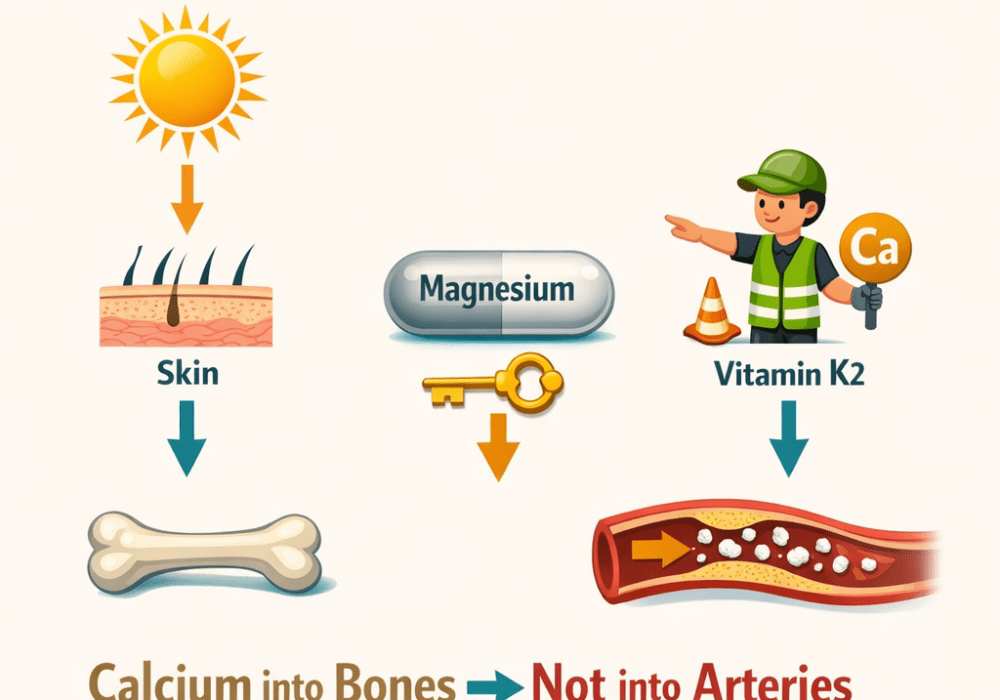
But modern research is showing that calcium metabolism is far more sophisticated than that. The body relies on a small team of nutrients working together — most importantly vitamin D3, magnesium and vitamin K2.
When these nutrients are balanced, calcium is more likely to support healthy bones rather than accumulating in places where it should not be.
Understanding how this system works can help us make better choices for long-term health.
What do vitamin D3, magnesium and vitamin K2 do together?
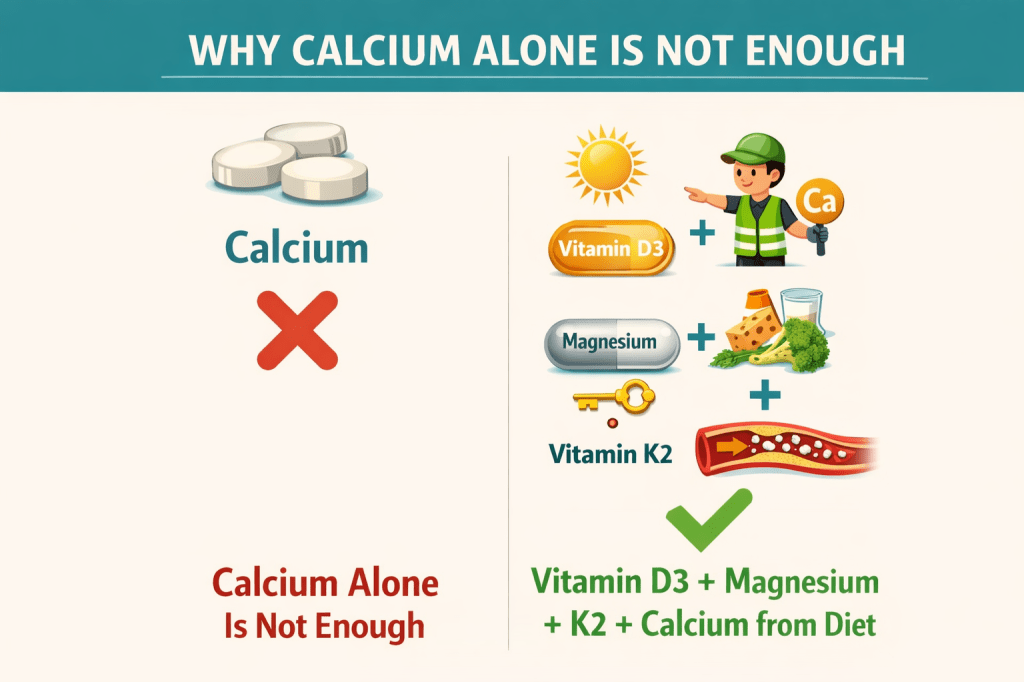
Vitamin D3 helps the body absorb calcium from food, magnesium activates vitamin D so it can function properly, and vitamin K2 directs calcium into bones while helping prevent deposits in arteries and soft tissues. Together, these nutrients support healthy calcium balance, bone strength and overall metabolic health.
Vitamin D3 – The Sunshine Signal
Vitamin D is often called a vitamin, but in reality it behaves more like a hormone.
Production begins in the skin when ultraviolet-B sunlight converts a cholesterol-related molecule called 7-dehydrocholesterol into vitamin D3.
Once activated by the liver and kidneys, vitamin D influences hundreds of genes involved in:
• calcium absorption
• immune regulation
• inflammation control
• muscle strength
• bone metabolism
One of its most important roles is helping the body absorb calcium from food.
Without sufficient vitamin D, the body may absorb only a small fraction of the calcium we eat.
Low vitamin D levels have also been associated in research studies with a range of conditions including:
• osteoporosis
• autoimmune diseases such as multiple sclerosis
• certain cancers including breast and bowel cancer.
This does not mean vitamin D alone prevents these diseases, but it highlights how important it is in maintaining normal physiological balance.
Magnesium – The Quiet Enabler
Here is a fact that many people do not realise.
Vitamin D cannot function properly without magnesium.
Magnesium is required for the enzymes that activate vitamin D in the body. Without adequate magnesium, vitamin D may remain largely inactive.
Magnesium also plays important roles in:
• parathyroid hormone regulation
• nerve and muscle function
• heart rhythm stability
• bone mineralisation.
Unfortunately magnesium deficiency has become common in modern diets due to soil depletion, processed foods and certain medications.
When magnesium levels are low, increasing calcium intake alone often fails to correct imbalances.
Vitamin K2 – The Calcium Guide
If vitamin D increases calcium absorption, another important question arises:
Where does that calcium go?
Vitamin K2 helps answer that question.
This nutrient activates specialised proteins that guide calcium into the bones while helping prevent calcium deposits in arteries and soft tissues.
Two important vitamin K2-dependent proteins include:
• Osteocalcin, which binds calcium into the bone matrix
• Matrix GLA protein, which helps prevent vascular calcification.
In simple terms, vitamin K2 acts like a traffic controller for calcium, helping ensure it strengthens bones rather than accumulating where it does not belong.
Why Calcium From Food Is Often Preferable
Calcium is clearly important for bone health, but more is not always better.
Many people can obtain adequate calcium through foods such as:
• dairy products
• leafy green vegetables
• almonds and sesame seeds
• small fish eaten with bones.
Supplements may be appropriate in certain situations, but high calcium intake without sufficient vitamin D, magnesium and K2 may not support healthy calcium balance.
For this reason, many clinicians now emphasise dietary calcium alongside nutrient balance rather than relying solely on supplements.
Vitamin D and the Immune System
Beyond bone health, vitamin D plays an important role in immune regulation.
Immune cells contain vitamin D receptors, and adequate levels appear to help maintain balanced immune responses.
Researchers have explored links between vitamin D status and conditions such as:
• multiple sclerosis
• autoimmune diseases
• breast cancer
• colorectal (bowel) cancer.
While vitamin D is not a treatment for these conditions, maintaining healthy levels may support the body’s natural defence systems.
Interestingly, the prevalence of multiple sclerosis increases in populations living further from the equator, where sunlight exposure — and therefore vitamin D production — is lower.
A Simple Way to Think About the System
Instead of focusing on a single nutrient, it helps to think of calcium regulation as a partnership.
Vitamin D3
helps the body absorb calcium.
Magnesium
activates vitamin D and supports metabolic processes.
Vitamin K2
directs calcium into bones and away from soft tissues.
Calcium
provides the structural building blocks for bones and teeth.
When these nutrients work together, the body is better able to maintain balance.
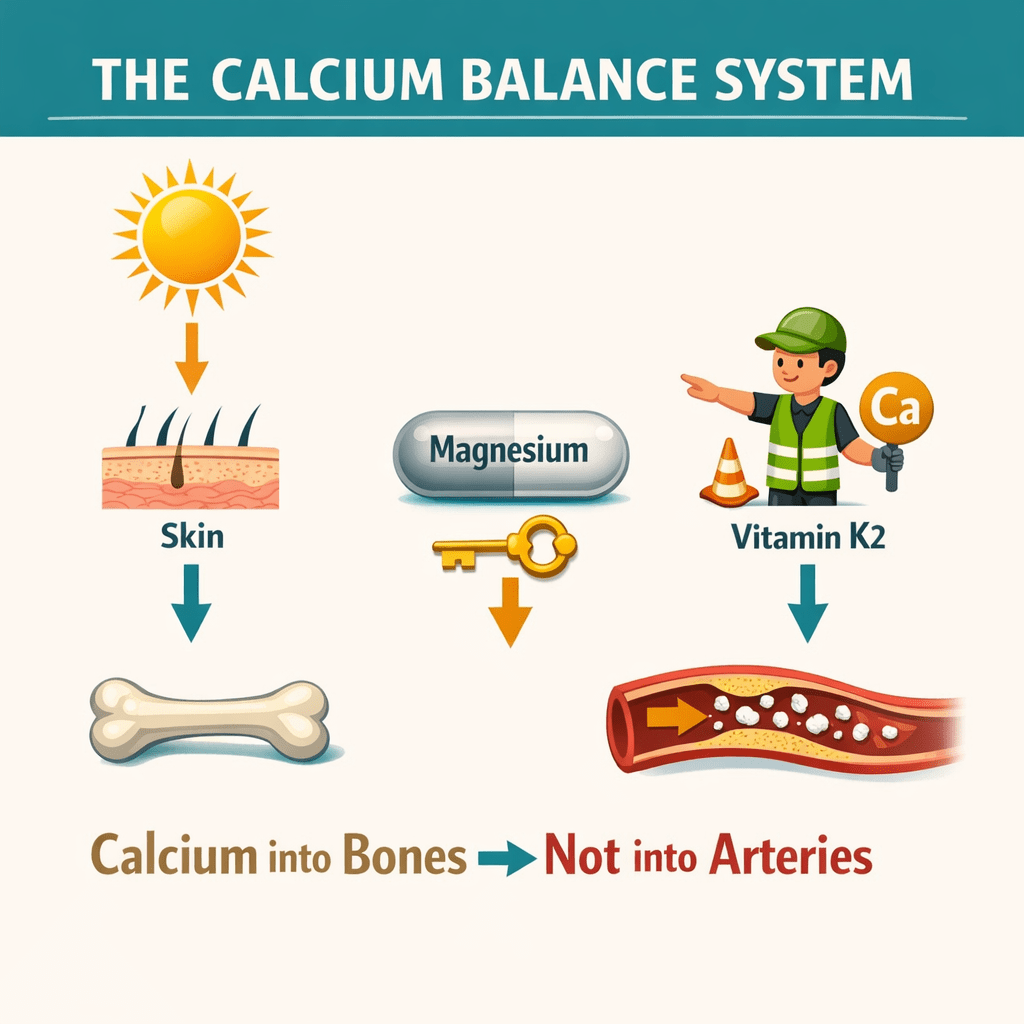
Diagram showing how Vitamin D3, magnesium and vitamin K2 work together to regulate calcium and support bone health.
Supporting Healthy Nutrient Levels
Some practical ways to support this system include:
• sensible sunlight exposure where possible
• eating a varied diet rich in vegetables, nuts and seeds
• including fermented foods or high-quality dairy where tolerated
• discussing testing or supplementation with a healthcare professional when appropriate.
Every individual is different, and personalised guidance is always best.
Emerging evidence suggests that boron may further support this system by improving how these nutrients are utilised within the body. Boron: The Missing Link in Vitamin D, Calcium & Hormone Balance
Final Thoughts
Health rarely depends on one nutrient or one supplement.
The body works through networks of nutrients and signals, each supporting the other.
Understanding how vitamin D3, magnesium and vitamin K2 interact gives us a clearer picture of how the body manages calcium, supports bone health and maintains overall wellbeing.
Sometimes the most effective approach is simply helping the body restore its natural balance.
I hope you feel inspired. Look after your body, and it will keep you healthy.
Catherine

CWD 14 March 2026/Ireland
Dr Catherine W. Dunne MSc.D., RGN, M.H.I.T. is a nurse, holistic practitioner, and educator based in Wexford, Ireland. With over 35 years of experience in healthcare and energy-based healing modalities, she integrates conventional medical knowledge with holistic approaches to support whole-person well-being.
Catherine is the founder of Holistic HealthCare Wexford and co-founder of Aumvedas Academy, where she teaches courses in holistic health, energy medicine, and integrative healing practices.
Her work focuses on empowering people to understand the body as an intelligent system capable of healing when supported with the right knowledge, nutrition, and energetic balance.
Learn more:
Holistic HealthCare Wexford
Aumvedas Academy
Disclaimer
The information provided in this article is for educational purposes only and is not intended as medical advice. Always consult a qualified healthcare professional before starting any new supplement or health intervention.
 Holistic Healthcare Wexford
One comment