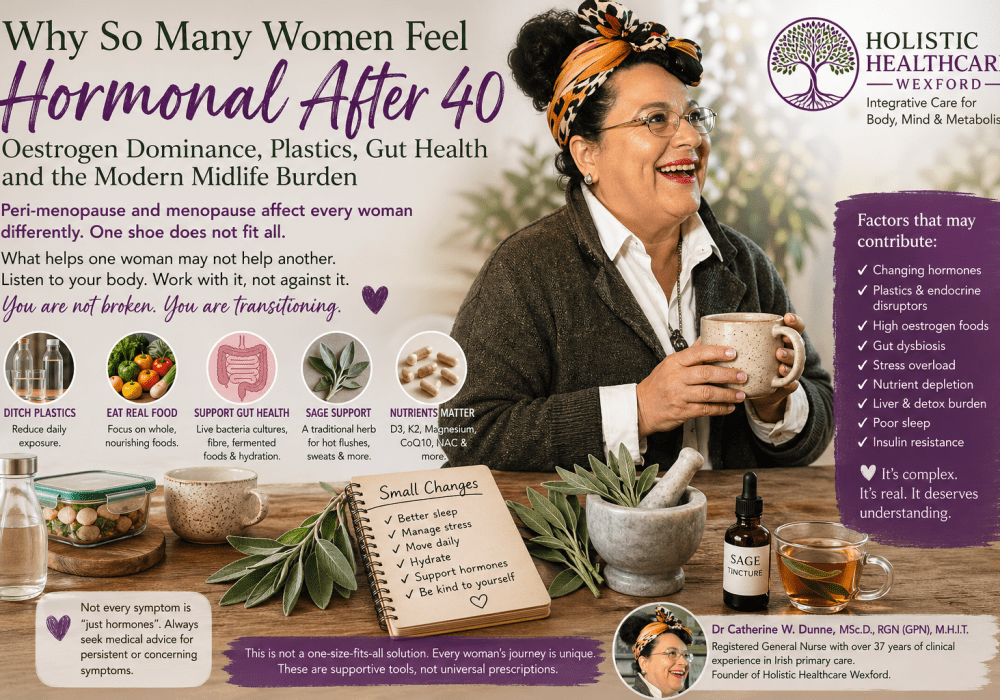
You are tired, irritable, bloated, anxious, forgetful, not sleeping properly, gaining weight around the middle, and feeling unlike yourself.
Yet blood tests may come back “normal”.
For many women over 35, especially through peri-menopause, this is where frustration begins. They know something has changed, but often feel unheard or dismissed.
One common pattern behind these symptoms is what is often called Oestrogen Dominance.
This does not always mean high oestrogen on a blood test. More often, it means oestrogen is relatively stronger than progesterone, or the body is struggling to process and clear hormones efficiently.
By Dr Catherine W. Dunne, MSc.D., RGN (GPN)
Holistic Healthcare Wexford | Co-founder, Aumvedas Academy
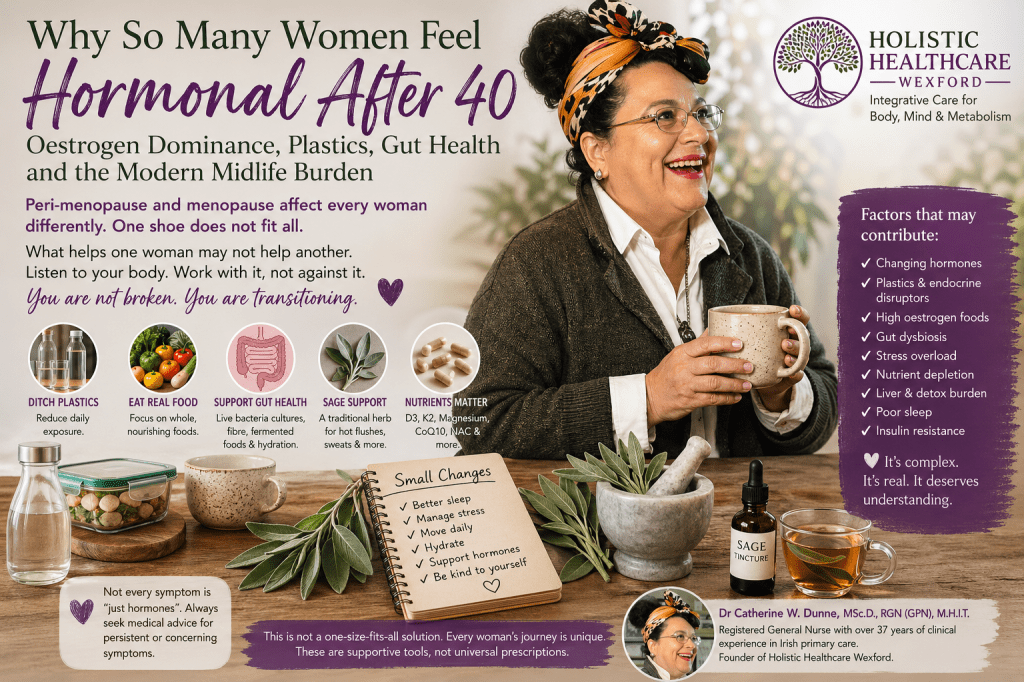
What Does Oestrogen Dominance Mean?
Hormones work in balance, not isolation.
Oestrogen has many important roles. It supports bones, skin, mood, brain function, the cardiovascular system and reproductive health. But when it outweighs progesterone, symptoms can begin to appear.
This often happens during peri-menopause, when progesterone may fall sooner and faster than oestrogen.
The result can be a body that feels hormonally unsettled.
Common Signs Women Notice
- heavier or irregular periods
- breast tenderness
- bloating and fluid retention
- mood swings or irritability
- anxiety or inner tension
- poor sleep
- headaches
- brain fog
- reduced stress tolerance
- stubborn weight gain, especially midsection
- feeling unlike yourself
And yes, many women simply know something is changing long before any test confirms it.
Walking into doorframes may also feature. We shall call that advanced hormonal navigation.
Many women enter their forties expecting a few hot flushes, some skipped periods, and perhaps the occasional mood swing. What they often get instead is a confusing collection of symptoms that seem to arrive all at once: bloating, weight gain around the middle, poor sleep, anxiety, breast tenderness, headaches, heavy or erratic periods, low mood, brain fog, irritability, and the unsettling feeling that they are somehow no longer themselves.
They go for blood tests. They are told everything is normal. They are advised to “manage stress” or accept that it is simply age.
Yet many women know in their bones that something has shifted.
One of the most common phrases used online to describe this experience is oestrogen dominance. It is not a formal medical diagnosis in the same way diabetes or hypothyroidism is, but it is often used to describe a very real pattern: when oestrogenic influence outweighs the balancing effects of progesterone, or when the body is carrying a broader hormonal burden that affects how a woman feels.
This does not always mean oestrogen is high on a blood test. More often, it means oestrogen is relatively stronger than progesterone, or the body is struggling to process, clear and regulate hormones efficiently. In other words, the issue may not be one hormone acting alone. It may be the whole terrain.
The Midlife Hormone Shift Begins Before Menopause
Many women assume menopause begins when periods stop. In reality, the turbulence often starts years earlier.
During perimenopause, ovulation becomes less predictable. Progesterone often declines first, while oestrogen may surge, dip or fluctuate wildly. This can create the classic picture associated with relative oestrogen excess: heavier periods, PMS-like symptoms, fluid retention, mood swings, poor sleep, breast tenderness, migraines and irritability.
When menopause arrives, periods cease, but symptoms do not necessarily vanish. Many women then face a new landscape of sleep disturbance, hot flushes, weight redistribution, vaginal dryness, anxiety, lowered resilience and fatigue.
Even post-menopause, hormones still matter. Fat tissue can continue to produce oestrogen through aromatase activity, lifestyle factors influence hormone metabolism, and environmental chemicals may continue to affect signalling pathways.
So no, the hormone story does not end at menopause. It simply changes chapter.
We Are the Plastic Container Generation
One part of the modern story that deserves far more attention is environmental exposure.
We became the convenience generation. We store food in plastic tubs, heat leftovers in plastic containers, drink water from bottles left in warm cars, wrap food in cling film, and begin our mornings with scalding tea or coffee in takeaway cups lined with plastic polymers and topped with plastic lids.
Many plastics contain compounds such as bisphenols, including BPA, BPS and BPF, as well as phthalates. These chemicals have been studied for their endocrine-disrupting potential, meaning they may interfere with natural hormone signalling.
The issue is not one takeaway coffee, one plastic lunchbox or one bottle of water. It is the small, repeated exposure over years.
Heat increases concern. Microwaving food in plastic, dishwashing worn containers repeatedly, pouring hot liquids into plastic-lined cups, or leaving bottles in sunlight may increase chemical migration. Even thermal till receipts have historically used bisphenol compounds, which can be absorbed through the skin.
This does not mean panic or perfectionism. It means awareness. Simple changes can reduce unnecessary load: use glass containers where possible, choose ceramic mugs, use stainless steel bottles, avoid heating food in plastic, and take a reusable cup for takeaway drinks.
Sometimes the body is not failing women. Sometimes the environment is working against them.
Food Quality Still Matters
Another overlooked area is the quality of the modern food supply.
One of the most significant concerns in discussions around oestrogen dominance is high-oestrogenic or hormonally disruptive food exposure. Commercially raised animals may be exposed to growth-promoting systems designed to increase size, speed of growth or milk production, depending on the country and farming system. Consumers are increasingly aware that what happens in the food chain does not magically stop at the plate.
Conventional produce may also carry residues from pesticides, herbicides and fungicides. Some of these compounds have been studied for endocrine-disrupting effects and may interfere with natural hormone activity, blood sugar regulation and metabolism. While residues may be present only in small amounts on individual fruits or vegetables, the concern is cumulative exposure over time.
This is why many people choose organic, local, pasture-raised or lower-intervention foods where feasible. Not out of fear, but because reducing the overall body burden makes sense.
Processed foods create a separate problem. Ultra-processed diets are often low in fibre, magnesium and protective plant compounds, while being high in refined sugars, additives, poor-quality fats and calorie density. This combination can worsen insulin resistance, inflammation and weight gain, all of which can influence hormone balance.
The real issue is rarely one “bad food”. It is the sum total of modern eating patterns.
Your Gut Helps Regulate Oestrogen
One of the most fascinating and under-discussed areas of women’s health is the gut-hormone connection.
The gut microbiome helps regulate circulating oestrogen through a group of bacterial genes often referred to as the estrobolome. These gut bacteria influence enzymes such as beta-glucuronidase, which are involved in whether oestrogens are eliminated from the body or reactivated and recirculated.
When gut flora is diverse and healthy, hormones are more likely to be processed and cleared efficiently. When gut balance is disturbed through repeated antibiotics, poor diet, chronic stress, constipation, alcohol excess, IBS-type patterns, dysbiosis or conditions such as SIBO, oestrogen recirculation may increase.
Many women with hormonal symptoms also report bloating, sluggish bowels, food sensitivities, recurrent thrush, IBS-type symptoms, and worsening PMS or peri-menopausal symptoms.
That is not coincidence.
Supporting gut health may include increasing fibre, vegetables, resistant starches, fermented foods where tolerated, adequate hydration and regular movement. In some cases, live bacteria cultures, often called probiotics, may help support gut flora and restore microbial balance, especially after antibiotics or periods of digestive disruption.
A healthy bowel habit is one of the least glamorous but most practical hormone tools available. Not glamorous, no. Useful? Absolutely.
Liver, Elimination and the Hormone Clearance Pathway
The liver plays a major role in processing hormones, including oestrogen. Once hormones have been metabolised by the liver, they still need to leave the body through bile and bowel elimination.
If a woman is constipated, inflamed, sleep deprived, nutrient depleted, drinking too much alcohol, under chronic stress or living on processed foods, the system can become less efficient. This does not mean the liver is “broken”. It means the workload is too high and the support is too low.
Good hormone clearance depends on the basics: enough protein, fibre, minerals, hydration, bowel regularity, sleep and reduced toxic load.
Simple, yes. Easy in modern life? Not always.
Where Sage Fits In
Sage is one of the old traditional women’s herbs that deserves renewed respect.
It has long been used for hot flushes, night sweats, excessive perspiration, digestive sluggishness, brain fog, and that overheated, unsettled feeling many women recognise during perimenopause and menopause.
Sage is not a magic hormone cure, and it should not be presented as something that “fixes” oestrogen dominance. Its value is more practical than that. It may support women through the symptoms of hormonal transition, especially where sweating, flushes and digestive heaviness are part of the picture.
The simplest form is sage tea. Use one teaspoon of dried sage leaf, or three to five fresh leaves, in a cup of hot water. Cover and steep for around ten minutes. One cup daily may offer gentle support, while up to two cups daily may be used during hot flush phases.
Sage tincture is another option, commonly taken as twenty to thirty drops in water once or twice daily, depending on product strength.
Regular culinary use also has value. Sage works beautifully in soups, roasted vegetables, stuffing, poultry dishes and savoury cooking. Small regular use often beats heroic one-off efforts.
Sage should be used cautiously in pregnancy, breastfeeding, seizure disorders, or where medications and health conditions require professional advice.
The Wild Yam Myth
For years, wild yam supplements were marketed as natural progesterone support.
Wild yam contains diosgenin, a plant compound used in laboratories as a starting material to manufacture steroid hormones. However, the human body does not naturally convert wild yam into progesterone. That conversion requires industrial processing.
So while some women may feel better using wild yam products, it should not be presented as equivalent to progesterone replacement.
Meanwhile, many women do not realise that in Ireland and Europe, regulated body-identical hormone therapies such as oestradiol and micronised progesterone are already available through licensed medical care and are generally preferred by professional menopause bodies over unregulated compounded alternatives.
That does not mean every woman needs HRT. It means women deserve accurate information rather than marketing fog.
Nutrients That Matter More Than Many Realise
Hormones do not work in isolation. They depend on healthy cells, nervous system balance, mineral sufficiency, mitochondrial energy and sleep.
This is why some women feel dramatically better when foundations are corrected.
Vitamin D3 is particularly relevant in Ireland, where low sunlight exposure is common. It functions more like a hormone messenger than a simple vitamin and influences mood, immunity and bone health.
Vitamin K2 is often paired with D3 to support healthy calcium handling.
Magnesium is one of the most important minerals for midlife women. It supports sleep, nervous system calm, muscle relaxation, blood sugar balance, vitamin D metabolism and stress resilience.
CoQ10 supports mitochondrial energy production and may be especially relevant in fatigue states, ageing and for women using statins.
NAC, or N-acetyl cysteine, supports glutathione pathways and antioxidant defence and is often discussed in relation to inflammation, metabolic health and resilience.
These are not magic pills. They are part of restoring the terrain in which hormones must function.
What Women Need Most
Many women do not need another lecture telling them to “just relax”.
They need a proper conversation that recognises the complexity of modern midlife health.
They may be dealing with changing hormones, sleep debt, stress overload, mineral depletion, low vitamin D, insulin resistance, environmental chemical burden, gut imbalance, caring responsibilities and years of putting everyone else first.
That is not a minor issue. That is a full-body systems load.
And yes, walking into doorframes, forgetting why you entered a room and losing your words mid-sentence may also feature. We shall call that advanced hormonal navigation.
What Can Help Practically?
The answer is rarely one tablet, one test or one buzzword. It is usually a return to fundamentals.
Eat enough protein. Build meals around real food. Increase fibre gradually. Support bowel regularity. Reduce plastic exposure where possible. Stop heating food in plastic. Choose better-quality food where feasible. Move daily. Strength train if able. Prioritise sleep. Correct nutrient deficiencies. Support gut flora. Reduce alcohol. Use herbs wisely. Seek medical support when symptoms are significant.
And most importantly, listen to the body before it has to shout.
One Size Does Not Fit All
It is also important to say this clearly: no two women experience perimenopause, menopause or post-menopause in exactly the same way.
One woman may struggle mainly with sleep and anxiety. Another may have heavy bleeding and migraines. Another may have hot flushes, joint aches, weight gain, vaginal dryness, low mood, or no major symptoms at all.
This is why the suggestions in this article should not be treated as a “one-for-all” prescription. They are general educational supports, not a personalised treatment plan. What helps one woman may not suit another, especially where medications, medical history, hormone-sensitive conditions, thyroid issues, diabetes, mental health concerns or other factors are involved.
Women deserve individualised care, not a conveyor-belt approach. Midlife health is not a template. It is a conversation.
Important Reality Check
Not every symptom in midlife is “just hormones”.
Persistent heavy bleeding, severe pain, sudden changes, unexplained weight loss, profound fatigue, depression, palpitations, post-menopausal bleeding or concerning symptoms deserve proper medical review.
Women should not be dismissed, but neither should everything be blamed on hormones without careful assessment.
Final Thought
Perimenopause and menopause do not create weakness. They reveal where the body has been carrying strain for years.
When women understand that, everything changes.
The body is not being dramatic. It is communicating.
Sometimes healing begins not with being told that everything is normal, but with finally being understood.
I hope you feel inspired. Look after your body, and it will keep you healthy.
Catherine

CWD | 25 April 2026 | Ireland
Holistic Healthcare Wexford
Integrative · Mindful · Patient-Centred
About the Author
Dr Catherine W. Dunne MSc.D. is a Registered General Nurse with over 37 years of clinical experience in primary care in Ireland. Alongside her work in General Practice Nursing, she is the founder of Holistic Healthcare Wexford and co-founder of Aumvedas Academy.
With a background that bridges conventional medicine and holistic practice, Catherine has a particular interest in the area where patients are often told “everything is normal,” yet still feel unwell. Her work focuses on helping people understand what their body is communicating, especially in relation to energy, stress, metabolic function, and recovery.
Through a combination of clinical knowledge and holistic support, she works with individuals to restore balance, improve resilience, and support long-term wellbeing.
Based in Wexford, Ireland.
Disclaimer
This article is for informational and educational purposes only and is not intended as medical advice. It does not replace consultation with a qualified healthcare professional. Patients should always seek appropriate medical guidance regarding their individual health needs and before making changes to treatment or care.
 Holistic Healthcare Wexford
Hello Catherine
Thank you for this blog.
I remember having consultations with clients (before I retired), about how nobody ever talks about post menopause. For some women , their symptoms carry on in one form or another, myself included.
The worst symptom for me then and still now, was anxiety. Still having warm flushes coupled with anxiety attacks. I am 68 yrs and eat healthy, no alcohol, active etc. I am a plant medicine practitioner and have so much support at hand. Yet……the anxiety has never left. What are your thoughts on this and perhaps you could write a blog on it.
Warm wishes
Bernadette Spink uk
Sent from my iPad
LikeLike
Dear Bernadette,
Thank you for such an honest and thoughtful comment. You have voiced something many women experience but few speak about openly: that symptoms do not always end once menopause has passed.
Anxiety, flushes and nervous system sensitivity can continue for some women well into later years, even when living a healthy lifestyle and doing “all the right things”.
There are often deeper layers involved: hormonal shifts, adrenal stress, nutrient depletion, thyroid balance, nervous system imprinting, and the body carrying years of responsibility and stress.
You have inspired me to write a blog on this important topic.
With warm wishes, Catherine
LikeLike