
The Herb That Once Had a Remedy for Everything
There are some plants that quietly occupy our gardens without asking for attention.
Betony is not flashy. It does not produce enormous blooms or dramatic colours. Yet for centuries it was considered one of the most respected medicinal plants in Europe.
The old herbalists held Betony in such high regard that a common saying emerged:
“Sell your coat and buy Betony.”
While that may sound excessive today, it reflects the esteem in which this humble member of the mint family was once held.
Today, Betony is largely forgotten.
Yet it continues to grow faithfully in gardens, meadows and hedgerows, offering the same gentle qualities that made it a favourite of generations past.

By Dr Catherine W Dunne MSc.D | M.H.I.T. | Registered Nurse
Meeting Betony
Betony (Stachys officinalis) is a perennial herb belonging to the mint family (Lamiaceae).

It produces upright square stems crowned with whorls of deep pink-purple flowers that bloom through summer.
The leaves
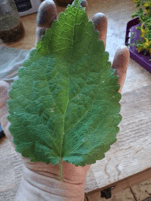
form attractive basal clumps and are softly textured, with a slightly crinkled appearance and finely toothed margins.
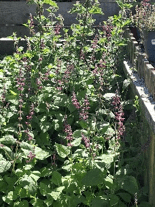
Like many members of the mint family, Betony is a valuable plant for pollinators. Bees seem particularly fond of its flowers, and on warm summer days the flower spikes can be alive with activity.
In my own garden, the bees arrive almost as soon as the flowers open.
A Long History of Traditional Use
Betony has an impressive herbal history stretching back to Ancient Rome and Medieval Europe.
Traditional herbal texts describe its use for:
- Headaches
- Nervous tension
- Stress and anxiety
- Digestive discomfort
- General weakness and fatigue
- Minor wounds and bruises
In medieval monasteries it was considered one of the essential medicinal herbs to cultivate.
Many herbal traditions regarded Betony as both a physical and emotional tonic—supporting the body while also helping to calm an overworked mind.
What Modern Herbalists Appreciate
Modern herbalists tend to view Betony as a gentle nervine and restorative herb.
Traditionally it has been used to:
- Encourage relaxation
- Ease tension headaches
- Support nervous system balance
- Promote a sense of calm during periods of stress
- Aid recovery during convalescence
Its action is generally considered mild rather than dramatic.
Betony is not the herb that forces change.
Instead, it works quietly in the background, helping the body find its own equilibrium.
Harvesting Betony
The aerial parts of the plant are usually gathered while flowering.
Both leaves and flowering tops can be used.
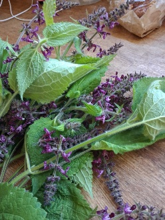
Fresh material may be tinctured, while dried herb can be prepared as a tea.
This year, my own Betony patch has flourished, producing a beautiful display of flower spikes and providing plenty of material for winter stores.
Some will be dried carefully for teas.
Some will find its way into tinctures.
And some may eventually become part of infused oils and herbal preparations.
This year my Betony has been one of the stars of the garden. The bees seem to adore it, and its flower spikes have provided colour for weeks. As I gathered some for drying, I found myself reflecting on how many generations before us would have recognised this plant immediately.
Why I Grow It
Part of the joy of growing herbs is reconnecting with plants that previous generations knew intimately.
Many of these herbs have slipped quietly from common awareness, replaced by newer remedies and modern conveniences.
Yet Betony remains exactly as it has always been.
Reliable.
Beautiful.
Bee-friendly.
And steeped in centuries of herbal tradition.
Perhaps that is why it continues to earn a place in my garden.
Not because it shouts for attention.
But because, like many of the best herbs, it simply gets on with the job.
Have you ever grown Betony in your garden, or encountered it in the wild? I’d love to hear about your experiences in the comments below.
I hope you feel inspired. Look after your body, and it will keep you healthy.
Catherine

CWD | 22 June 2026 | Ireland
Holistic Healthcare Wexford
Integrative · Mindful · Patient-Centred
About the Author
Dr Catherine W. Dunne MSc.D. is a Registered General Nurse with over 37 years of clinical experience in primary care in Ireland. Alongside her work in General Practice Nursing, she is the founder of Holistic Healthcare Wexford and co-founder of Aumvedas Academy.
With a background that bridges conventional medicine and holistic practice, Catherine has a particular interest in the area where patients are often told “everything is normal,” yet still feel unwell. Her work focuses on helping people understand what their body is communicating, especially in relation to energy, stress, metabolic function, and recovery.
Through a combination of clinical knowledge and holistic support, she works with individuals to restore balance, improve resilience, and support long-term wellbeing.
Based in Wexford, Ireland.
Disclaimer
This article is for informational and educational purposes only and is not intended as medical advice. It does not replace consultation with a qualified healthcare professional. Patients should always seek appropriate medical guidance regarding their individual health needs and before making changes to treatment or care.
 Holistic Healthcare Wexford